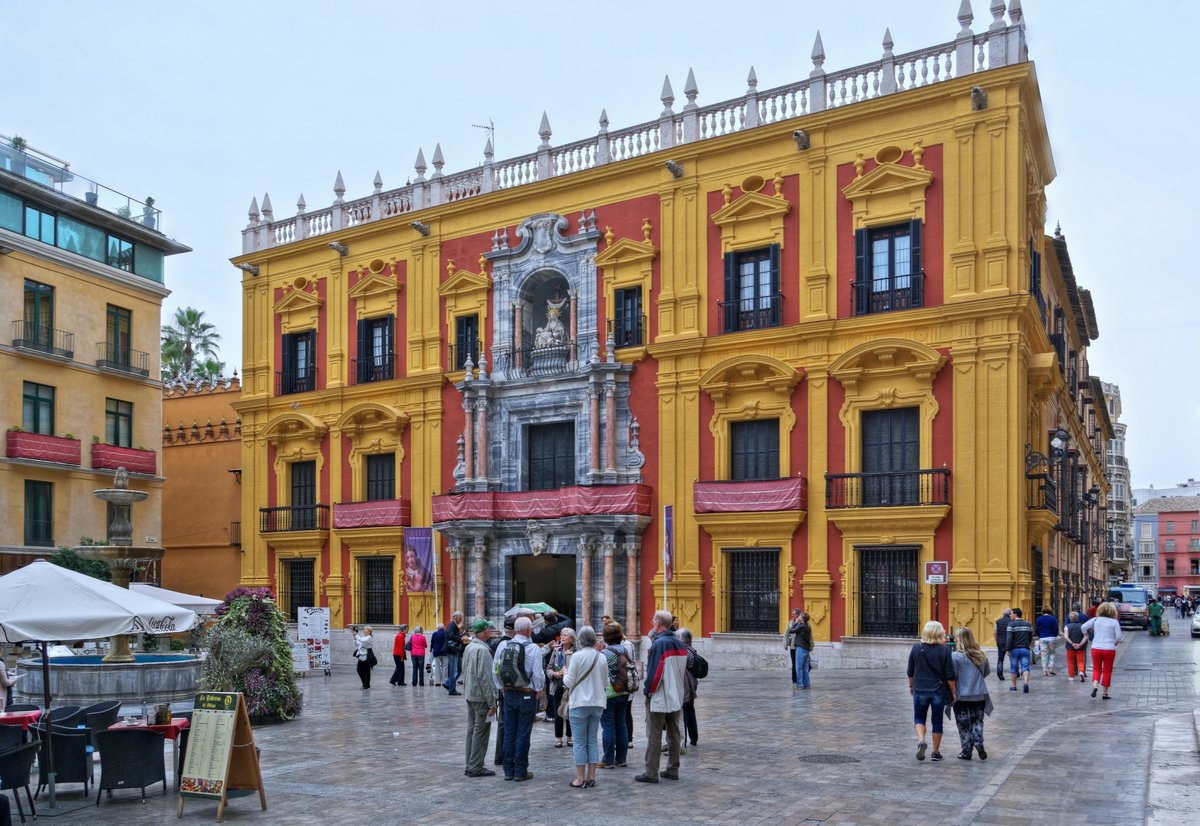

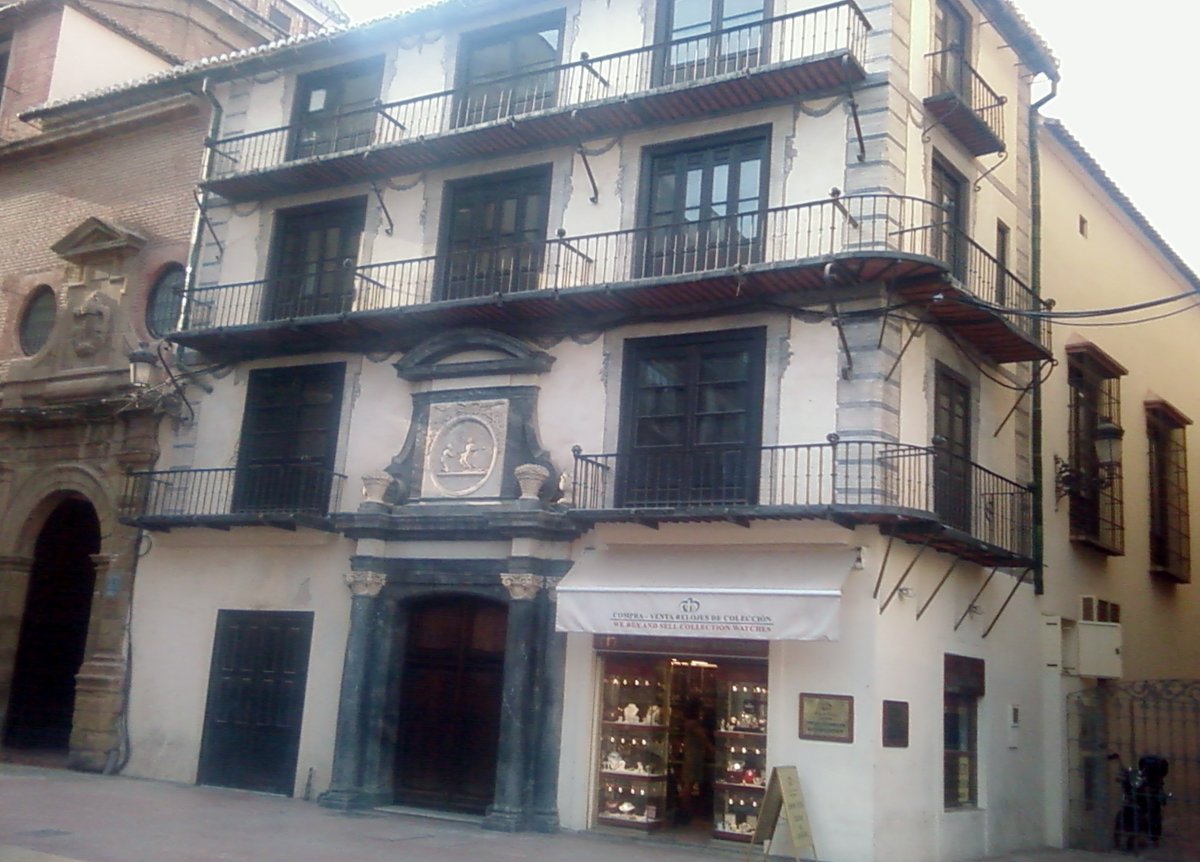
The Palacio Episcopal de Málaga is located on Plaza del Obispo, very close to the Malaga Cathedral. It was constructed starting in 1762 under the patronage of Archbishop José Francisco Lasso de Castilla. The designs are attributed to architect Antonio Ramos, who continued the works of José de Bada, who had been working on the cathedral. This palace represents one of the best examples of civil architecture in Malaga.
The building features a three-story facade articulated with paired and simple pilasters. It is characterized by a classicist baroque style with straight and curved pediments over the upper openings. A central feature of this facade is a magnificent portada-retablo superimposed in the center, which combines grey marble for the background and pink marble for the columns. The number of columns decreases progressively on each upper floor.
The palace has a turbulent history. On December 15, 1930, there was an attempt to set the building on fire by anti-clerical groups. On May 11, 1931, the building was assaulted and set on fire by anti-clerical groups; during this time, Archbishop San Manuel González escaped with the Eucharist and the nuns. The building was reconstructed in the 1940s and later underwent a rehabilitation in the 1990s. Currently, part of the building has been adapted as a space for the Museo Diocesano del Arte Sacro de Málaga. The palace is cataloged as a monument of cultural interest as of 1991.
Sources: Wikipedia, OpenStreetMap, Wikidata, Wikimedia Commons



Written by Nicolo Ciampini
Discuss this with the author and others
No comments yet. Be the first to start the conversation.