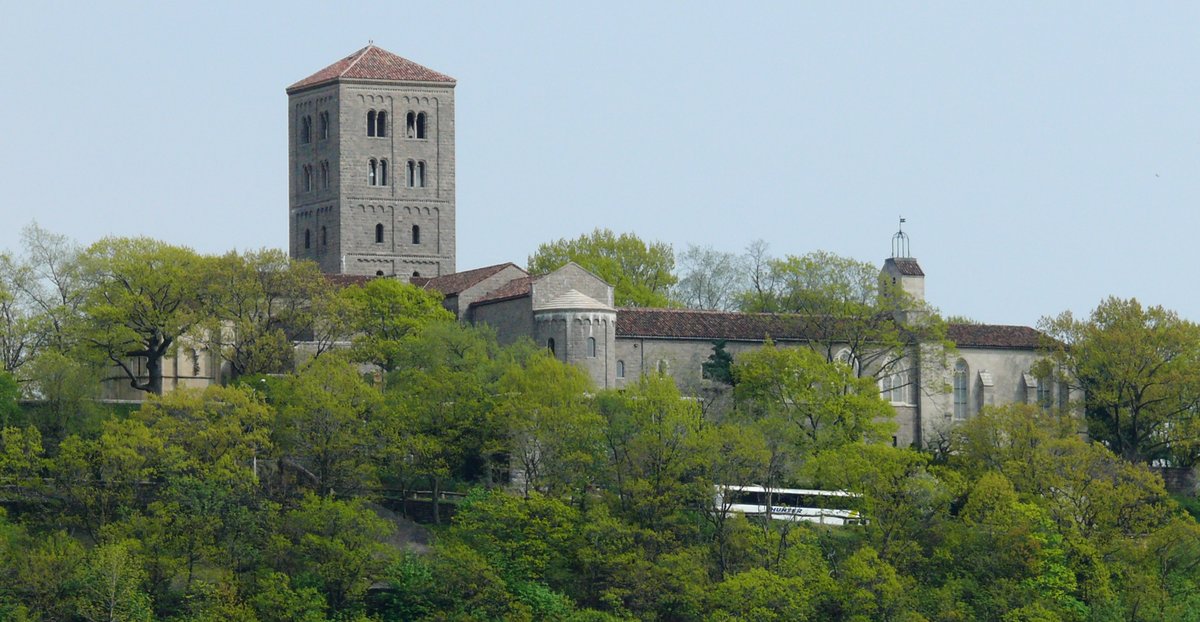

The Cloisters Museum, housed in New York's Fort Tryon Park, is a treasure trove of European medieval art and architecture, under the watchful eye of the Metropolitan Museum of Art. It's a veritable garage sale of history, and we're the lucky buyers. This enchanting place was the brainchild of French sculptor Charles Collens and American artist George Grey Barnard, who worked their magic to create mind-boggling French monastery structures. Ain't that a trip!
If you're curious, it all opened up in 1938. They’ve got around 5,000 works of art and architecture, with Byzantine to early Renaissance pieces being the highlight. The Mérode Altarpiece, a piece of Early Netherlandish art, and the Cloisters Cross, a 12th-century English walrus ivory cross adorned with 92 intricate carvings and 98 inscriptions, are just a few must-sees. It seems folks like John D. Rockefeller Jr. and J.P. had a soft spot for these masterpieces back then.
Four cloisters – the Cuxa, Saint-Guilhem, Bonnefont, and Trie-sur-Baïse – were transported to New York before 1913, and they're now the heart of this magical place. Side note: Barnard didn't seem to mind the odd questionable relic with no provenance or origin. In 1925, John D. Rockefeller Jr. purchased the museum's collections from George Grey Barnard, with the help of architect William W. Bosworth. Rockefeller was smitten and made sure the museum, which opened its doors on May 10, 1938, was constructed by the Metropolitan Museum of Art.
Sources: Wikipedia, OpenStreetMap, Wikidata, Wikimedia Commons
Written by Friendly Jane
Discuss this with the author and others
No comments yet. Be the first to start the conversation.