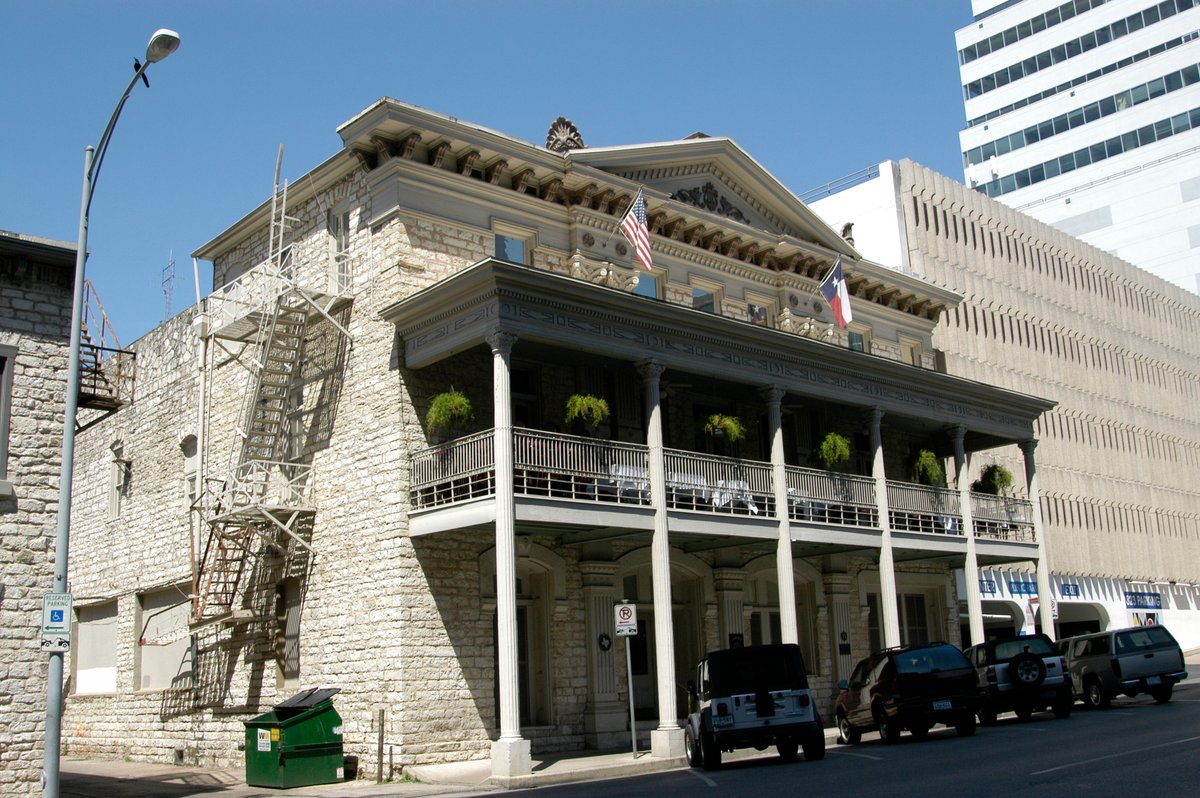
As I wandered the avenues of Austin, Texas, I was drawn towards the spellbinding allure of the Millett Opera House. A whimsical relic amidst the contemporary splendor, this sultry beauty was born in 1878 under the vision of Charles Millett. The masterful hands of Frederick Ruffini sculpted it to be one of Texas's grandest stages, offering seating for 800 and walls that hummed with the rhythm of 24-inch limestone. Each corner whispered the secrets of a hand-painted ceiling, an ode to artists and their dedication.
This was more than just entertainment; it was a testament to a bustling, spirited community that thrived in the 1950s. In 1950, the Opera House faced a dire forecast, but the unwavering determination of some heartfelt dreamers from Austin saved it from ruin, claimings its glory in 1940 from the Austin Public Free Schools. The Opera House, over the following decades, served as a printing company, slowly slipping into the arms of disrepair. But in 1979, the Austin Club took the reins, giving the Opera House a second chance.
Under their steadfast protection, it was restored, reimagined as a three-story sanctuary of history. One of the meeting rooms bore the same luminous splendor of the original hand-painted ceiling. Today, the Millett Opera House, a living legend, stands ever so gracefully, an eternal symbol of Austin's vibrant and colorful past.
Sources: Wikipedia, OpenStreetMap, Wikidata, Wikimedia Commons
Written by No other
Discuss this with the author and others
No comments yet. Be the first to start the conversation.