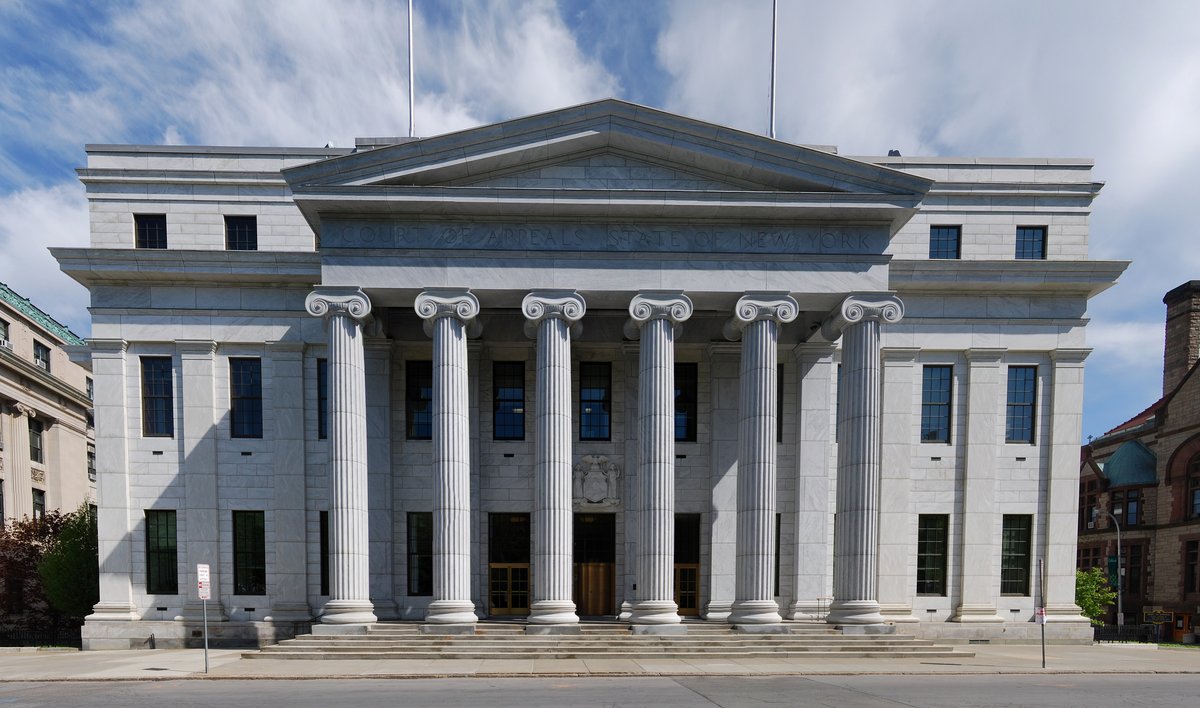
The New York Court of Appeals Building, officially known as Court of Appeals Hall, is a stone Greek Revival structure built in 1842 at the corner of Eagle and Pine streets in Albany. Originally known as State Hall, the building initially housed state clerks and various executive branch officials. Four years after its completion, a new state constitution united the state's court hierarchies, establishing the Court of Appeals as the highest court.
Architect Henry Rector designed the building, which incorporates all three classical orders in its rotunda and utilizes stone arches to support the ceilings as an early attempt at fireproofing. In the 1880s, architect Henry Hobson Richardson designed a courtroom that was originally located in the nearby state capitol; this courtroom was later moved into the Court of Appeals building. A rear addition was overseen by Lewis Pilcher in the early 20th century to accommodate the moved courtroom. The building has undergone several renovations, including a refacing in the late 1950s and a project in the early 21st century that removed the cupola and restored much of the original interior decoration.
The building's frieze features the legend "Court of Appeals State of New York" engraved in its upper portion. The roof is flat, featuring a copper-sheathed dome with stainless steel cladding, an oculus, and a gold leaf finial. The interior floors and stairs are laid in marble flagstone, and the first floor contains a library and lounge for attorneys, as well as the John Jay Room for public events and viewing oral arguments.
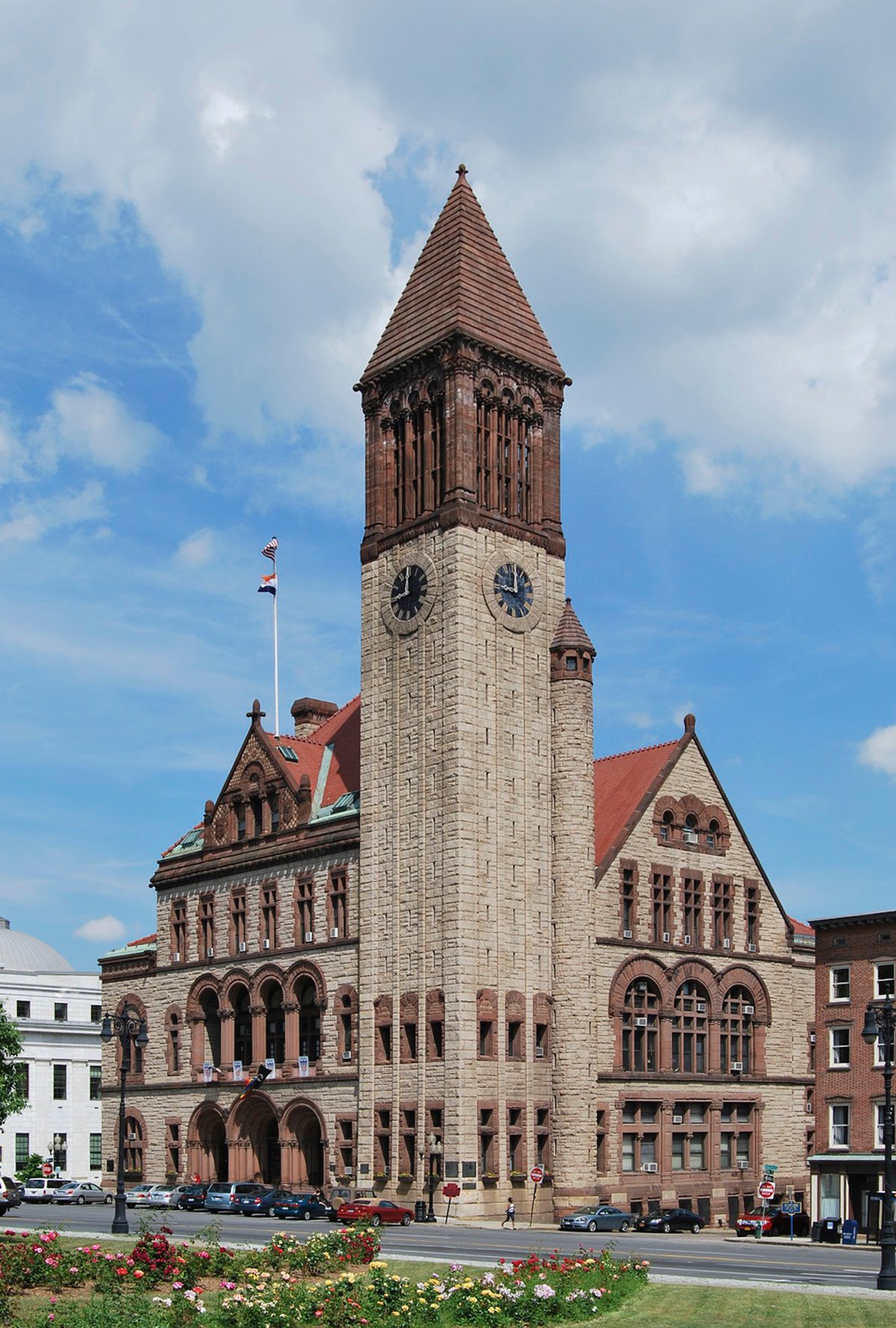
The courthouse occupies half of the block between Columbia, Eagle, Lodge and Pine streets. It is surrounded by other historic structures, including Albany's City Hall and St. Peter's Episcopal Church, and is a contributing property to the Lafayette Park Historic District.
Sources: Wikipedia, OpenStreetMap, Wikidata, Wikimedia Commons


Written by No Other
Discuss this with the author and others
No comments yet. Be the first to start the conversation.