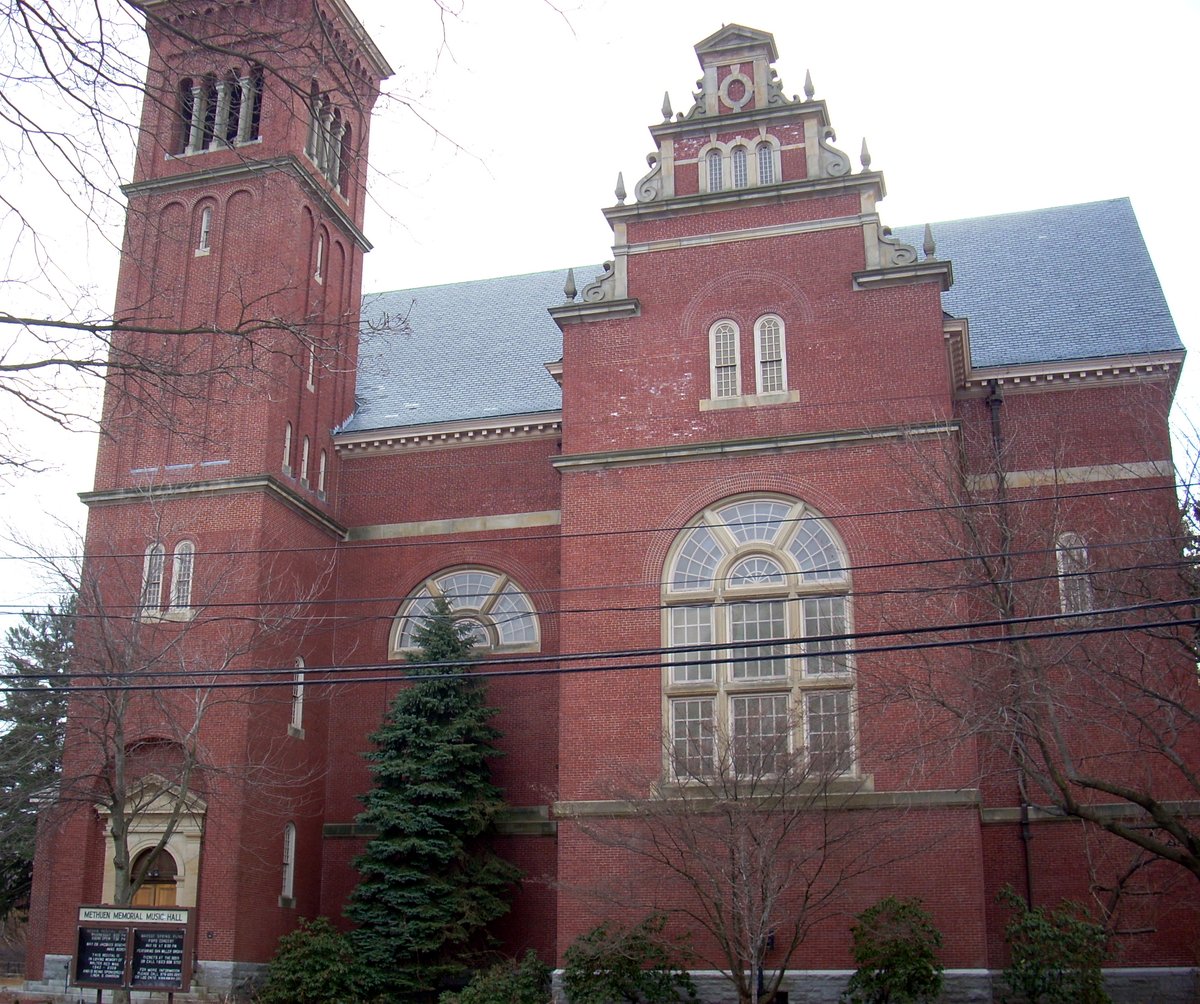
Most people build a house and maybe throw an organ in it. Edward Francis Searles took the opposite approach: he bought a massive German organ first and then commissioned a music hall to house it. The result was a 100-foot-long hall with walls over three feet thick. To ensure the acoustics were perfect, he included interior air gaps for soundproofing.
The instrument, known as The Great Organ, was the first concert organ in the United States. It arrived in the US from Germany in 1863 and spent its first life at the Boston Music Hall. However, the Boston Symphony Orchestra eventually decided they needed more space for the performers and less room for the pipes. They removed the organ to storage in 1884. Searles purchased it at auction for $1,500 - a bargain, considering it possessed 6,088 pipes and 84 registers.
Architect Henry Vaughan designed the interior to mimic a church, complete with a nave, transepts, and a vaulted ceiling reaching 65 feet high. The style is English baroque, featuring dark oak paneling and marble floors in a reddish-brown and gray scheme. It creates a four-second reverberation time when empty, providing the specific acoustic environment required for the organ.
Today, the hall stands at 192 Broadway as a monument to 1909 engineering. It remains a remarkably preserved piece of music history, still standing tall in Methuen with its Italianate campanile and baroque volutes, proving that sometimes the best way to preserve a machine is to build it a dedicated home.
Sources: Wikipedia, OpenStreetMap, Wikidata, Wikimedia Commons


Written by Kyle McLonely
Discuss this with the author and others
No comments yet. Be the first to start the conversation.