Serbia: Fortresses and Castles, a Crossroads of Empires and Religions

For Browsing

On the territory of modern Serbia lie the ruins of fortresses built in strategically important locations — near rivers, trade routes, and the borders of former empires. Constructed to protect cities, estates, or monasteries, they played a significant role in the military strategies of medieval rulers. Some of the fortresses served exclusively defensive purposes: here you can explore ancient military camps, arsenals, and barracks. Inside others, entire towns grew: houses, schools, and shops, as well as churches and mosques. The ruins of some of them have been preserved to this day. One of the oldest fortresses in Serbia is Stari Ras, listed as a UNESCO World Heritage site along with the nearby monasteries of Sopoćani and Đurđevi Stupovi, as well as the Church of the Holy Apostles Peter and Paul (Petrova Church). Serbian fortresses allow you to connect with the turbulent history of these lands and transport visitors back to the Middle Ages — a time when powerful rulers, brave knights lived here, and major battles took place.

Belgrade Fortress or Kalemegdan

RFF2+J3 Belgrade, Serbia

The name comes from the Turkish designation "Castle Square" (in Turkish, Kale Meydanı). According to another opinion, the name Kalemegdan originates from two Turkish words: "Kale" ("fortress") and "Megdan" ("battle"). The Turks called Kalemegdan Fikir-bayır (fikir bayır), meaning "hill of reflection." Nowadays, Kalemegdan often refers to the Belgrade Fortress itself. It is the most important historical monument of Belgrade. It is located on the top of a hill at an altitude of 125 meters above sea level, at the confluence of the Danube and Sava rivers.

Petrovaradin Fortress or the Hungarian Gibraltar on the Danube

Fortress 1, Petrovaradin, Serbia

The Petrovaradin Fortress — a fortress on the Danube opposite the city of Novi Sad — was founded by Prince Kroua in 1692 to defend the Habsburg Empire against the Turks. Known as the "Hungarian Gibraltar," it was a key fortification on the Austro-Turkish border. The construction of the fortress, based on Vauban's designs, was overseen by Austrian generals Kaiserfeldt and Marsigli. In 1694, the Turks unsuccessfully attempted to capture the unfinished fortress. The main event of the next Austro-Turkish war was the Battle of Petrovaradin (1716), won by Eugene of Savoy.

Niš Fortress

b.b., Niš, Serbia

One of the best-preserved citadels on the territory of Serbia. The preservation of the Niš Fortress is almost complete, despite numerous Serbian-Turkish wars, the First and Second World Wars, and the American bombings of 1999 that swept through Niš.

Bač Fortress

Bačka Fortress 30, Bač, Serbia

A fortress in Serbia, located near the town of Bač in the autonomous province of Vojvodina. It was built during the reign of the Hungarian king Charles Robert (1310–1342). At that time, it consisted of walls and eight towers, and also included the governor's buildings, barracks, a kitchen, wells, etc. Bač became a major military, political, cultural, and religious center. After the Battle of Mohács (1526), the town and fortress came under the control of the Ottoman Empire. The traveler Evliya Çelebi described it, noting that the town and fortress were surrounded by a wide circle of water-filled moats.

Smederevo Fortress

Smederevo, 3 Omladinska, Smederevo, Serbia

The fortress located on the banks of the Danube since the early 15th century, from where George Branković ruled the Serbian Despotate. Over time, the city of Smederevo grew around the fortress. The capture of the fortress by the Turks in 1459 marked the final fall of medieval Serbian statehood.

Ram Fortress

Fortress Ram, 105, Ram, Serbia

The settlement on the fortress hill existed even before our era. Ram is a fortress on the right bank of the Danube in the village of the same name, just over 100 km from Belgrade. It is located on a cliff descending from the northeast towards the Danube. It is believed that the fortress was built opposite the Haram fortress, which was located on the opposite bank of the river and of which nothing remains today.

Kladovski-Grad or Fetislam

Fortress Fetislam in Kladovo, E771, Kladovo, Serbia

A fortress in Serbia located on the banks of the Danube, a few kilometers from Kladovo. It was erected by the Turks in 1524 as a bridgehead for the capture of the border Hungarian territories and invasion of Transylvania. In addition, the fortress served a defensive function along with fortresses such as Smederevo, Kulič, Ram, and Golubac. During the Austro-Turkish wars of 1717-1737, the fortress once again became an important military center, was expanded, and received six new bastions. It underwent another enlargement and strengthening in 1818, after two Serbian uprisings. In 1867, along with six other fortresses, it was handed over to Prince Mihailo Obrenović.

Fortress Vrdnik or the fortified town of Vrdnik

4QVG+H3 Rakovac, Serbia

The fortress of Vrdnik, or the fortified town of Vrdnik, was a fortified town on Fruška Gora near Vrdnik.

Vršaц Fortress

Vršac Tower, Vršac, Serbia

The Vršac Fortress in Serbia from the 15th century, the remains of which rise to an altitude of 399 meters above sea level, on the Vršac hillside above the city.

Manich Fortress

Maglič Fortress 36341 Bogutovac Raška District, Maglič, Serbia

A medieval Serbian town in the Ibar Gorge, near the village of Bogutovac, 20 kilometers south of the city of Kraljevo. The name of the town comes from the Serbian word "magla" — "fog." It is located on top of a cliff, surrounded on three sides by the flow of the Ibar River, about 100 meters above the bottom of the gorge and the old caravan route from Kosovo to northern Serbia, now a highway connecting Kosovo and Metohija with Belgrade.

Brvenik Fortress

9J4Q+WQ Bela Stena, Serbia

A fortress in Serbia, the remains of which are located 8 km north of Raška, near the settlement of the same name. Brvenik is situated on one of the peaks (599 meters) of the Gradina elevation, above the confluence of the Brvenica River with the Ibar. It is unknown when it was built, and in the Middle Ages it was a square and the residence of the Brvenik parish. Today, very little remains of it, and its entire area is overgrown with dense vegetation.

Grabovac Fortress or Jerinin Grad

JXQF+28 Grabovac, Serbia

Fort Grabovac, or Erin's Town, is located on a hill above the left bank of the Western Morava River in the area of the village of the same name, 3.5 kilometers northwest of Trstenik. It is believed to have originated during the early Byzantine period, specifically during Justinian's restoration, and was also used in the Middle Ages. Grabovac is one of the largest fortresses in Western Pomoravlje, its role being to establish control over the road leading through the river valley to the vicinity of Kruševac. Its significance for the Serbian people was likely greatest immediately after the Battle of Kosovo, when the army defending the nearby Ljubostinja Monastery was stationed here, from where Princess Milica governed the state.

Golubac Fortress (Iron Gates)

Golubac Fortress, 25.1, Golubac 12223, Serbia

The town of Golubac or the Golubac Fortress is a medieval fortress, a cultural monument of exceptional significance. It is located in Đerdap National Park, on the right bank of the Danube, 4 km downstream from the current settlement. It is situated on high cliffs, at a point where the river narrows, right at the entrance to the Đerdap Gorge. The fortress is built in a fan shape and consists of three parts: the front, the rear, and the upper town (with the citadel). In total, it comprises 10 towers and two large gates. In front of the fortress, there was a civilian settlement, of which only some partially explored remains testify today.

Diana Fortress

MG3V+GR Novi Sip, Serbia

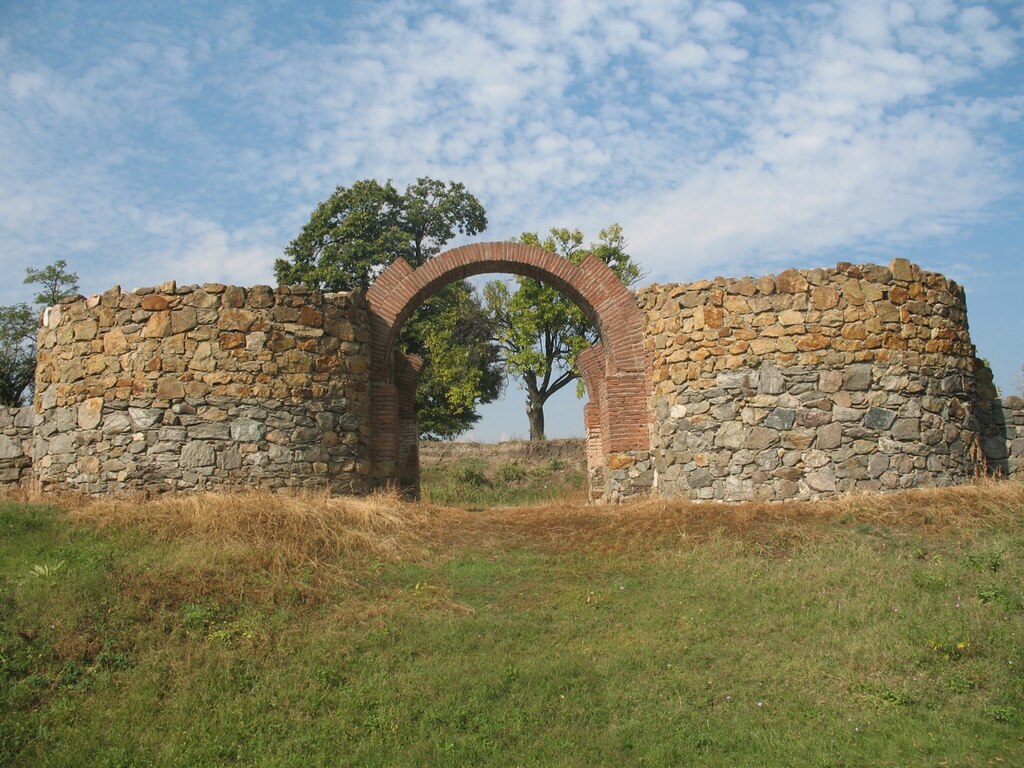
Diana is an ancient fortified city on the banks of the Danube. It is located in Karataş, downstream from the Đerdap I hydroelectric power station. The fortress was built as one of the bases for the Dacian wars and to ensure navigation on the Danube. Today, the remains of the fortifications are preserved here, and archaeological excavations are being conducted in the area itself.

Soko Fortress (Sokol), Bosnia and Herzegovina

P8VP+VWQ, Soko, Bosnia and Herzegovina

The medieval town of Soko (Sokol), located on a rocky hill in the village of the same name seven kilometers north of Gračanica, dates back to the Middle Ages, that is, the period of the medieval Bosnian state.

Fortress Sokograd (Sokolac)

Sokograd, Sokobanja, Serbia

Sokograd, also known as Sokolac, is a medieval town and fortress located 2 km east of the resort town of Sokobanja, Serbia. In 1982, the fortress was declared a cultural monument of great importance and is under the protection of the Republic of Serbia.

Fortress Stari Ras (Gradina Fortress with the lower town of Trgovište)

203, Sebečevo, Serbia

The fortress of Stari Ras, together with the Church of the Holy Apostles Peter and Paul, and the monasteries of Đurđevi Stupovi and Sopoćani, is a masterpiece of human creativity and the cradle of Serbian history. It is the largest fortress on the eastern border of the early medieval Serbian state. Through the Latin form of its name—Raška—it became the name for all of medieval Serbia, after which the Serbs were called Rašani.

Koznik Fortress

FW4R+29 Grčac, Serbia

Koznik is a fortress in Serbia, located 8 km west of Aleksandrovac and 10 km northwest of Brus, built in the last third of the 14th century. It is situated on the slopes of Kopaonik, on a conical elevation 921 meters above sea level, dominating the surroundings and the Rasina River. Historically, it is associated with the figure of the great military commander Radič Postupović, a nobleman of Stefan Lazarević. As part of the Night of Museums in 2009, an exhibition titled "Life in a Medieval Castle" was held at Koznik Fortress. Today, it is partially conserved and protected by the Republic of Serbia as a cultural monument of great importance.

Shabac Fortress (originally Zaslon or Sava, Ottoman name Bogur Delen (Böğur Delen))

Savska bb, Šabac, Serbia

The Šabac Fortress (originally Zaslon or Sava, Ottoman name Bogur Delen (Böğur Delen), meaning "flank breaker") is a fortification in present-day Šabac on the bank of the Sava River. The fortress in its current form was built in 1471 by Isa-beg Isaković following the Ottoman model, which was also used in the construction of Kladovo (Fetislam) and the town of Zemun. Today, only the southern half of the fortress remains, featuring two round towers and a rampart, as the northern half was washed away by the Sava.

Kruševac - the city of Prince Lazar or Šaren Grad (from the Turkish name Aladža Hisar)

Czara Lazara 1, Kruševac, Serbia

The former capital of Prince Lazar. The city also has the prince's court church, the so-called Lazarica. Today, very little remains of the city. Since Kruševac is inextricably linked with the Battle of Kosovo and Prince Lazar, it was celebrated by the people much more than any other capital. It was the most famous and most frequently mentioned place of the old Serbian state.

Stalach (Tower of Todor, Kula Todora od Stalać)

Kulska 26V, City of Stalać, Serbia

A medieval fortress near Stalać, of which today only the remains of the donjon have survived, so the entire area is usually called "the tower." It is believed that the tower was built by Prince Lazar Grebelanović on the remains of an ancient city, as well as a church nearby, of which today only the bell in the church gates remains, on which it is written that it was made in 1384 in Milan. The Tower of Todor itself is located on the slopes of the Mojsin mountains, where once stood 70 Serbian monasteries and churches. The tragic end of Todor from Stalać and his love Elitsa is described in the folk song "The Death of the Voivode Prijezda."

Slankamen Fortress (Roman Acumincum, Castrum Zalankemen)

Gudura 23A, Smederevska Palanka, Serbia

On a prominent elevation on the right bank of the Danube, above the present-day village of Stari Slankamen, lie the remains of a medieval fortress built on the foundation of a Roman castle. This area has been densely populated since prehistoric times, and during the Roman administration, a fortification called Acumincum was constructed here. Throughout history, it was conquered by many peoples: Huns, Goths, Gepids, Avars, Bulgars, Byzantines, Hungarians, and Turks. The medieval town of Slankamen is first mentioned in historical sources in the 11th century; in later periods, its names included Zalonkemen, Zolankaman, and Zolankament. At the end of the 12th century, Slankamen was seized from the Byzantines by the Hungarians. By the early 14th century, it had gained the status and privileges of a royal town (Civitas regis Zalankaman). According to sources, it can be concluded that a class of wealthy merchants and craftsmen developed in Slankamen quite early.

Zemun Fortress

Visoka 35a, Belgrade 11080, Serbia

The fortress of Zemun dates back to the early Middle Ages (it is mentioned in sources as early as the 9th century) and is located on the territory of modern Gardos. Only the quadrangular citadel of the former fortification has been preserved, in the center of which the so-called Millennium Tower was built in 1896, today better known as the Sibinjanin Janko Tower.

Kupinik or Water City in Kupinovo

Kupinik, Kupinovo, Serbia

Kupinik or Water City in Kupinovo is located in Lower Srem near the village of Kupinovo, built at the end of the 13th or in the first half of the 14th century as a military-border fortress of the Hungarian king. Srem served as the capital for the last Serbian despots. The fortress was built on a small island on the Sava River, on the outskirts of the modern Obedska Bara reserve.

Secrets of Mount Rtan: A Wonder of Nature or a Man-Made Pyramid?

QV9G+8C Vrmđa, Serbia

In Central Serbia, a couple of hundred kilometers from Belgrade, lies the Rtanj mountain. The height of the mountain reaches one and a half kilometers. It is part of the Carpathian mountain system, located between the Serbian towns of Boljevac and Sokobanja. Rtanj mountain is shrouded in myths, legends, and mysterious stories. The locals often call it the "Serbian pyramid."

Felix Romuliana — "The Royal City"

V5XM+WJ, Gamzigrad, Serbia

Felix Romuliana — the "royal city" — is an imperial residence built on the territory of the Roman Empire at the end of the 3rd and the beginning of the 4th century AD. The initiator of the construction was one of the members of the tetrarchy rulers, Gaius Galerius Valerius Maximianus.

Trajan's Bridge — the longest bridge of antiquity

Trajanova 23, Kostol, Serbia

The longest ancient Roman bridge, built between 103 and 105 AD according to the design of Apollodorus of Damascus, spanned the Ister (Danube) to the east of the Iron Gates. It was the first bridge in history across the second largest river in Europe.

Trajan's Board, or "Tabula Trajana" (Tabula Trajana)

M846+R2 Tekija, Serbia

A memorial plaque installed after the completion of the road construction. It is located on the Serbian side, facing Romania, near Ogradina, opposite the head of Decebalus – the tallest stone sculpture in Europe. Accessible only by water.

The Statue of Decebalus - "the largest face in Europe"

J7RR+FF Dubova, Romania

The Statue of Decebalus on the Danube River, Romania. This is "the largest face in Europe." The face belongs to the Dacian leader Decebalus, stands 40 meters tall, and is the largest sculpture in Europe carved from a single rock. History enthusiasts might be disappointed: this statue is younger than you and me; it was built in 2004 by 12 sculptors who spent nearly 10 years carving it into the rock. The statue rises above the waters of the Danube and is clearly visible even from Serbia.