
Minaret Qutb Minar (Qutub Minar and Qutab Minar)
P15, opp. Qutab Minar, Seth Sarai, Mehrauli, New Delhi, Delhi 110030, India
India: Delhi: Qutb Minar Complex (Qutb Minar) and its Monuments Jermaine
 For Browsing
In 1192, during the reign of Ghyath al-Din Muhammad (1163–1203), construction began in Delhi on a mosque named "Quwwat al-Islam" ("The Might of Islam"). The mosque is enormous in size: 250 by 150 meters, with a total area (including auxiliary buildings) of 4 hectares. The building of the now-ruined mosque resembles the columned mosques of Syria and Andalusia. However, this similarity arose by chance: the craftsmen did not master the technique of laying arches and vaults from wedge-shaped bricks. They constructed flat ceilings supported by corbels and columns. These columns were taken from 27 destroyed Hindu temples and decorated with carved figures. Typically, a column in an Indian mosque has a square base, but then the craftsman shapes it into a round or faceted section and then returns to the square form. The red sandstone used by Indian craftsmen is easy to work with, so the carving usually covers all surfaces made from this stone. Only the facade wall and fragments of the prayer hall with columns have survived. But even in its ruined state, the mosque vividly recalls the times when it was the most outstanding structure of Muslim India. Its facade wall is among the finest examples of mosque decoration — its forms are executed with noble simplicity and elegance. Ornamental carving, done with great skill, covers the entire surface of the facade from top to bottom. In this carving, the combination of stripes of traditional Indian floral ornamentation with inscriptions in Arabic calligraphy is very interesting, creating a contrasting yet harmonious decorative effect. Besides the usual purpose of calling people to prayer, the minaret of Quwwat al-Islam was used as a victory tower to demonstrate the power of Islam, as well as a watchtower to oversee the surroundings for the city's protection. Among historians, there is also an opinion that the minaret was named after the first Turkish sultan Qutb-ud-din Aibak, or, according to another hypothesis, after the saint from Baghdad Khwaja Qutb-ud-din Bakhtiyar Kaki, who migrated to India and was highly respected by Akbar. Qutb-ud-din Aibak (1206–1219) built the unusual minaret Qutb Minar from red sandstone. It appears that the minaret is composed of numerous conical sections, which are linked like rings by openwork balconies supported by stalactite brackets. Later, a mausoleum of Sultan Shams-ud-din Iltutmish was added to the mosque. The Quwwat al-Islam mosque complex also includes the world-famous Iron Pillar, dating back to the early centuries AD. It is one of the most mysterious monuments of Indian culture. The Alai Minar minaret was started by Alauddin Khilji, who intended to make it twice as tall as the Qutb Minar. However, construction was halted when the structure reached 24.5 meters, and only one tier was built after Alauddin's death. The first tier of the building has survived to this day. The Quwwat al-Islam mosque became something like a "museum of trophies" of Indian architecture, taken by Muslim conquerors from ancient Indian temples. Here one can see, for example, columns with relief decorations taken from some destroyed Hindu structures. At the same time, it creates the impression that the champions of Islam who led the mosque's construction were not at all embarrassed by the fact that characteristic Hindu motifs appeared in a Muslim temple, which sharply contradicted the main principles of Muslim religious art, known to forbid depicting humans and animals, especially in buildings of a cult nature.
Jermaine Loading stories…
P15, opp. Qutab Minar, Seth Sarai, Mehrauli, New Delhi, Delhi 110030, India
India: Delhi: Qutb Minar Complex (Qutb Minar) and its Monuments Jermaine 
G5FP+HJM, Set Sarai, Mehrauli, New Delhi, Delhi 110030, India
India: Delhi: Qutb Minar Complex (Qutb Minar) and its Monuments Jermaine 
Mehrauli, G5FM+VXW, Seth Sarai, Mehrauli, New Delhi, Delhi 110030, India
India: Delhi: Qutb Minar Complex (Qutb Minar) and its Monuments Jermaine 
G5GP+84M, Alai Minar Around Path, Seth Sarai, Mehrauli, New Delhi, Delhi 110030, India
India: Delhi: Qutb Minar Complex (Qutb Minar) and its Monuments Jermaine 
G5FP+MGQ, Qutub Minar Complex Rd, Seth Sarai, Mehrauli, New Delhi, Delhi 110030, India
India: Delhi: Qutb Minar Complex (Qutb Minar) and its Monuments Jermaine 
Qutub Minar Complex, G5GM+3RM, Qutub Minar Complex Rd, Seth Sarai, Mehrauli, New Delhi, Delhi 110030, India
India: Delhi: Qutb Minar Complex (Qutb Minar) and its Monuments Jermaine 
Qutub Minar Complex, G5FP+M9C, Qutub Minar Complex Rd, Seth Sarai, Mehrauli, New Delhi, Delhi 110030, India
India: Delhi: Qutb Minar Complex (Qutb Minar) and its Monuments Jermaine 
G5FM+HR3, Set Sarai, Mehrauli, New Delhi, Delhi 110030, India
India: Delhi: Qutb Minar Complex (Qutb Minar) and its Monuments Jermaine 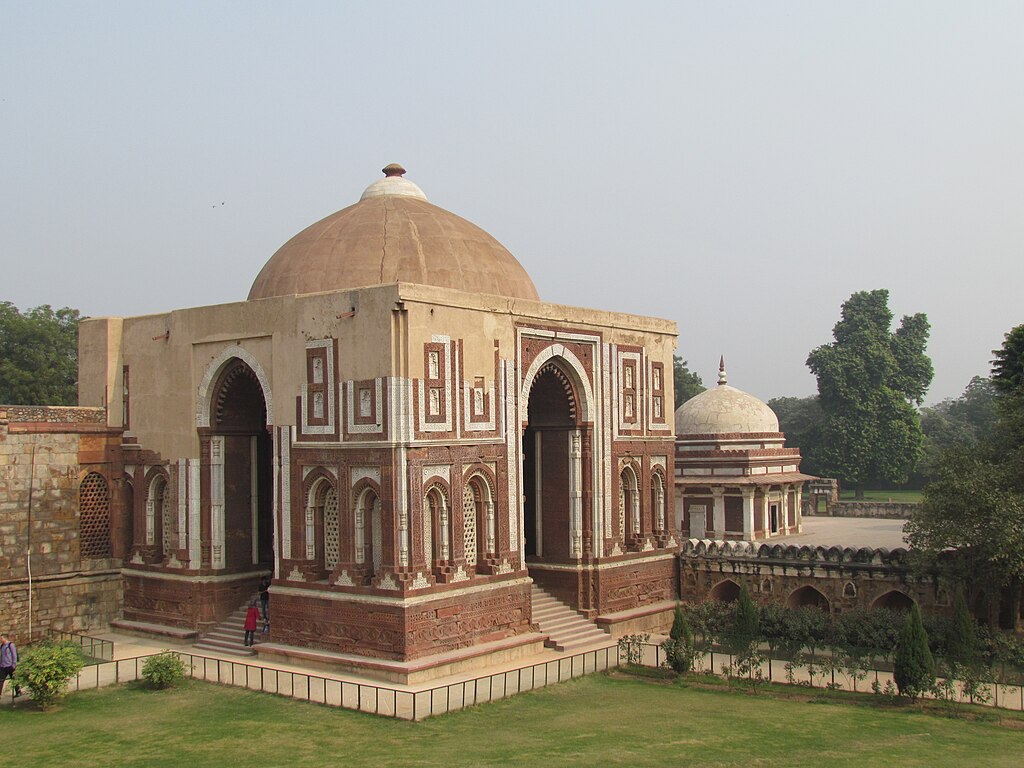
G5FP+M9C, Qutub Minar Complex Rd, Seth Sarai, Mehrauli, New Delhi, Delhi 110030, India
India: Delhi: Qutb Minar Complex (Qutb Minar) and its Monuments Jermaine