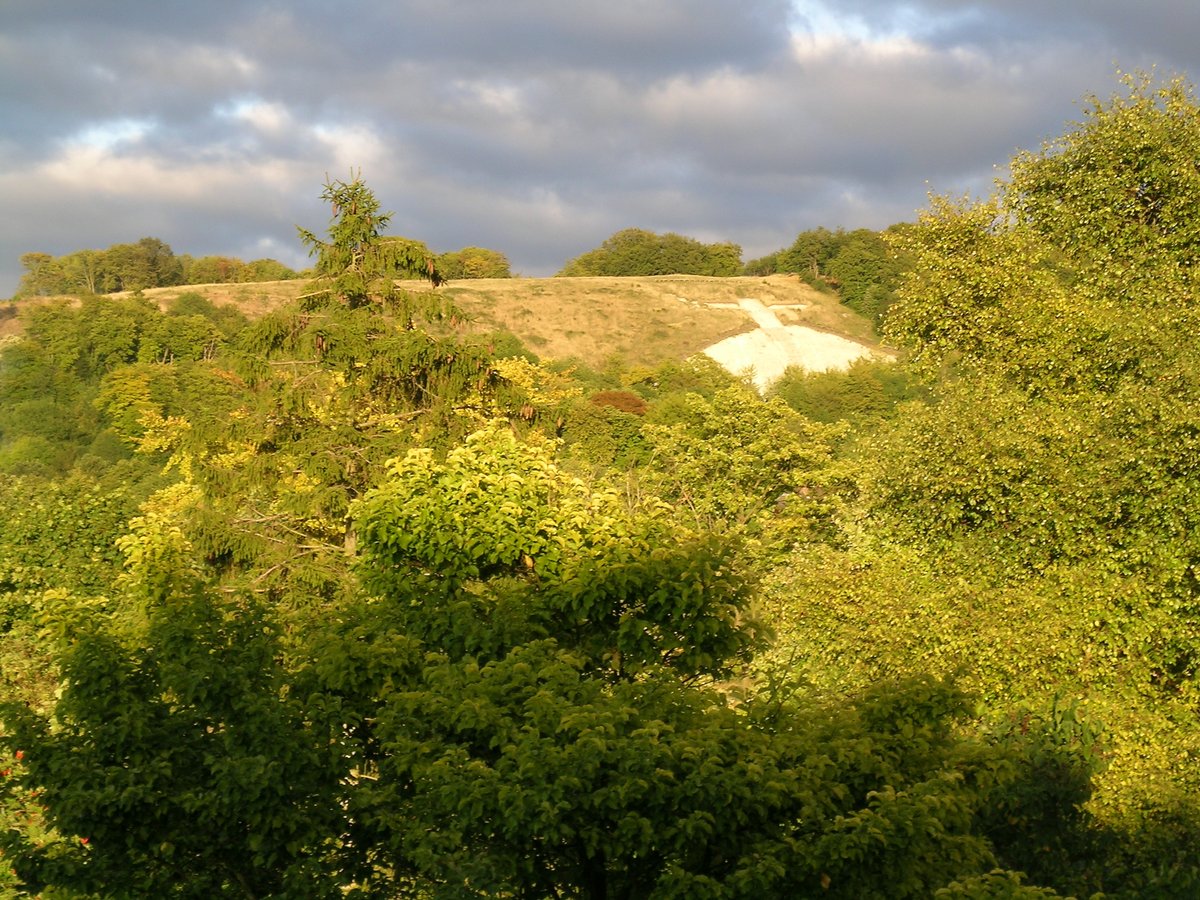

Why would someone spend so much effort carving a cross into a chalk hill? If you look at the Whiteleaf Cross today, you see a triangular base and a shape that looks perfectly pious. But the history is a bit messier - or perhaps just more mysterious.
The first mention of the landmark appears in 1742, though the hamlet nearby was known as White Cliff in the eighteenth century. Before 1700, the records are silent. This means the cross could be centuries older than the first person to write about it.
People have spent a long time guessing what it actually is. Some say it was a Saxon celebration of a victory over the Danes. Others suggest it was a phallic symbol that was later Christianised for a more respectable audience. There are even more mundane theories, like it being a direction sign for a monastery that never existed, or a bored group of Civil War soldiers amusing themselves during a lull in the fighting.
In 1839, an Act for enclosing common lands specifically required the cross to remain open and conspicuous forever. It is still protected today as part of the 11-hectare Whiteleaf Hill Nature Reserve. You can see it for yourself on the hill, standing near a Neolithic barrow that, despite its proximity, likely has nothing to do with it.
Sources: Wikipedia, OpenStreetMap, Wikidata, Wikimedia Commons


Written by Nicolo Ciampini
Discuss this with the author and others
No comments yet. Be the first to start the conversation.