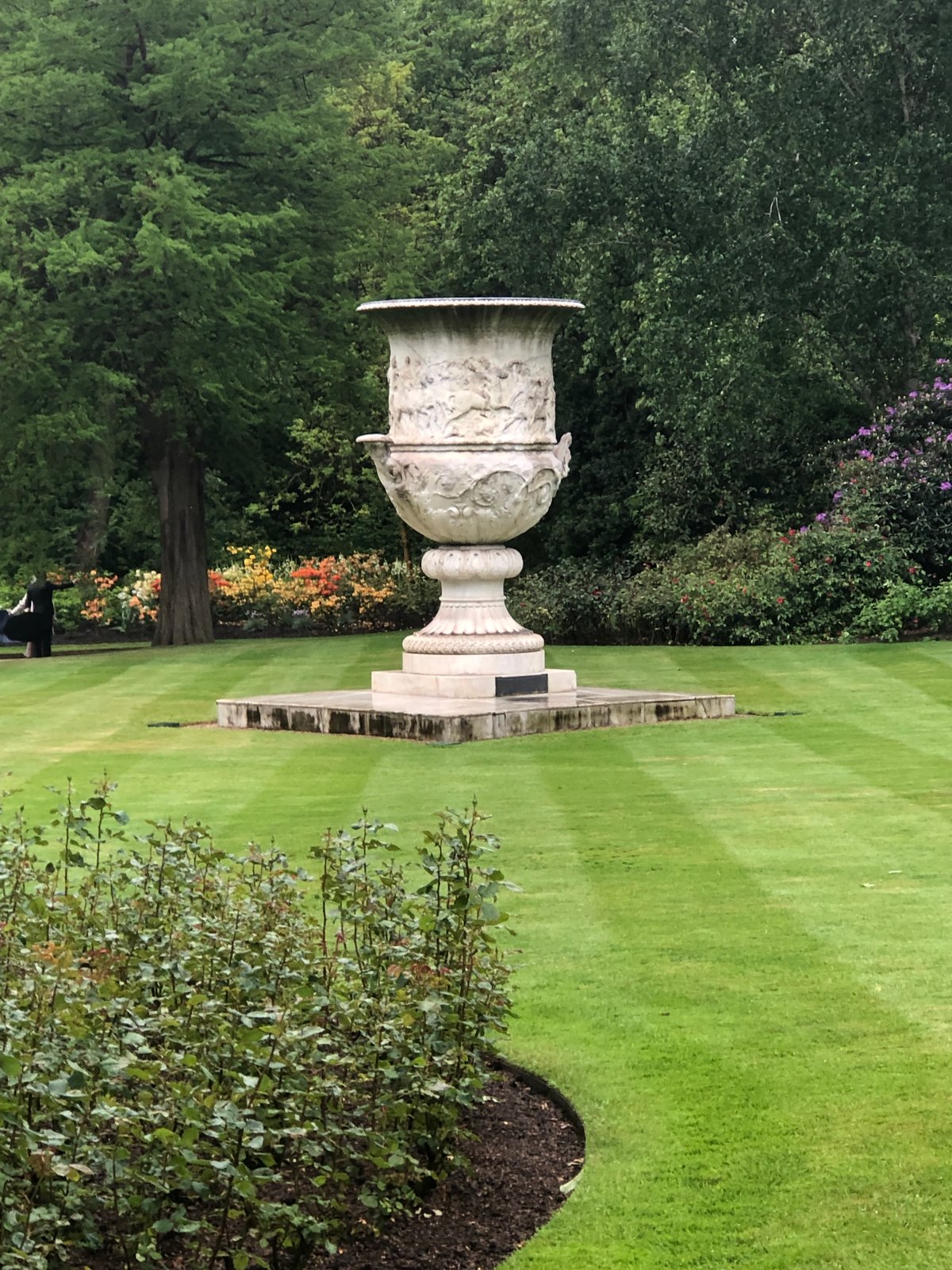
The Waterloo Vase is a 5.5-meter (18 feet) high stone urn, situated in the garden of Buckingham Palace in central London. Fashioned from a single piece of Carrara marble, it was initially presented to Napoleon I, who intended to have it carved in celebration of anticipated future military victories. After the Emperor’s defeat at the Battle of Waterloo, the uncarved vase was given to the Prince Regent, who became King later. The Duke of Tuscany, who at that time was Leopold II, presented the vase unfinished to the Prince Regent.
Richard Westmacott, a renowned sculptor, was commissioned to decorate the vase with reliefs celebrating the victory at Waterloo. The original plan to place the vase in the Waterloo Gallery at Windsor Castle proved unrealisable, the weight of the vase being greater than the gallery’s floors could bear. It was therefore given to the National Gallery in Trafalgar Square. Considering the vase surplus to its requirements, the gallery placed it first in Hyde Park, London and then into storage at the Victoria and Albert Museum.
In 1903, it was offered by the museum to the new king, Edward VII, who installed it as a garden ornament in the grounds of Buckingham Palace, where it remains. The vase is a Grade I listed structure.
Sources: Wikipedia, OpenStreetMap, Wikidata, Wikimedia Commons
Written by Nicolo Ciampini
Discuss this with the author and others
No comments yet. Be the first to start the conversation.