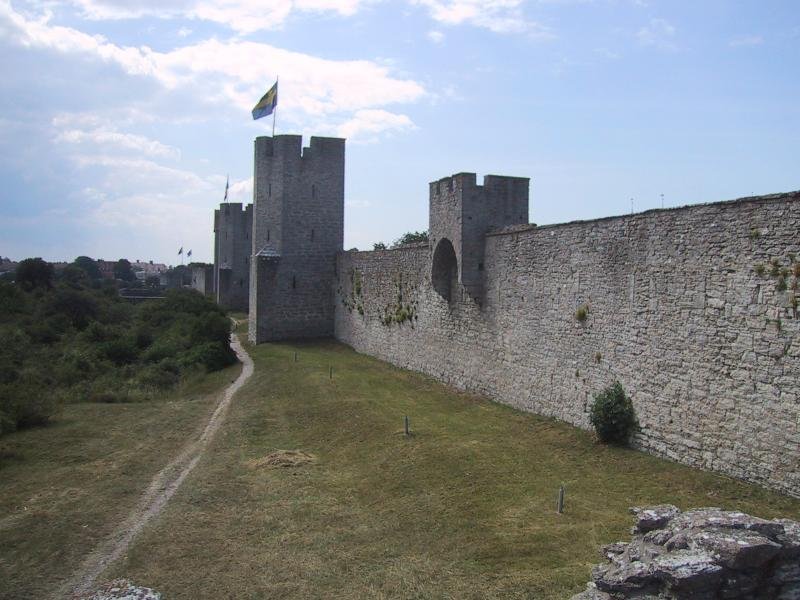

Visby's ring wall and the area inside is a World Heritage Site, established in 1994. But what led to its creation wasn't conflict. The city's influence can be seen from the Age of Rome. The ancient Roman road Via Regia played a significant role in Visby's growth,
Visby was a major player in the Hanseatic League's trade network, trading with Russia, Denmark, and Germany.
The wealth of Visby was rooted in the island's rich resources and strategic location in the Baltic Sea. German traders, Rus Vikings, and Danes established their presence in Visby, creating a diverse and bustling city.
The Tyska Gotlandsfararesällskapet, a guild of members who were responsible for building the current St. Mary's Cathedral, completed it in 1225. The church is a remarkable example of Romanesque architecture, with its sturdy stone construction and rounded arches, and it is a testament to the influence of Roman trade routes on Visby's architectural style. Today, Visby is a popular tourist destination, with its well-preserved medieval architecture and lively festivals attracting visitors from around the world.
The city's rich history is preserved, and it continues to be a testament to the importance of Rome's ancient road and the Hanseatic League's trade network in shaping Visby's legacy.
Sources: Wikipedia, OpenStreetMap, Wikidata, Wikimedia Commons
Written by Nik Frost
Discuss this with the author and others
No comments yet. Be the first to start the conversation.