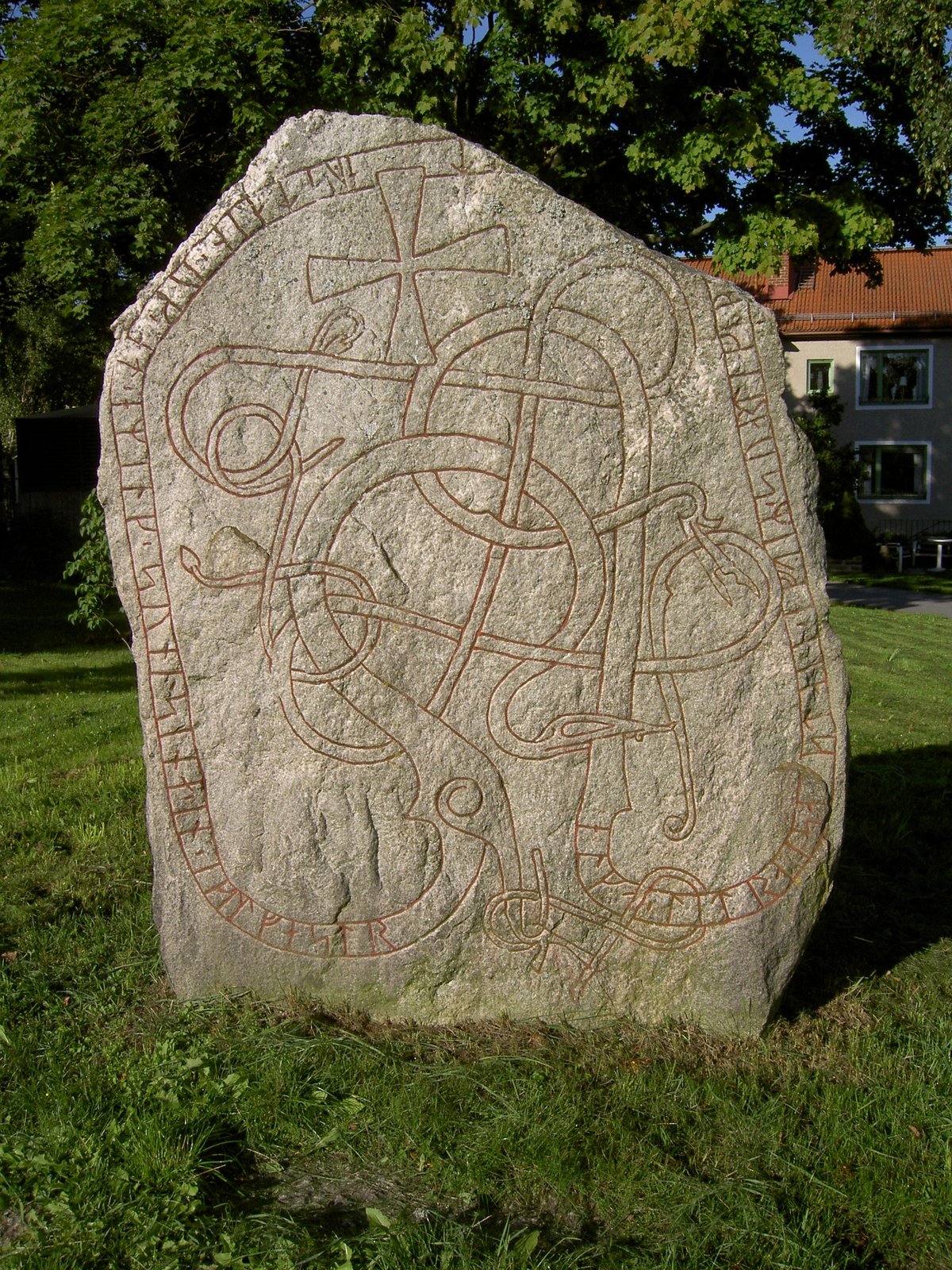

Skyward and sturdy, the Uppland Runic Inscription Fv1953;263 dominates the entrance to the Kummeby church with its lofty 1.8-metre granite frame. Carved in Urnes style in the 10th century, its inscription weaves a tale of family and honour. Proudly raised by Helga, the runestone memorialises her husband Svertingr and their sons Eysteinn and Hemingr. The masterful runic artist, Ígulfastr, left his mark on the stone, joining A- and L-runes in the names of both men and women, a signature touch often found in his work.
However, it ought to be noted that the incorrect citing of the runestone as carved by Ígulfast can lead to confusion about the runemaster who created it. In fact, Ígulfastr was the one who crafted the stone. The runestone, made of granite and 1.8 meters in height, is classified as having been carved in runestone style Pr5, which is also known as Urnes style. This inscription is unique because it is the only known one signed by Ígulfastr. The inscription states that the stone was raised by Helga in memory of her husband Svertingr and her sons Eysteinn and Hemingr.
Ígulfastr, the runemaster who carved the inscription, is also mentioned in the text. U Fv1953;263 is the only surviving runestone signed by Ígulfastr. The inscription's runic text uses bind runes and has been classified as Pr5, also known as Urnes style. Stylistically, the work of Ígulfastr is similar to that of Öpir. The runic text uses bind runes. The Rundata designation for this Uppland inscription, U Fv1953;263, refers to the year and page number of the issue of Fornvännen in which the runestone was first described.
The runestone is known locally as the Kummelbystenen. Impressively, U Fv1953;263 is the only surviving runestone signed by Ígulfastr. The inscription on the runestone states that it was raised by Helga in memory of her husband Svertingr and her sons Eysteinn and Hemingr. Ígulfastr, the runemaster who carved the inscription, is also mentioned in the text.
Sources: Wikipedia, OpenStreetMap, Wikidata, Wikimedia Commons
Written by Nik Frost
Discuss this with the author and others
No comments yet. Be the first to start the conversation.