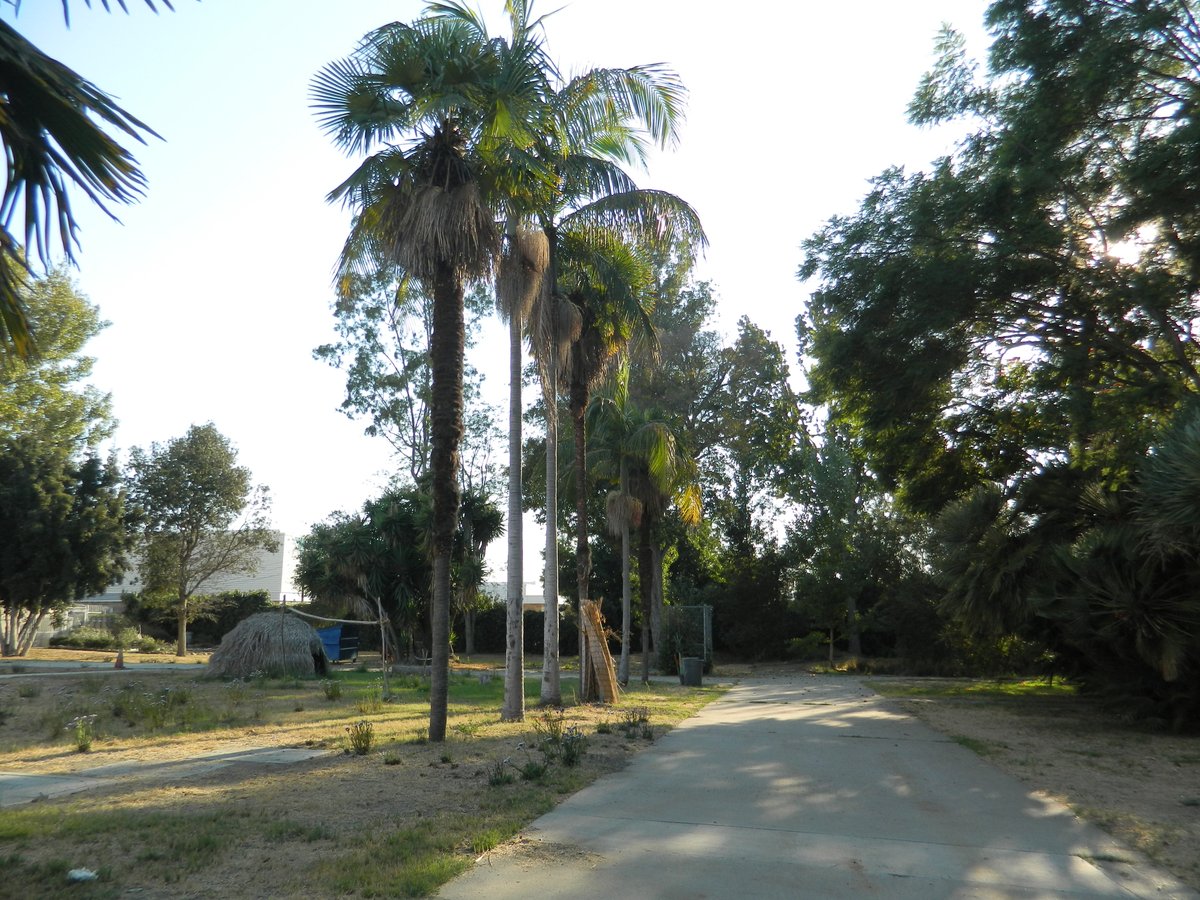

You might think Santa Monica is just a typical beach name, but it actually started as a nickname for these specific springs. Back around the turn of the 19th century, folks called the water The Tears because it looked like a saint weeping for her son. Eventually, the city, the canyon, the mountains, and the freeway all adopted the name from this tiny source of water.
The Gabrielino Tongva people called this place Kuruvungna, which means we are in the sun. They had been living here since at least the 5th century BC and relied on the springs for fresh water. When the Portolá Expedition arrived in 1769, the locals even shared chia and watercress with the group. The site was part of a village, and in 1839, it was included in a rancho, marking the first time it had been owned by anyone other than the indigenous inhabitants.
Construction on University High School in 1925 dug up evidence of that old village. The school decided to keep the springs as a campus feature by building a man-made waterfall near the athletic field. They kept a lower spring open too, so you can still see water bubbling through the sand today.
After the area got pretty rough in the 1980s, the Gabrielino Tongva Springs Foundation stepped in to clear out the trash. They restored the space with native plants like tule reeds. Nowadays, the water still makes its way into the Santa Monica Bay.
Sources: Wikipedia, OpenStreetMap, Wikidata, Wikimedia Commons




Written by Friendly Jane
Discuss this with the author and others
No comments yet. Be the first to start the conversation.