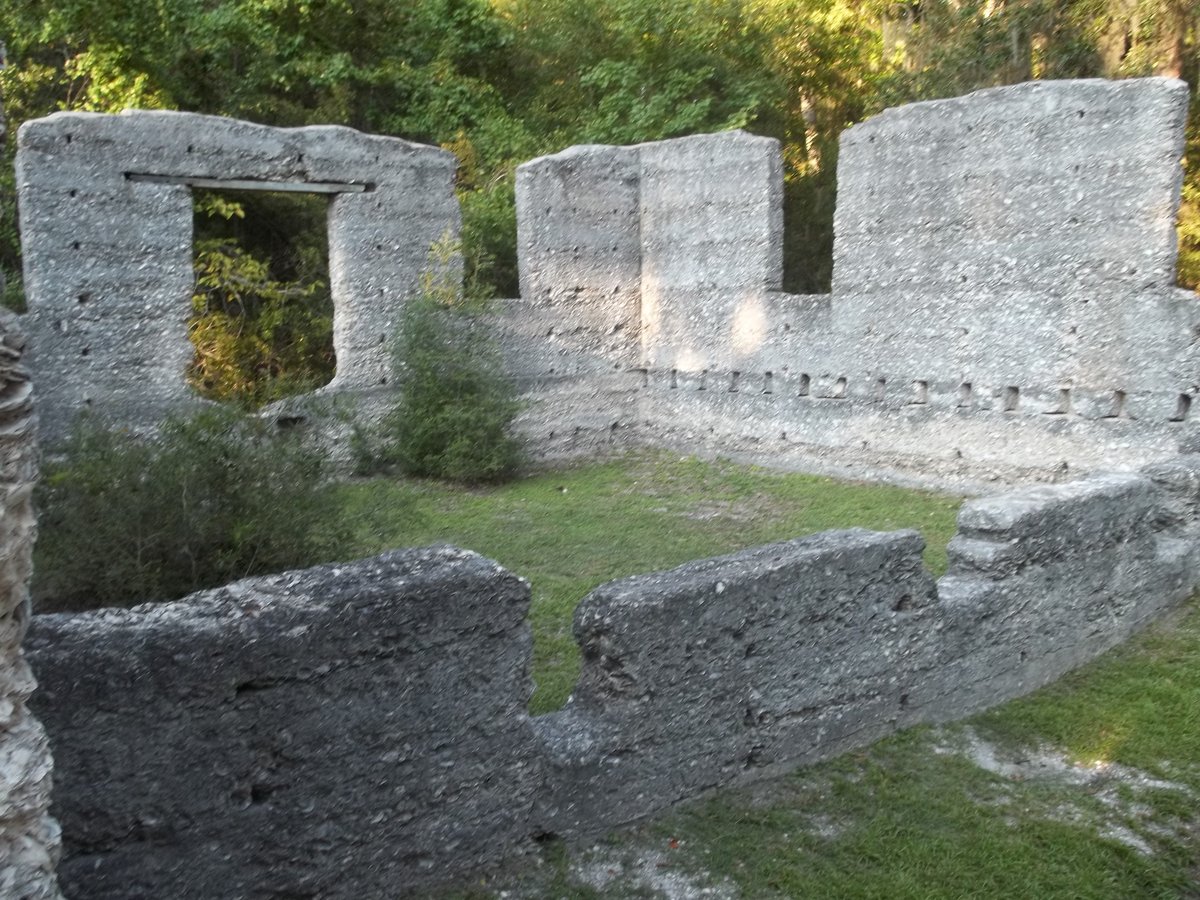

Head northwards a bit on the highway, and you'll stumble upon a bit of history; specifically, the McIntosh Sugarworks. Established in the late 1820s by John McIntosh, these ruins are like an old-timer, nestled between the modern and the nostalgic. With a whopping 200 years under its belt, the mill sits just a stone's throw from the rat race – offering a peek into the region's past. You can find this piece of time travel at 3600 Charlie Smith Sr Highway, nearby the quaint St Marys, Georgia.
But beware, don't let its current state deceive you. This wasn't just a white elephant; it was a dynamo, driven not by steam but the sweat of field hands and the grinding of hammer-mills and stones. The entire processing chain occurred under one roof, stretching from one end to the other: milling, boiling, and converting juice into sugar. It's all still there for you to witness. Thomas Spalding offered his mill design to McIntosh before 1825, and John Hamilton Couper believed that the mill was already churning out the sweet stuff by 1829.
Now, it's time to debunk a common myth – these 'tabby ruins' have never been associated with an old Spanish mission. It all began back in the War of 1812, when John Houstoun McIntosh settled in Camden County, Georgia. After his passing in 1836, his plantation, New Canaan, was sold to Caroline Hallowes in 1840. Hallowes renamed it Bollingbrook, and it remained in the family's hands until after the Civil War. During the war, the tenacious Colonel Hallowes began cultivating sugar cane and continued the mill's tradition of producing arrowroot starch in large quantities.
Sources: Wikipedia, OpenStreetMap, Wikidata, Wikimedia Commons
Written by Friendly Jane
Discuss this with the author and others
No comments yet. Be the first to start the conversation.