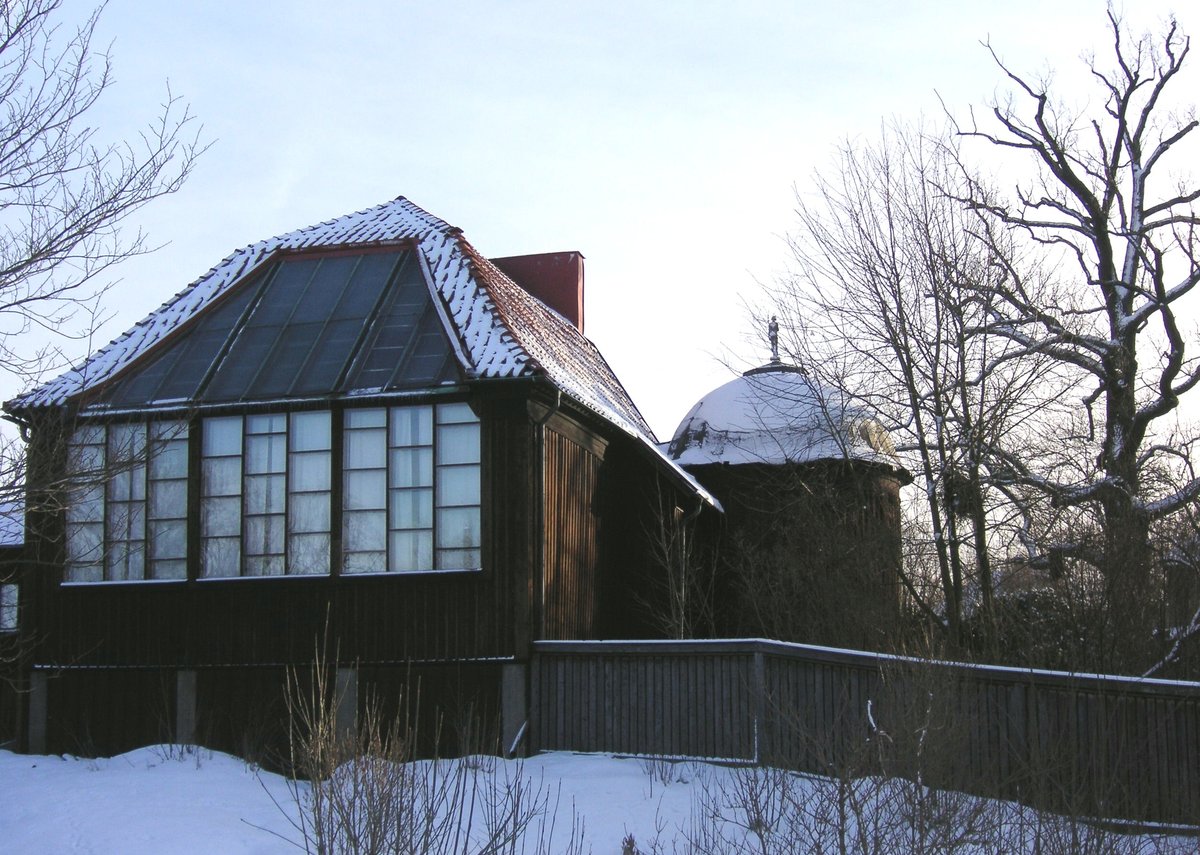

Carl Eldh moved into this studio in 1918, designed by him and architect Ragnar Östqvist. It was not intended to be a permanent home, but a place to work. Eldh lived an itinerant life for the first 15 years after returning from Paris, but he found a home here. The studio faces a lake and has large windows on the northern wall, for the light needed for sculpture. The museum, preserved as it was in 1963, includes the original furniture, tools, and personal belongings of Eldh and his family.
The interior of the studio remains largely as it was when Eldh was working there. The window above his desk still looks out onto the lake, as he would have seen it every day. Here, Eldh's work ranges from studies in plaster, to gypsum casts, to pieces in stone and bronze. His wife Elise, who wrote poetry and songs, accompanied the sculptures. Eldh's daughter Brita, who lived in the museum for many years after her father's death, provides context and historical background for the works.
Sources: Wikipedia, OpenStreetMap, Wikidata, Wikimedia Commons
Written by Nik Frost
Discuss this with the author and others
No comments yet. Be the first to start the conversation.