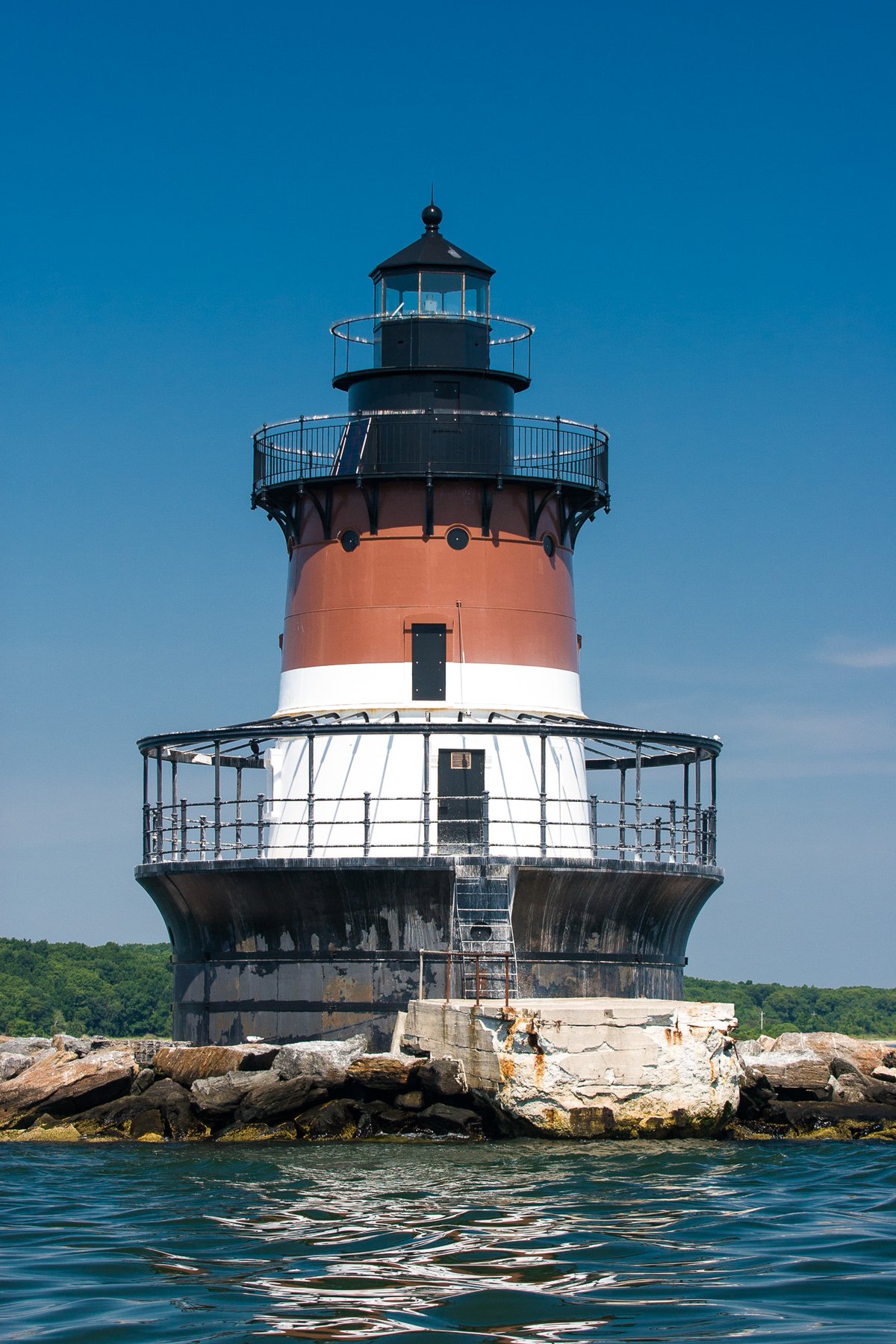

Construction began on the Plum Beach Lighthouse in 1896 using pneumatic caisson engineering. Workers discovered a seven-foot layer of quicksand during the process, which forced the foundation to be heightened at an extra cost. The lighthouse was finished in June 1899 and first lit on July 1, 1899. However, the completion of the Jamestown Bridge in 1940 made the light obsolete, and it was officially extinguished by the Coast Guard in May 1941.
For decades, the structure was abandoned, becoming a home for pigeons. During this period, the building's doors and windows disappeared, and thick layers of guano made the interior unsafe for humans. In the 1970s, researchers even studied the pigeons' natural population control. The lighthouse remained in a state of disrepair until 1999, when the Friends of Plum Beach Lighthouse received ownership of the structure from the State of Rhode Island after a long legal dispute over maintenance costs.
In 2003, the lighthouse underwent a complete exterior restoration and its beacon was re-activated, becoming a licensed Coast Guard Private Aid to Navigation. The lighthouse is now listed on the National Register of Historic Places. To fund its maintenance, the Friends group introduced an official license plate in 2010, which has sold over 7000 sets to Rhode Island residents.
Sources: Wikipedia, OpenStreetMap, Wikidata, Wikimedia Commons
Written by Friendly Jane
Discuss this with the author and others
No comments yet. Be the first to start the conversation.