Büyükada - Maden Neighborhood, Füsun Street No:30, 34970 Adalar/Istanbul, Turkey
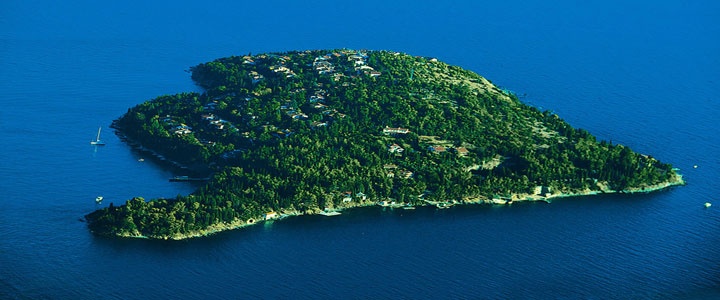
The outermost of the Princes' Islands, Sedef Island (Mother-of-Pearl Island), Terevintos or Terevinf, is located east of Büyükada Island (Prinkipo). Originally, the island was called Terebint (Anderovitos) due to the turpentine trees of the pistachio genus growing there, which is why Russian travelers called this island the Pistachio Island. A beautiful Turkish legend says that these trees were brought to the island by the son-in-law of Sultan Abdülmecid, but in reality, this work was done by ancient Greek settlers. Currently, the island is privately owned and can be admired from the shore of Prinkipo, as the island is only about 250-300 meters away. Historians refer to this patch of land as the Island of the Two Patriarchs.
Having stayed in the monasteries for 33 years, on July 4, 847, the holy Empress Theodora elevated him to the throne of the Patriarch of Constantinople as a steadfast fighter against iconoclasm. Holding conservative views, Ignatius gained popularity among the people but incurred the displeasure of the higher clergy. In 856, he entered into open conflict with Bardas, the regent of the young Emperor Michael III, openly condemning his sins and excommunicating him from communion. The patriarch urged Bardas to abandon his sinful life and boldly denounced his lawlessness. By Bardas's order, the saint was tortured for 15 days, forced to renounce his office, but to no avail. When in 857 Bardas wanted to force the saint to tonsure Empress Theodora, the emperor's mother, as a nun to remove her from state affairs, the holy patriarch
Ignatius not only refused this but even excommunicated Bardas publicly. Not daring to depose the patriarch directly, Bardas blamed the saint for a minor rebellion and, convincing the emperor of the truth of the accusation, exiled Ignatius to the island of Terevinf, one of the Princes' Islands. Empress Theodora was then confined by her son Michael III to a monastery on Neandros, the smallest of the Princes' Islands. A secular official, Photius, a undoubtedly bright and outstanding man, but who came to power swiftly and in violation of all the rules for appointing a patriarch, was placed on the patriarchal throne. The deposed Patriarch Ignatius, from exile, appealed to the Pope of Rome for help, which marked the beginning of the "Photian Schism." Here, the disgraced patriarch engaged in vigorous activity and began restoring monasteries and chapels damaged by Rus' raids in 860. In 867, after the assassination of Emperor Michael III and the rise to power of Basil the Macedonian, Ignatius was recalled from exile and reinstated as patriarch, a position he held until his death in 877.
The second patriarch on the island, but a secular one, was the already familiar Constantine, son of Romanos Lekapenos. He was transferred here in 945 and later sent to Thrace, where he was executed after an attempted escape.
In 1042, Empress Zoe was exiled to Prinkipo. The monastery on Prinkipo also held in captivity Anna Dalassina, Irene Doukaina, and Maria of Alania.
Interesting information about the imprisonment of Maria of Alania is provided by a letter from Archbishop Theophylact of Ohrid, whom the disgraced empress once patronized but whom he did not visit while sailing past on a ship. He writes: "Let your majesty know that I repeatedly and for a long time urged the sailors to turn the rudder and direct the sails to the islet of Prinkipo, where your majesty happily resides. But my stern shouts did not reach them, I think, because their ears were blocked by the even sterner howl of the north wind." This situation is quite curious in that the archbishop feels compelled to justify why he did not visit the empress in exile, i.e., he not only could but also should have visited her,
and what prevented him was not fear of punishment from the formidable emperor but the "stern north wind." Overall, he does not hesitate to write that the empress "happily resides" on one of the islands. It is obvious that the conditions of the royal person's detention on the island were not so harsh and quite corresponded to her status.

