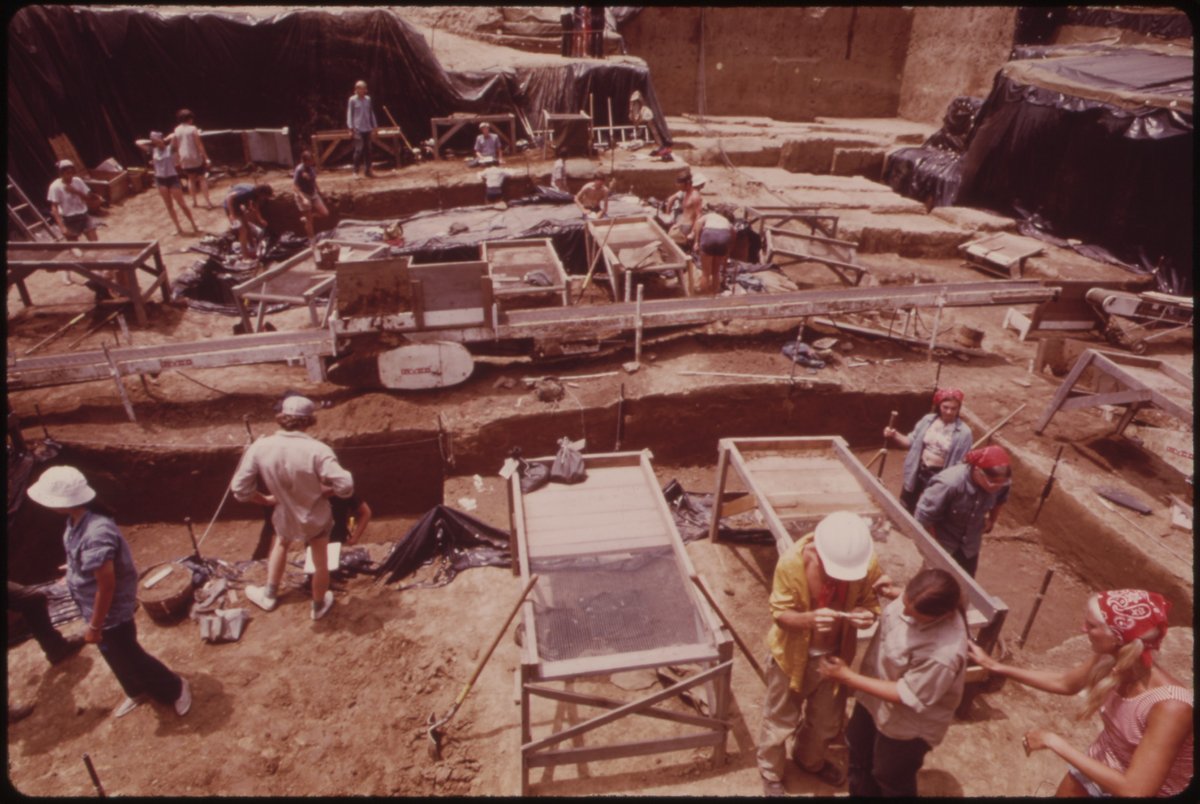

The Koster Site, a historical hillock just south of Eldred, Illinois, encompasses over 3 action-packed acres and delves 30 feet deep into the alluvial deposits of the Illinois River valley. During its unearthing from 1969 to 1978, this site provided evidence of ancient human settlements from the early Archaic period (BC 7500) to the Mississippian period (AD 1000).
This site is home to one of the oldest known cemetery sites in eastern North America and offers researchers clues that the Early Archaic civilizations followed specific burial rituals, laying their dead to rest in mounds, even in spirit squads.
Apart from revealing evidence of early North Americans using stones to chow down their grub and keeping man's best buddy, domesticated dogs, the site also flaunts three 9,900-year-old pooch burials – the oldest dog remains ever discovered in the Americas.
The discovery of permanent digs and stone-cold artifacts at the site implies it was a lively, all-day village. Excavations at the site also unearthed a mixed bag of stone tools, giving us a sneak peek into their diverse functions and hinting at the site's long-term residency.
This archaeological site was unveiled on the farm of Theodore and Mary Koster, earning its nickname from Northwestern University anthropologist Stuart Struever, who struck gold under the cornfields following a local farmer's tip. Under Struever's command, the site became one of the largest diggin's of its time, attracting over 10,000 yearly visitors, solidifying it as the prize jewel of the Center for American Archeology's findings.
The site was enshrined in the National Register of Historic Places on June 19, 1972.
Sources: Wikipedia, OpenStreetMap, Wikidata, Wikimedia Commons
Written by Friendly Jane
Discuss this with the author and others
No comments yet. Be the first to start the conversation.