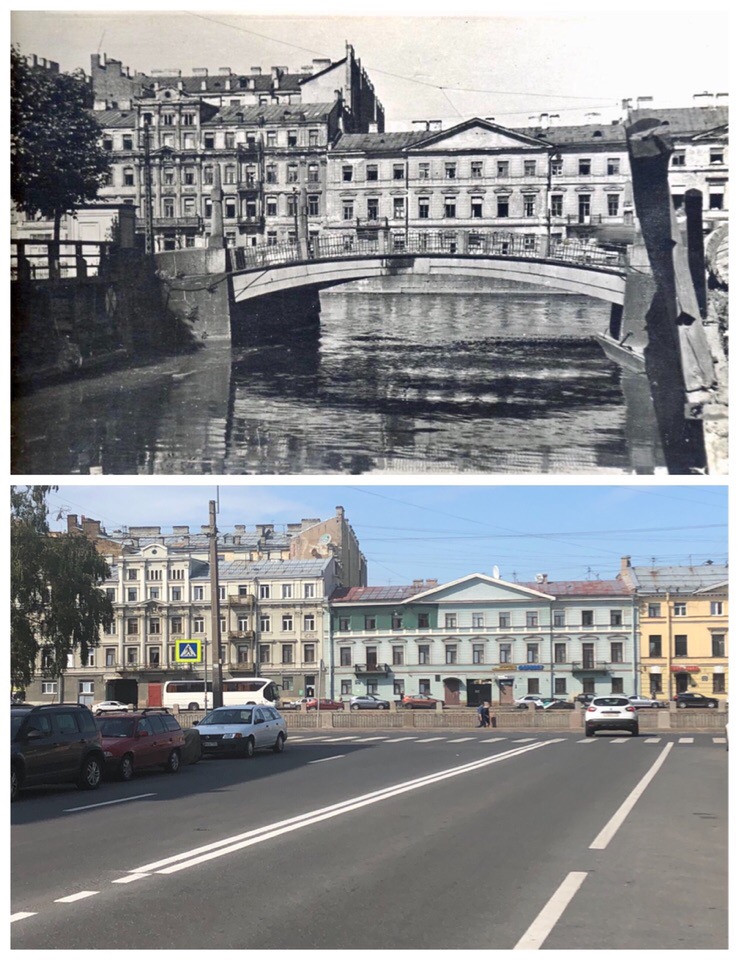
Relatively recently, a canal was located on the site of the street of the same name, which connected the embankments of the Fontanka and Obvodny Canal near the Vitebsky railway station, and over which four bridges were built: the Yegersky Bridge — along the embankment of the Obvodny Canal, the Vvedensky Bridge — at the intersection with Zagorodny Prospect, the heat pipeline bridge — opposite the 3rd HPP, and the Alexandrovsky Bridge — along the Fontanka embankment.
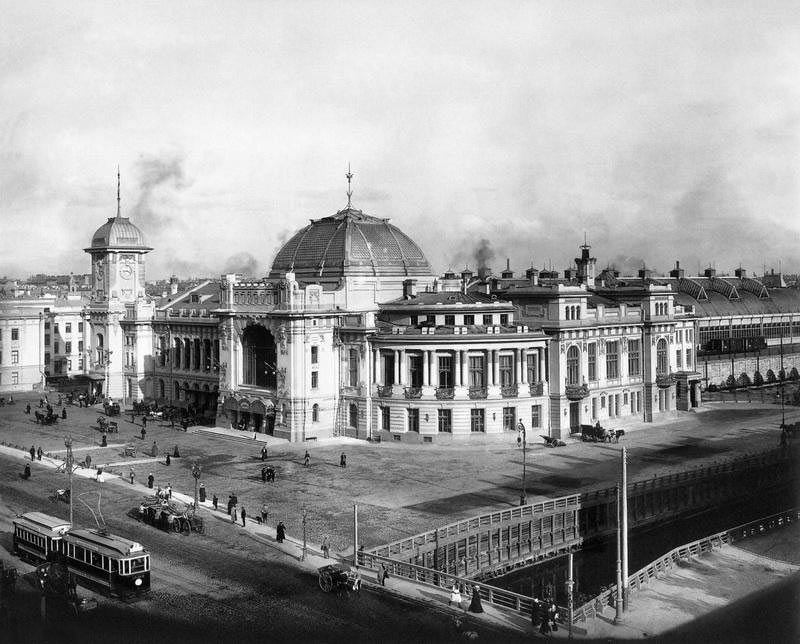
The canal was dug between 1807 and 1810, with the project created by engineer F. I. Gerar. It flowed out of the Obvodny Canal, passing between the former barracks of the Yeger Regiment on the left bank and the Vitebsk railway on the right, then crossed Zagorodny Prospect near the Vitebsky railway station and flowed into the Fontanka near the Obukhovsky Bridge.
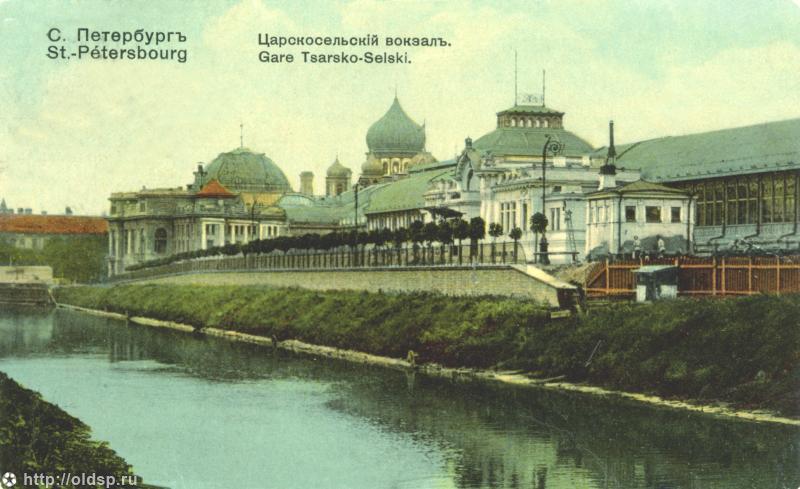
By the late 1830s, this part of the city changed, and the Tsarskoye Selo Railway was located along the Vvedensky Canal.
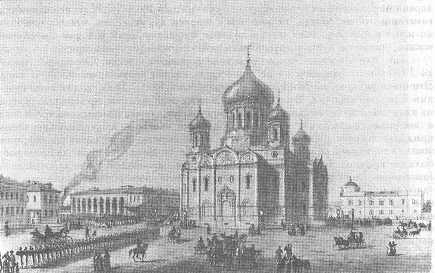
In 1837, the Church of the Entry into the Temple of the Most Holy Theotokos was founded according to a design by Ton. This was the church of the oldest regiment in the Russian army, the famed Life-Guards Semenovsky Regiment, founded by Peter the Great in 1683.
This canal was mainly used for navigation, water intake, and later as a sewage collector. In the first half of the 19th century, the canal was also called the New or Semenovsky Canal. In 1836, the name Vvedensky Canal Embankment appeared. The canal got its name thanks to the nearby Vvedensky Cathedral of the Life-Guards Semenovsky Regiment. In the 1930s, the cathedral was demolished, and in its place is now a square of the same name between Zagorodny Prospect and Lazaretny Lane, opposite the Vitebsky railway station.
In 1935, the canal’s name was changed to Vitebsky, after the Vitebsky railway station, and accordingly, the embankment’s name was also changed.
Earlier, in 1978, on the city plan, the section from Zagorodny Prospect, not reaching the Obvodny Canal, was marked as 7th Street, in accordance with the sometimes used numbering of passages in the Semenovsky Regiment settlement.
Between 1965 and 1971, the Vvedensky Canal was completely filled in, the bridges over it dismantled, and a street was laid along the former canal route, which was named Vitebsky Canal Street.
Since December 29, 1980, it was renamed to Vvedensky Canal, with the variant Vvedensky Canal Street.
Sources:
https://vecherka.spb.ru/?p=22527