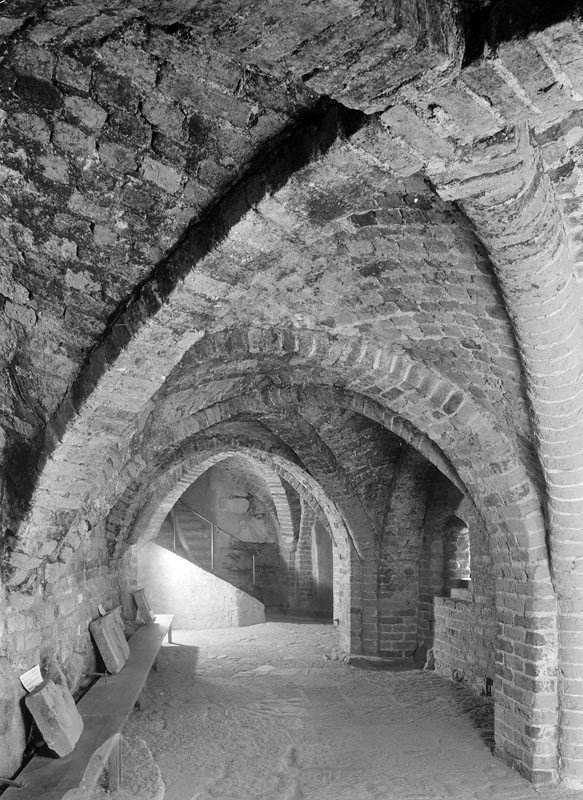

The Black Friars' Monastery, also known as the Convent of Stockholm, was a Dominican monastery located on the island of Stadsholmen in central Stockholm. Founded by King Magnus IV in 1337, the monastery was built on a plot of land donated by the king. The monastery played a significant role in the city's political landscape during the 14th and 15th centuries, hosting important events. It was here that Charles Knutsson (the future King Charles II) was appointed Rikshövitsman (Kingdom Captain) during the Engelbrekt rebellion of 1436, and Sten Sture the Elder took office as Riksföreståndare (Regent) in 1501.
However, the monastery was destroyed by King Gustav Vasa in 1528, but the building material was reused for the reconstruction of Three Crowns Castle. Today, some of the vaults are preserved and can be visited. Svartmangatan, the street which once led to the monastery, still bears remnants of the monastery's era. The Black Friars, or Dominicans, were a mendicant order founded by Saint Dominic in 1216, and the quest for a suitable location in Stockholm began in the early 1200s, but was initially denied by the king's vogt at Three Crowns Castle.
In 1289, the friars bought a house at the southern bridge where they lived during their trips to Stockholm. It was not until 1337 that King Magnus IV donated a plot of land for the construction of the monastery. Pope Clement VI issued a permit for the monastery in 1343. The monastery was rebuilt after being destroyed by a fire in 1407 and plays a significant role in the city. It is assumed that the monastery basement during the late Middle Ages was leased to a wine merchant.
Sources: Wikipedia, OpenStreetMap, Wikidata, Wikimedia Commons
Written by Nik Frost
Discuss this with the author and others
No comments yet. Be the first to start the conversation.