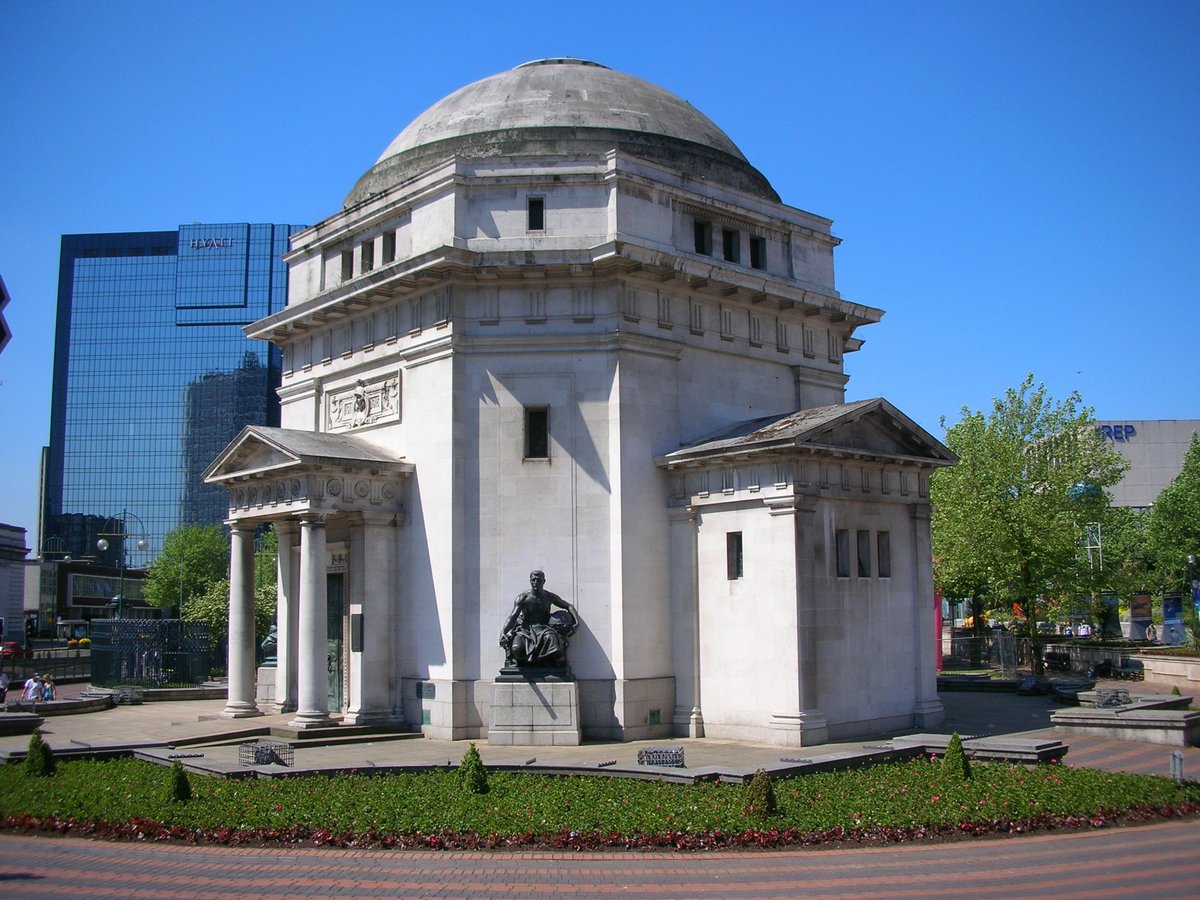
The Hall of Memory in Birmingham, England, stands as a memorial to the 12,320 Birmingham citizens who lost their lives during World War I. The structure was built between 1922 and 1925, designed by W. N. Twist and S. N. Cooke. However, the grand civic scheme that included new council offices, a mayor's residence, a public library, and a concert hall was never completed due to the outbreak of World War II. The Hall of Memory was carved from Portland Stone, a prized building material.
It was opened to the public on 4 July 1925 to a crowd of 30,000. Despite its status as a war memorial, the Hall of Memory's significance extends beyond its war memorial status. Known films that used the Hall of Memory as a backdrop include The Green Goddess in 1930 and A Yank in the RAF in 1941.
These productions added to the Hall of Memory's fame and brought it to the attention of a wider audience. However, the Hall of Memory's time in the spotlight was short-lived. As new films and locations began to emerge, the Hall of Memory was eventually forgotten, with its Hollywood connections all but forgotten. Today, the Hall of Memory stands as a testament to the past, a memorial to those who served and sacrificed, and a reminder of Birmingham's rich history.
Sources: Wikipedia, OpenStreetMap, Wikidata, Wikimedia Commons
Written by Nicolo Ciampini
Discuss this with the author and others
No comments yet. Be the first to start the conversation.