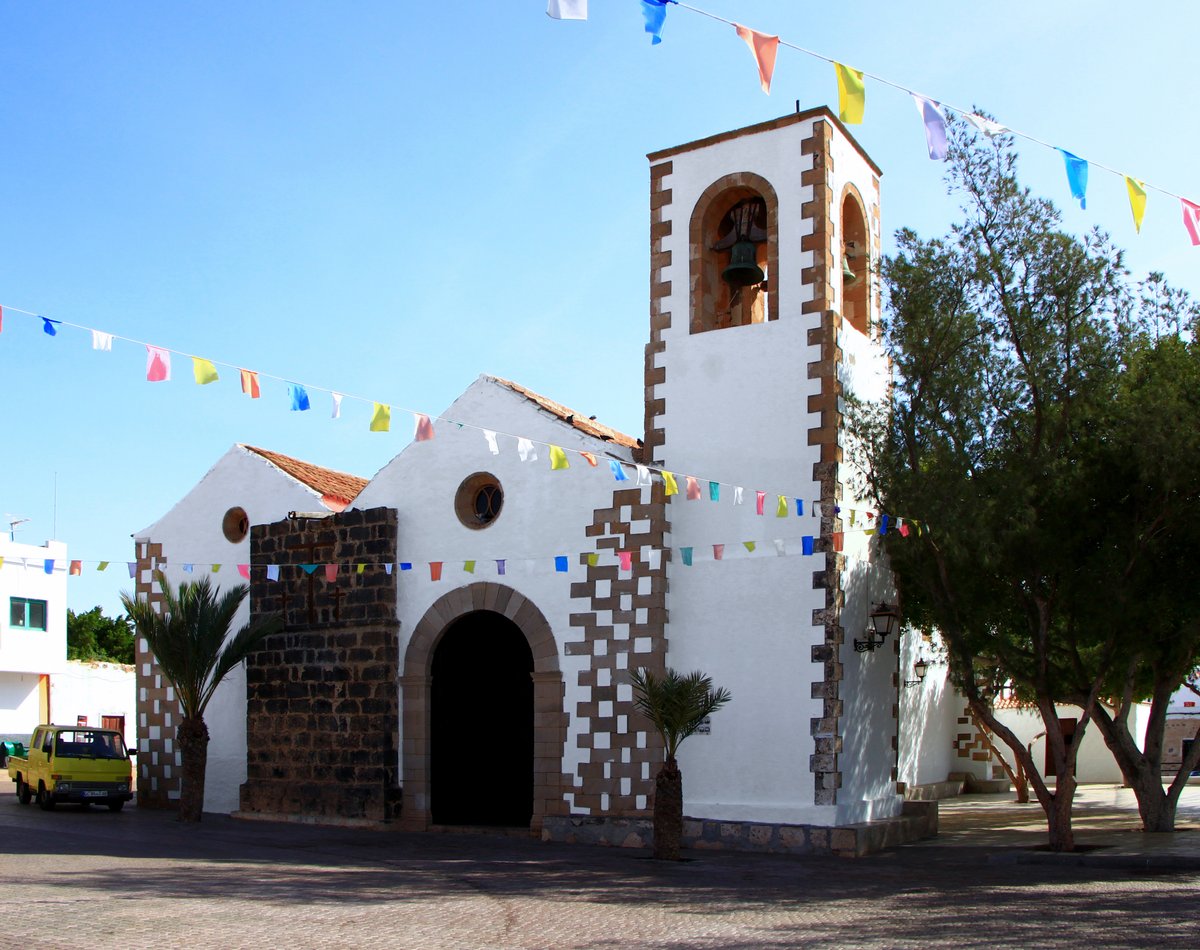

In the heart of the tranquil village of Tuineje, upon the enchanting isle of Fuerteventura, Spain, resided a humble hermitage dedicated to the awe-inspiring Archangel- San Miguel Arcángel's Church. The sanctuary, cradled by an air of sanctity, was no different from other hermitages during that antique era. As the 18th century unfolded, four altars, each hailing to the Archangel, were constructed within its sacred confines. The initial bricks for this hermitage were laid on a moonlit September evening in 1695, with the first mass echoing harmoniously within its unassuming walls in the March of 1702.
This one-naved church heralded a cautious beginning, a delicate seed for spiritual growth. As the village of Tuineje flourished, so did the church, mirroring the community's ascension. The Grand Chapel, first planned in 1764 and finally commissioned in the year 1782, was overseen by Juan Cabrera de la Rosa. It was under his graceful leadership that Tuineje broke free as an independent Benefice, as bestowed by Bishop D. Antonio Martínez Plaza on the 22nd day of December in 1787. The erection of the Grand Chapel necessitated the demolition of the old church, providing space for restful burials.
A new nave was constructed to accommodate the needs of the expanded Benefice. The skilled hands of Juan Joseph and Diego Rosas shaped its sturdy walls, while the enchanting carvings at the corners were the work of José de Zerpa. The divine door, a masterpiece of intricate designs, was dreamt up by the gifted Juan Bautista Bolaños. The pillars, each topped with a graceful arch, were the prestigious work of the talented father-son duo Francisco Martín and Diego Martín. However, the dark canteria was used for the tower, and the Chapel Major of the old temple was sacrificed in preparation for the embrace of eternal life.
Sources: Wikipedia, OpenStreetMap, Wikidata, Wikimedia Commons
Written by Mutabor
Discuss this with the author and others
No comments yet. Be the first to start the conversation.