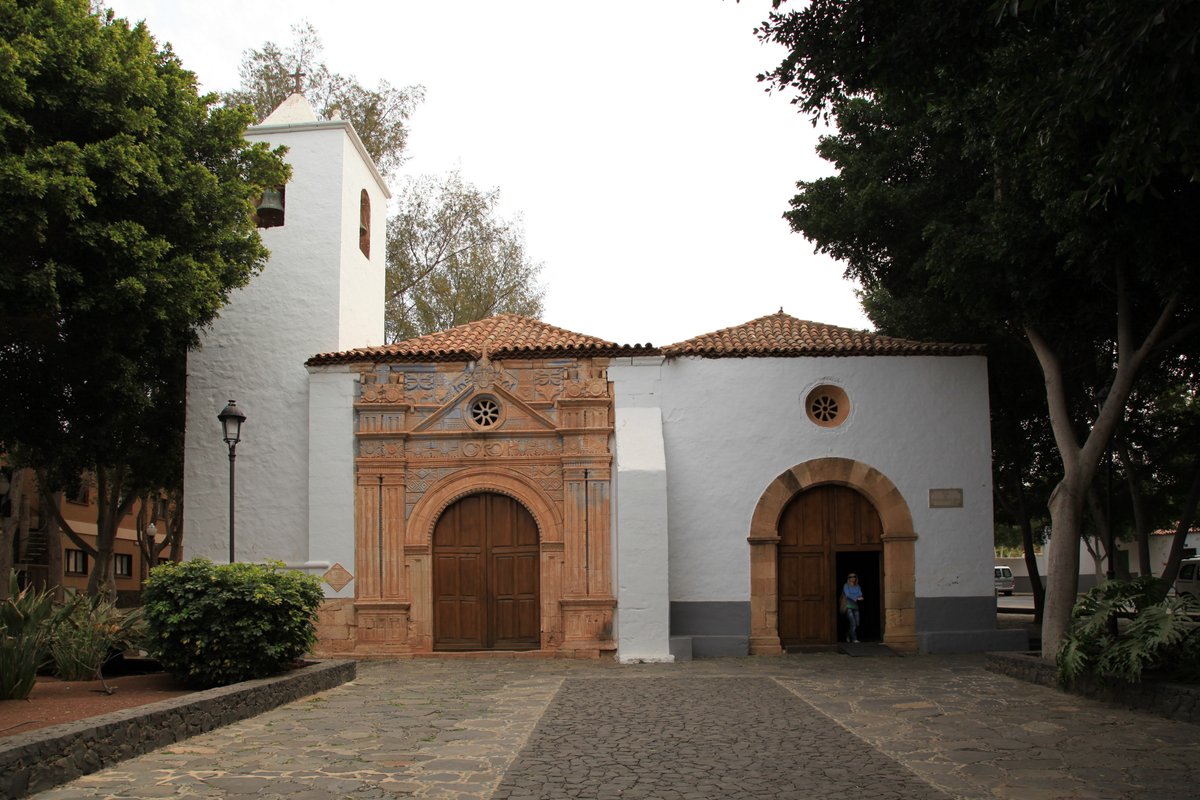

Nestled within the verdant heart of Pájara, Fuerteventura, Spain, blooms a masterpiece of architectural whimsy -- the Iglesia de Nuestra Señora de Regla. Time has enfolded this chapel within its embrace, lending it an air of mystery and nostalgia, as though it were a story lost within the annals of history. The façade, a riot of decorative motifs, speaks of the rich cultural tapestry of the Emerald Land, woven through centuries of heritage. Upon its birth in the year 1687, it donned a unique melody of Mudejar and Baroque styles.
A humble archway, a whisper of grandeur yet to come, leads the way to the main chapel, dedicated to the Virgin Mary. The sight that greets one's eyes takes one's breath away, with vaults and arches standing proudly, supported by ornate stone columns. A sign of an age, an ancient relic, possibly augmented, adorns the main chapel, hinting at a time much older than 1687. As the congregation grew, an additional nave was added within the church in the year 1735, a testament to the enduring faith and devotion of its people.
Each nave shares a cloistered sacristy upon the testero wall, their separate identities united by columns of cantering, each finding support through keystone arches above. Mudéjar-inspired wooden roofs sway gently atop a floor adorned with cord and paired stripe decorations. A wooden coro bridges the width of both naves, detectable at the temple's footsteps. The presbiterios within the church are immense and elevated, distinctly separate from their naves by arches and columns, a sacred realm that stands apart from the rest.
Sources: Wikipedia, OpenStreetMap, Wikidata, Wikimedia Commons
Written by Mutabor
Discuss this with the author and others
No comments yet. Be the first to start the conversation.