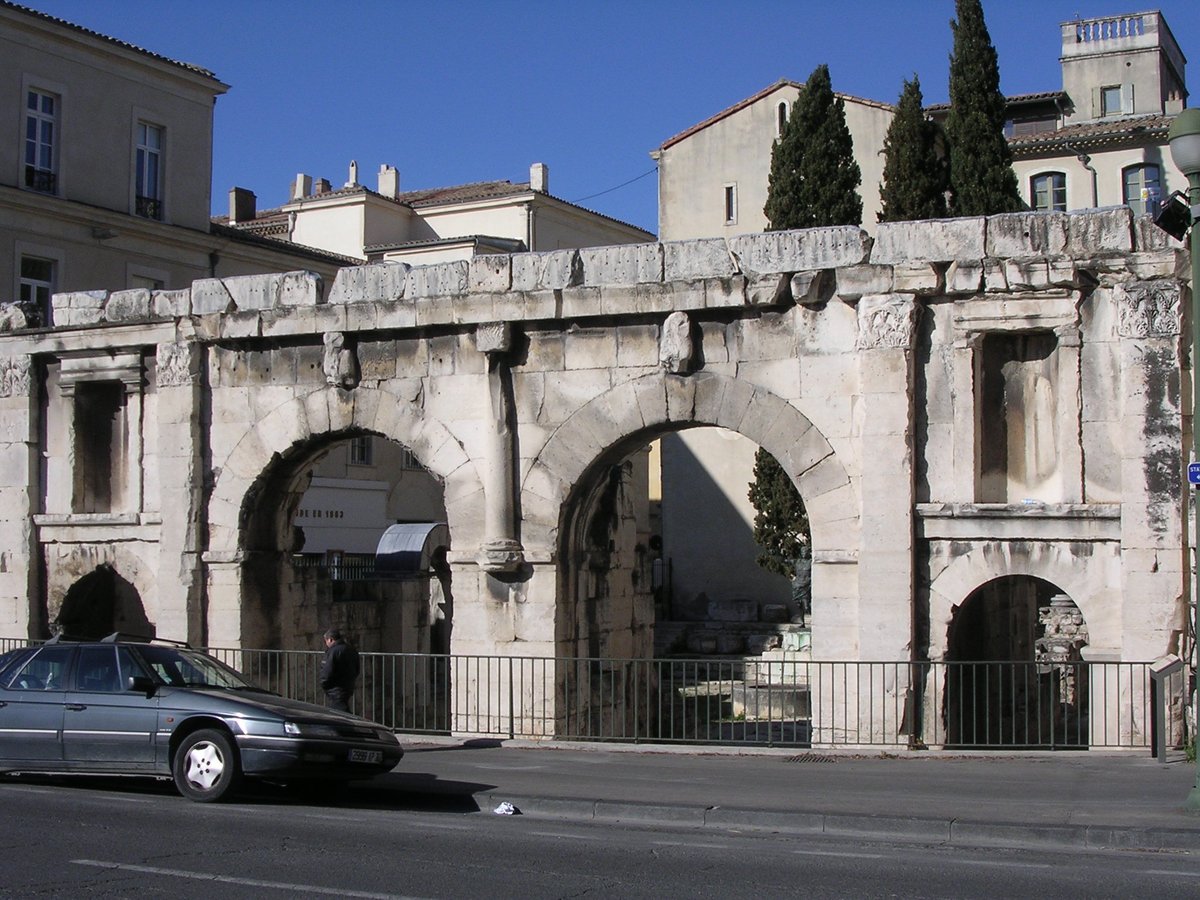

The Porta Augusta in Nîmes, France, stands as a testament to the ingenuity and ambition of the ancient Roman Empire. This city gate, built in the 1st century BC, was part of the long Roman city wall of Nîmes and one of the main points of entry into the city. Originally known as the Porte d'Arles, it was a significant milestone on the Via Domitia, the main Roman road to Spain. The Porta Augusta is listed as a historic monument by the 1840 list. It features four passage arches, two larger ones for vehicles and two smaller ones for pedestrians.
The inscription above the arches reads: 'IMP CAESAR DIVI F AVGVSYTVS COS XY TRIBPOTEST VIII'. This inscription indicates that the emperor Augustus, son of the divine Caesar, consul for the 11th time, exercising the tribune's power for the 8th time, gave the gates to the colony. The year of construction can be deduced from the inscription: 736 of Rome or 16 BC. Today, the Porta Augusta stands as a reminder of a time when Roman power and influence stretched far beyond the Italian peninsula, reaching even into the lands of the Gauls.
Visitors can appreciate the architectural and historical significance of this ancient city gate, a testament to the ingenuity and ambition of the Roman Empire.
Sources: Wikipedia, OpenStreetMap, Wikidata, Wikimedia Commons
Written by Nicolo Ciampini
Discuss this with the author and others
No comments yet. Be the first to start the conversation.