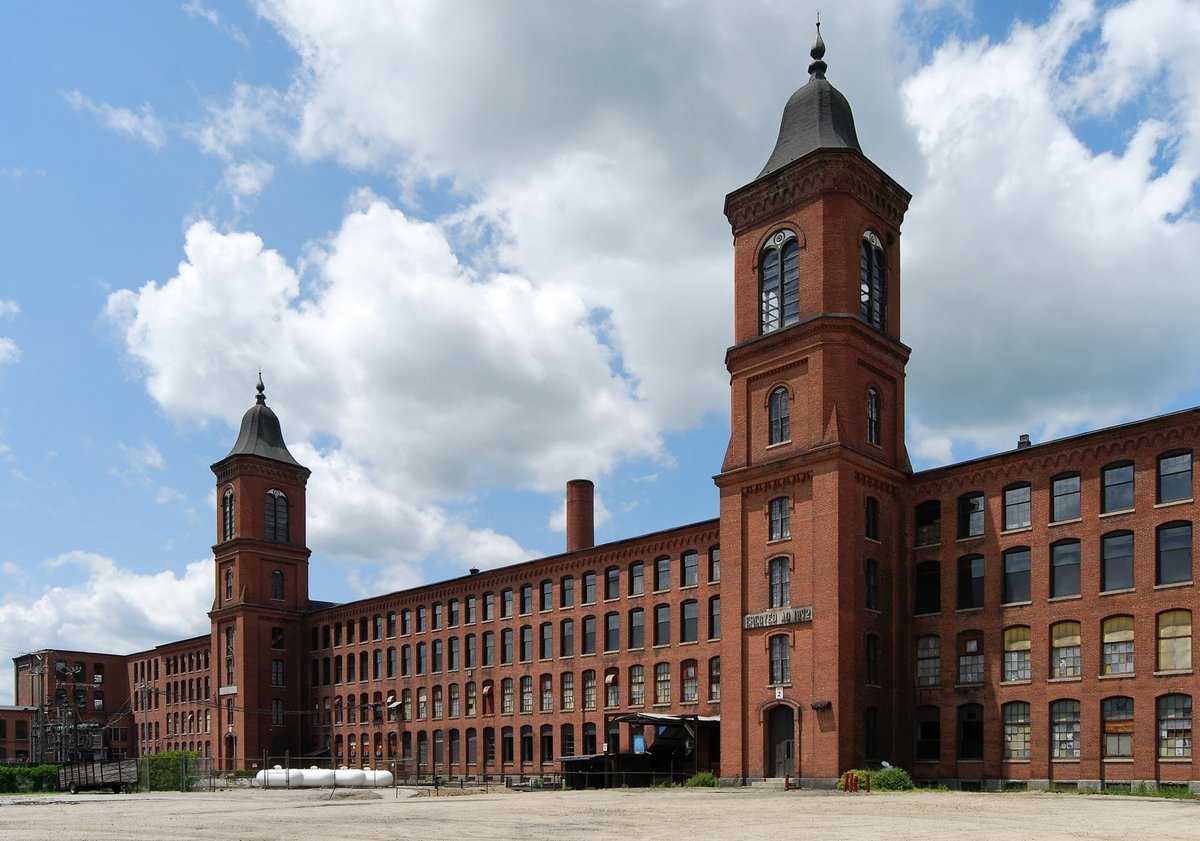
William Grosvenor bought a small textile mill and the associated water privileges in North Grosvenordale. He also purchased a second mill further south, where he built a large new mill in 1868 and called that village Grosvenordale. When he built a large brick mill here in 1872, he renamed this village North Grosvenordale.
This mill produced fine cotton fabrics and was one of the longest-lived and most successful textile businesses in northeastern Connecticut. The mills operated until 1954, and have since been adapted to other industrial uses.
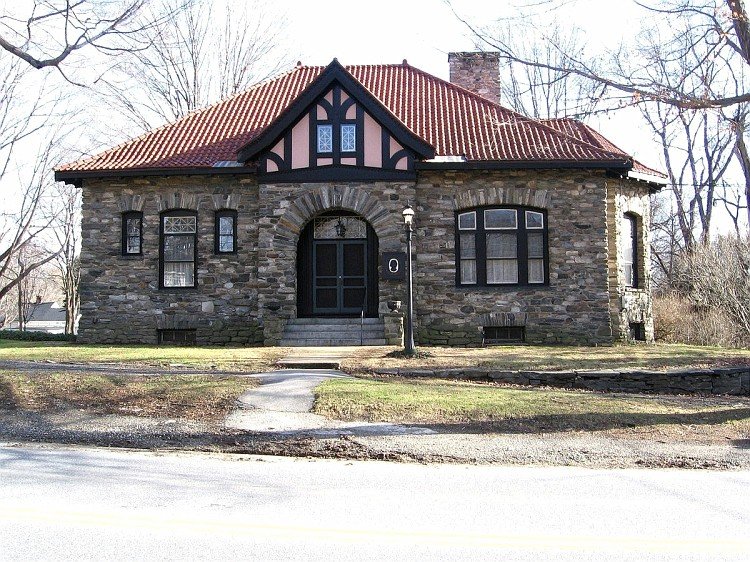
Grosvenor also built significant tracts of worker housing on either side of the river. Most of these are multiple-family buildings with vernacular Greek Revival style. They were occupied in clusters by different groups of immigrant workers, giving rise to neighborhood names such as "Little Canada" and "Swede Village". The company also built some higher-quality single-family houses at the north end of the village, which were probably occupied by skilled specialists and supervisors.
Today the mill and surrounding company-related resources, an area of about 70 acres with more than 100 buildings, are listed on the National Register of Historic Places. The historic area is located on Riverside Drive, Buckley Hill Road, Floral Avenue, Market Lane, and Marshall, Central, River, and Holmes Streets.
Sources: Wikipedia, OpenStreetMap, Wikidata, Wikimedia Commons
Written by Leroy
Discuss this with the author and others
No comments yet. Be the first to start the conversation.