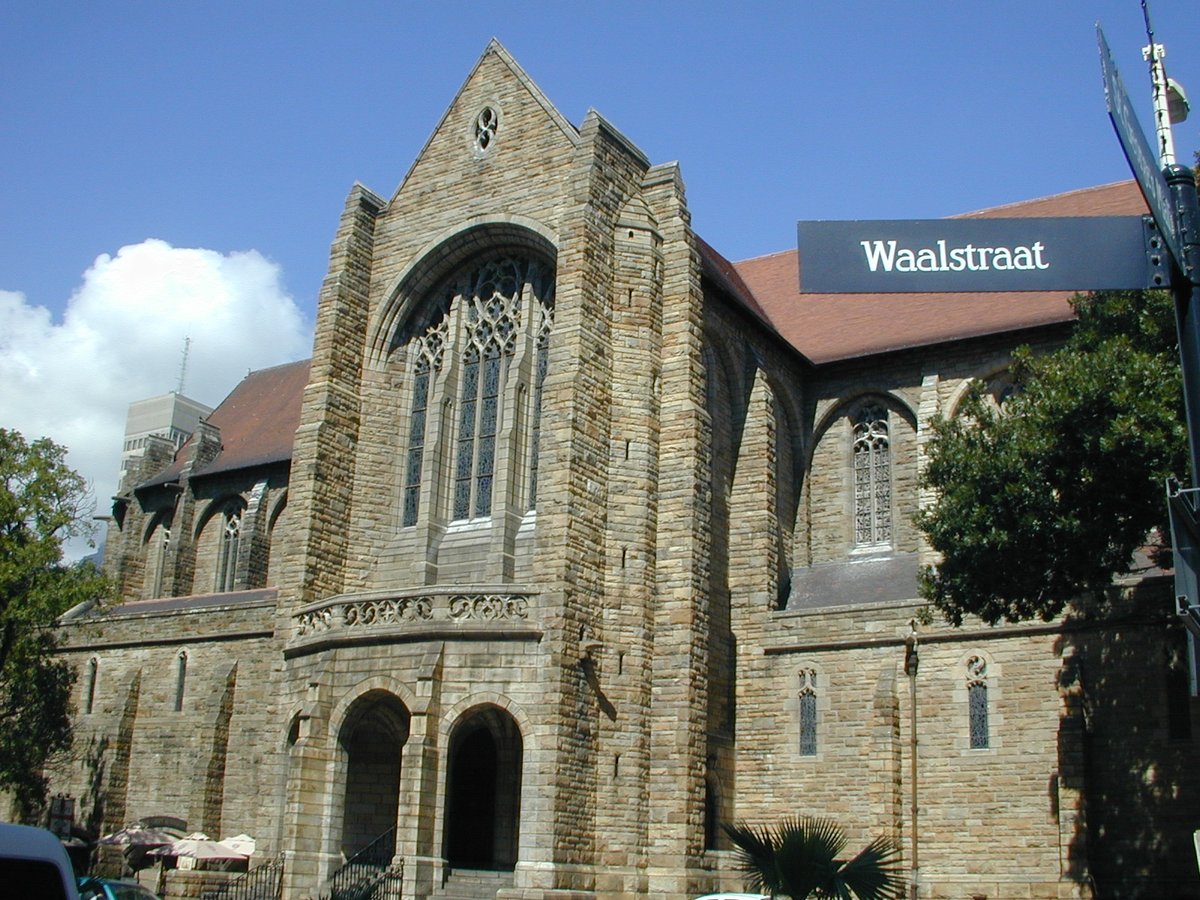

In Cape Town, South Africa, the Cathedral Church of St. George the Martyr, known as St. George's Cathedral, serves as the seat for the Archbishop of Cape Town. Designed by Sir Herbert Baker, the cathedral replaced an incomplete church at the site. While the first stones of the foundation were laid in 1901, the north transept was not completed until 1936, finally making Baker's design a reality.
The colonial government donated the land at the corner of Government Avenue and Wale Street. The foundation stone was laid by Governor Sir Lowry Cole on St. George's Day, April 23, 1830. While the 1834 church was based on drawings by John Skirrow, the current cathedral replaced the original structure. The cathedral is renowned as the "people's cathedral" for its role during apartheid, serving as a meeting point for activists and a symbol for the struggle for social justice and human rights.
The cathedral's tower houses a ring of ten bells. The original eight bells from 1834 were recast in 1963. These bells were named by former archbishop Joost de Blank: Joy, Love, Peace, Faith, Charity, Service, Patience, Sacrifice, Redemption, and Good Hope. The tenor, the largest bell, is named Good Hope and weighs 2,800 pounds, while the smallest, the treble, weighs 594 pounds.
St. George's Cathedral was declared a provincial heritage site by Heritage Western Cape on September 23, 2014. The remains of Archbishop Emeritus Desmond Tutu are interred in front of the high altar. The cathedral's crypt houses a jazz restaurant known as The Crypt.
Sources: Wikipedia, OpenStreetMap, Wikidata, Wikimedia Commons

Written by Mutabor
Discuss this with the author and others
No comments yet. Be the first to start the conversation.