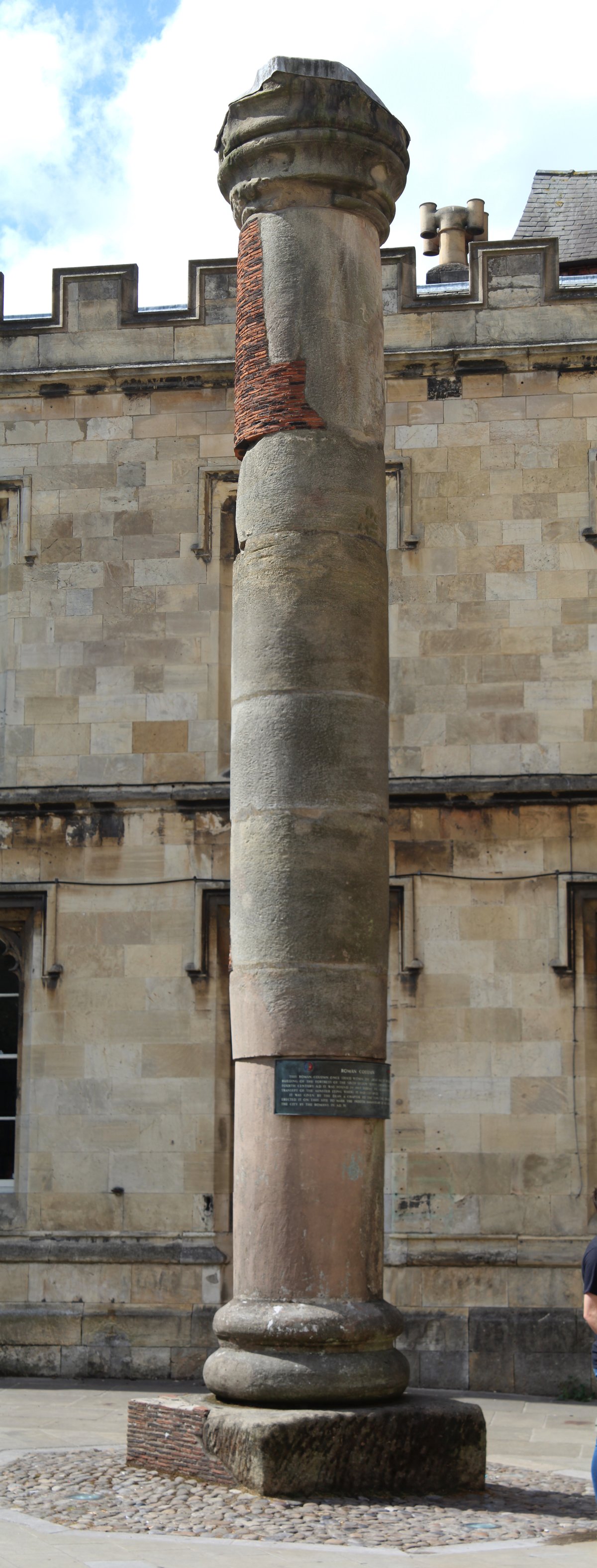
The Roman column, located just south of York Minster, is one of the few remaining examples of Roman architecture in northern England. It was built around AD 71 by the Ninth Legion as part of a military fortress, Eboracum, the Roman name for York. Originally, the column supported part of the basilica’s upper structure. Roman emperors Septimius Severus and Constantius I were present in York; Constantius I died in York in AD 306. But it was his son, Constantine the Great, who was proclaimed emperor at this very spot after Constantius’ death.
Although he was not present, it was here that Constantine's destiny was foretold. Centuries of construction over the Roman fortress led to much of Eboracum being buried. The column was uncovered during archaeological excavations beneath York Minster in the late 1960s. To mark the 1,900th anniversary of York's founding, the column was reassembled and erected in Minster Yard in 1971.
Sources: Wikipedia, OpenStreetMap, Wikidata, Wikimedia Commons
Written by Nicolo Ciampini
Discuss this with the author and others
No comments yet. Be the first to start the conversation.