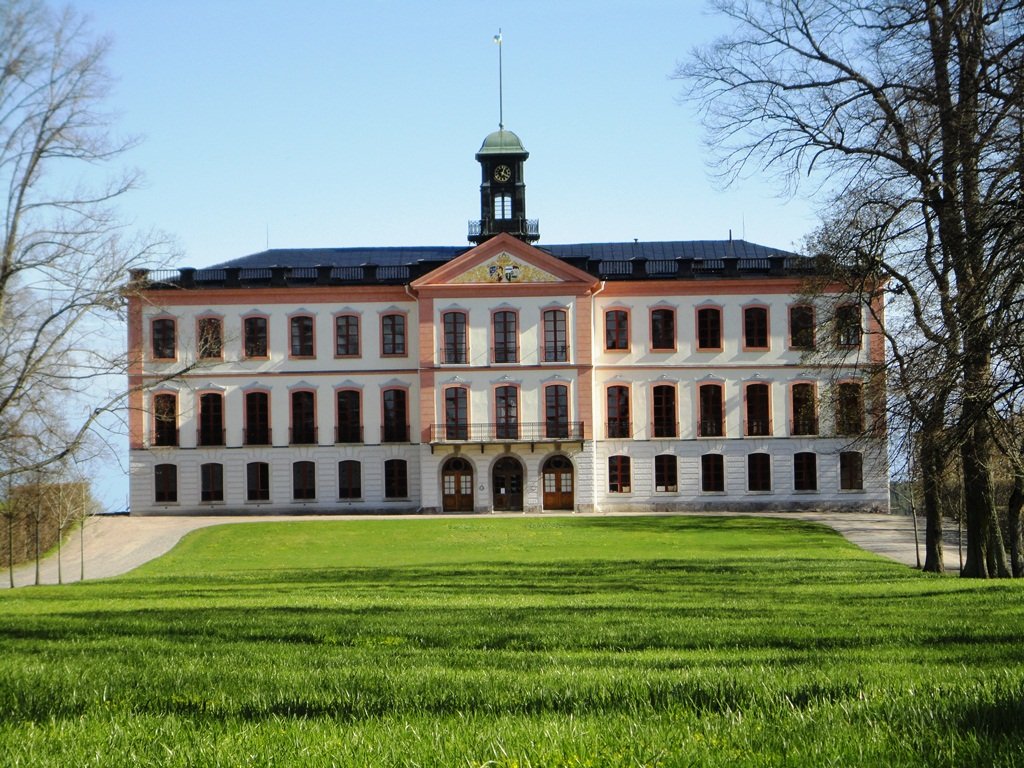

Queen Victoria came from Baden in Southern Germany. During the late 19th century, King Gustaf V and Victoria used Tullgarn Palace as their summer residence and implemented extensive changes. They decorated the main building more like a modern functional summer home than a royal pleasure palace. The breakfast room was furnished in a southern German Bierstube style from the 1890s, possibly reflecting the Queen's origins.
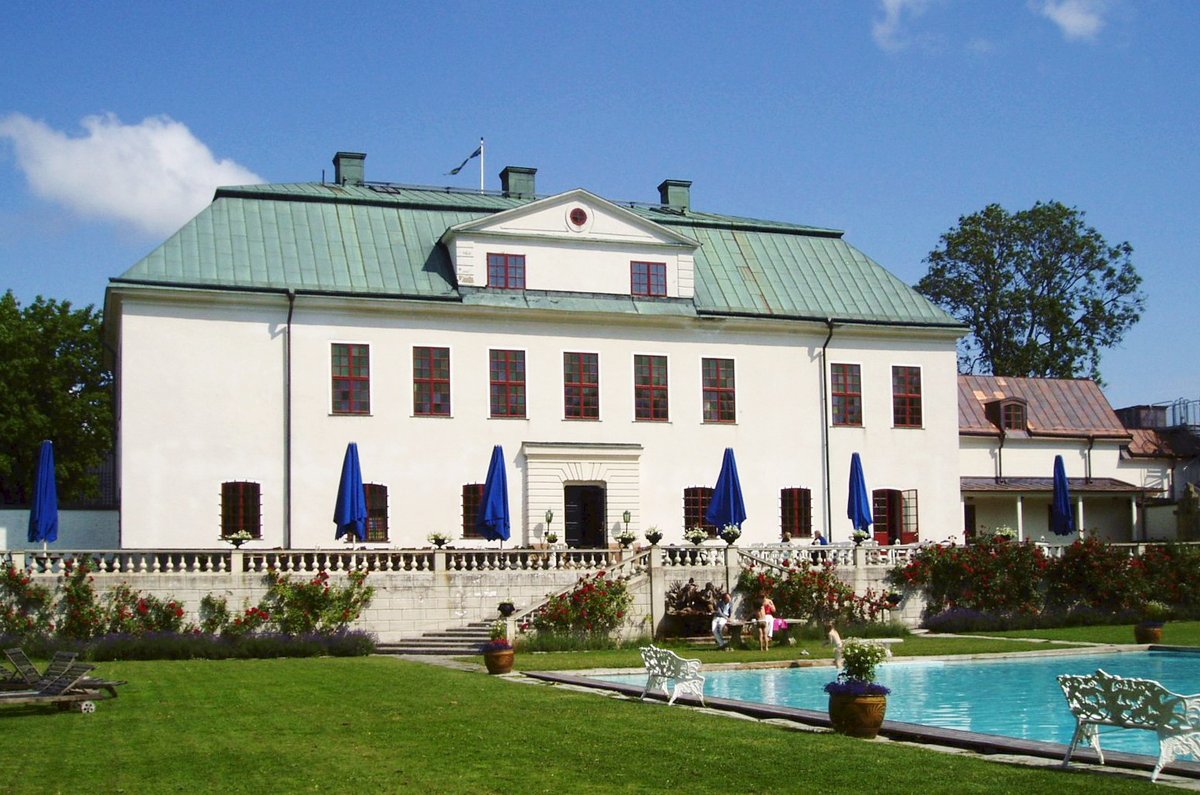
Construction of the palace occurred between 1720 and 1727 for Magnus Julius De la Gardie. The crown assumed ownership in 1772, and the residence first belonged to Duke Fredrik Adolf. During his time here with his lover Sophie Hagman, he modernized the building. He added a new story to the wings and established some of the finest Gustavian interiors in the country.
When King Gustaf V assumed leadership in 1881, he and Victoria updated the vestibule with hand-painted Dutch tiles. They preserved other areas as time capsules, including the cigar room which has remained largely untouched since his death in 1950. The palace houses fine examples of interiors from different epochs, including the small drawing room decorated in the 1790s.
Visitors can see the courtyard which is open to the sea and took on its present appearance in the 1820s. The palace remains a premier destination for those eager to explore the architectural evolution of Sweden, offering a mixture of rococo, Gustavian and Victorian styles.
Sources: Wikipedia, OpenStreetMap, Wikidata, Wikimedia Commons


Written by Nik Frost
Discuss this with the author and others
No comments yet. Be the first to start the conversation.