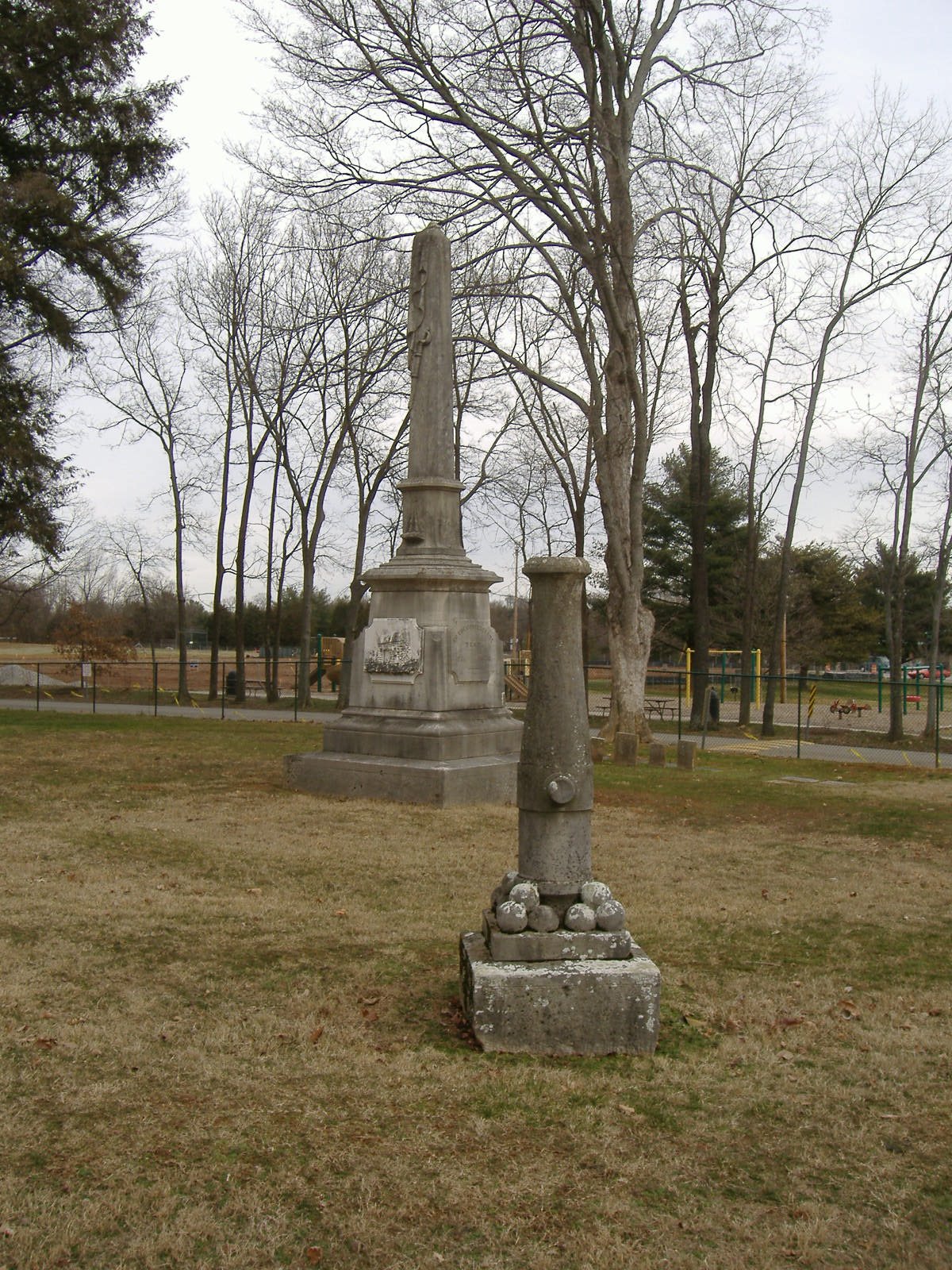

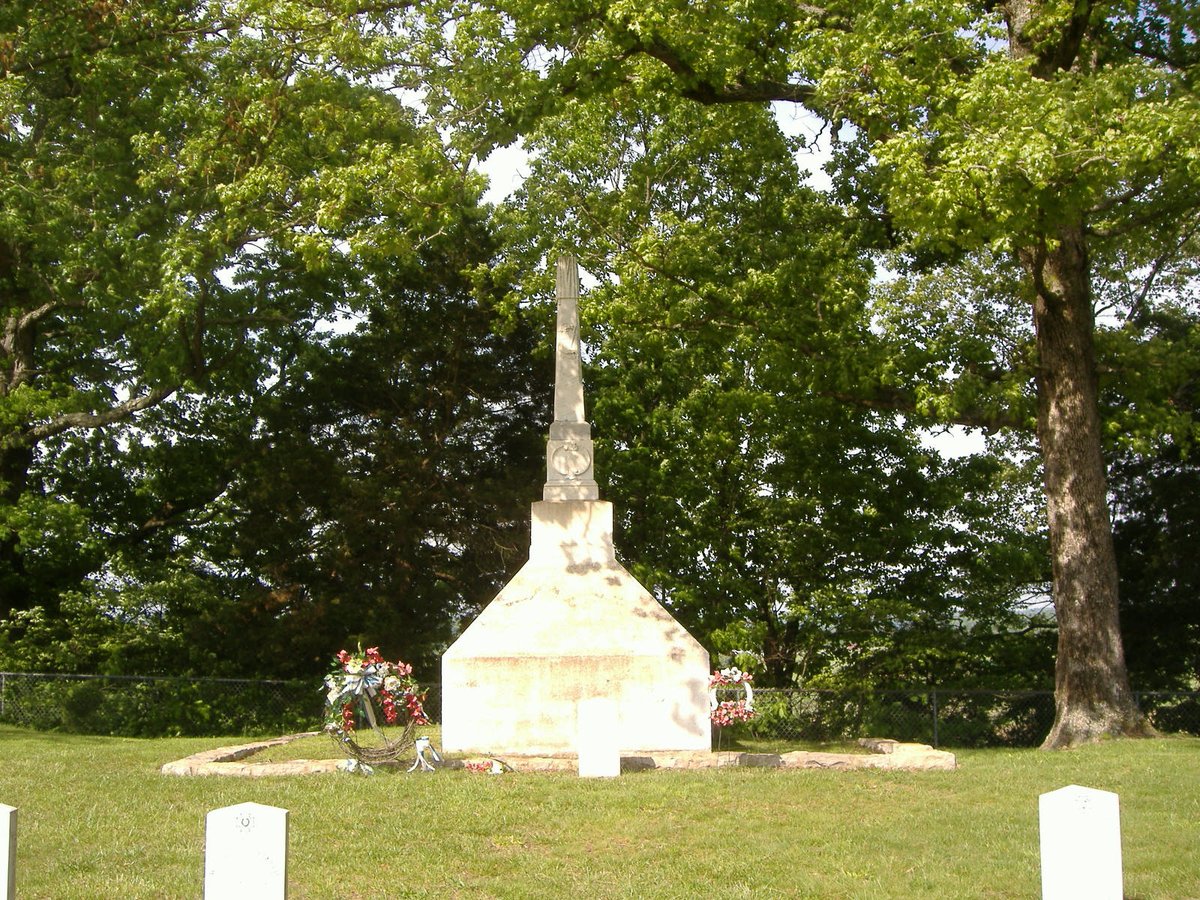
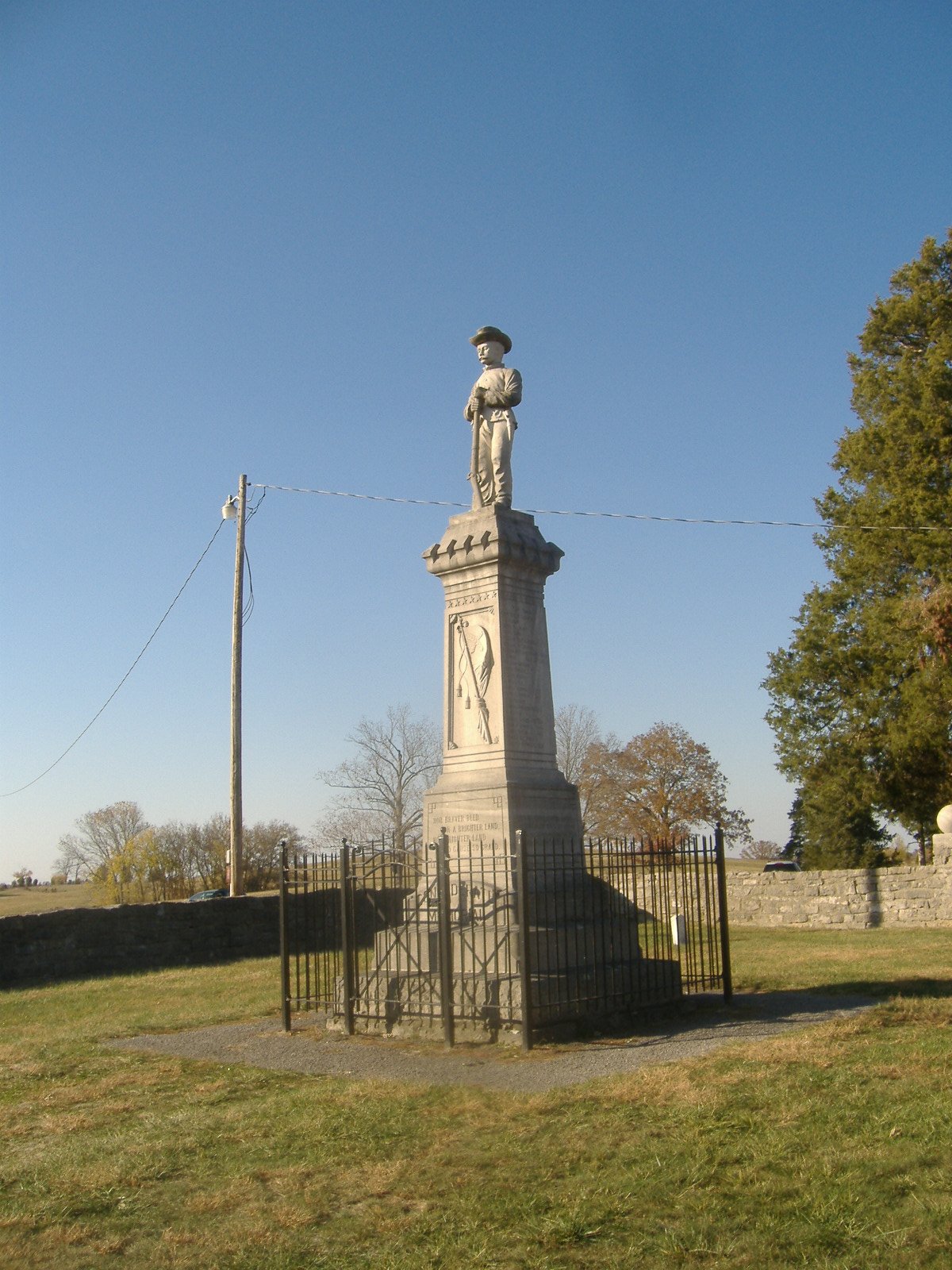
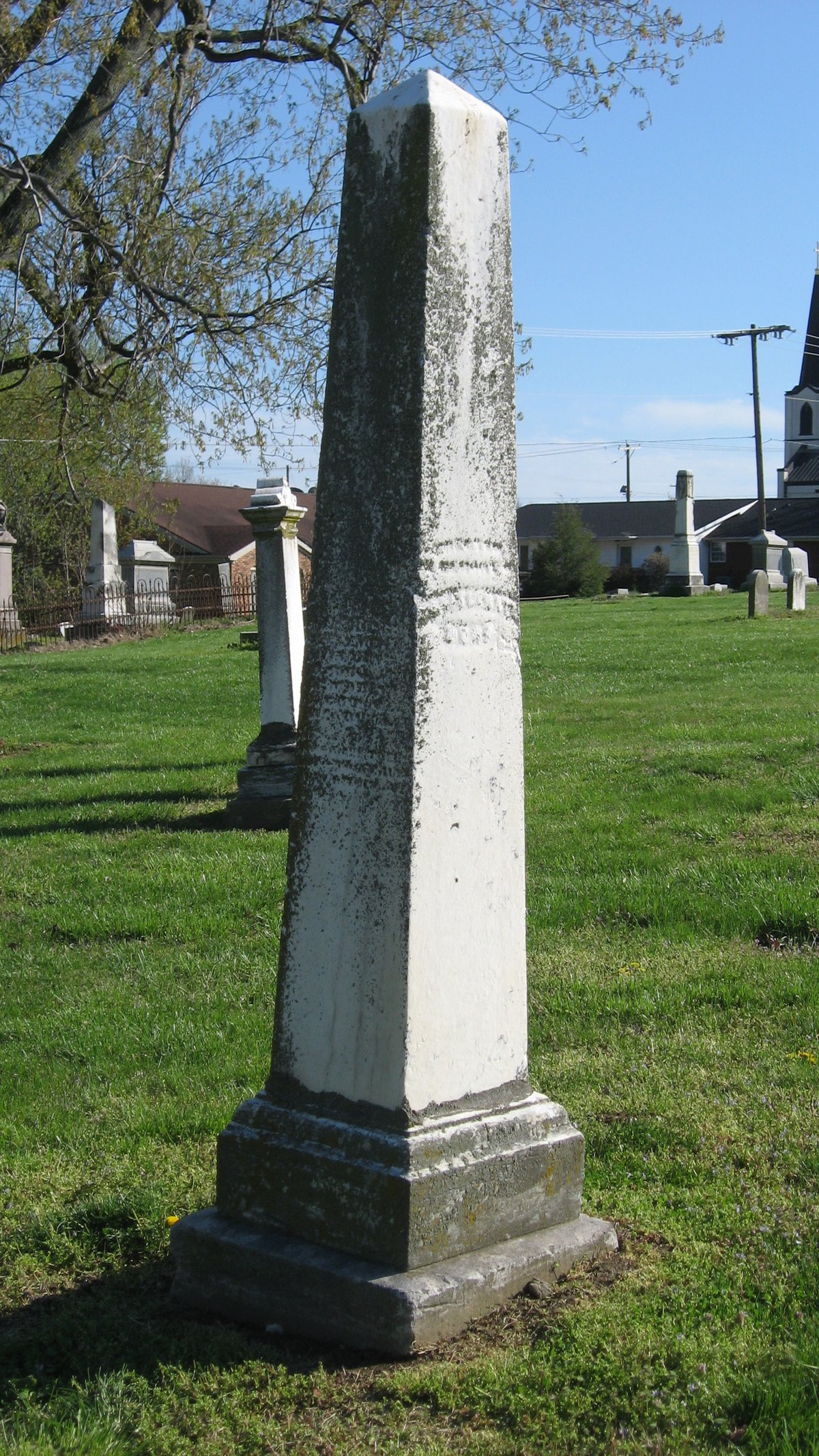
The Confederate Monument of Bowling Green stands in the east side of the Fairview Cemetery. Built between 1875 and 1876 through a subscription drive, the obelisk was constructed from white limestone acquired from a local quarry. It stands thirty feet tall and is draped by a carved Confederate flag. The front of the monument features a bas-relief of Henry Mosler's "Lost Cause," a painting that typified the devastation of the U.S. Civil War.
The stonemason Hugh F. Smith, who was based in Bowling Green and held a partial interest in the limestone quarry, carved the monument. His signature, "SMITH & BROEG," appears in the lower right corner of the plaque. Surrounding the main monument are statues of cannons, each eight feet tall, positioned twenty feet from each corner. These cannon statues feature depicted cannonballs around their bases. The monument serves as a memorial for more than seventy Confederate soldiers buried in the surrounding graves.
A historical marker in front of the monument contains a factual error regarding Thomas Hines. The marker claims Hines died before the 1876 dedication, but records show he lived for another twenty-two years. Hines had served as a spy under John Hunt Morgan and served as the president of the Warren County Monumental Association, the group formed to build the memorial. Over ten thousand people attended the dedication on May 3, 1876, where William Campbell Preston Breckinridge spoke to the crowd.
Sources: Wikipedia, OpenStreetMap, Wikidata, Wikimedia Commons
Written by Friendly Jane
Discuss this with the author and others
No comments yet. Be the first to start the conversation.