The federal government set up the Freedmen's Cemetery in 1867 to bury formerly enslaved people receiving assistance from the Bureau of Refugees, Freedmen, and Abandoned Lands. In the 1870s, budget cuts and the politics of race and Reconstruction led to the site falling into disrepair, and the federal government ultimately decided to abandon the Freedmen's Cemetery.
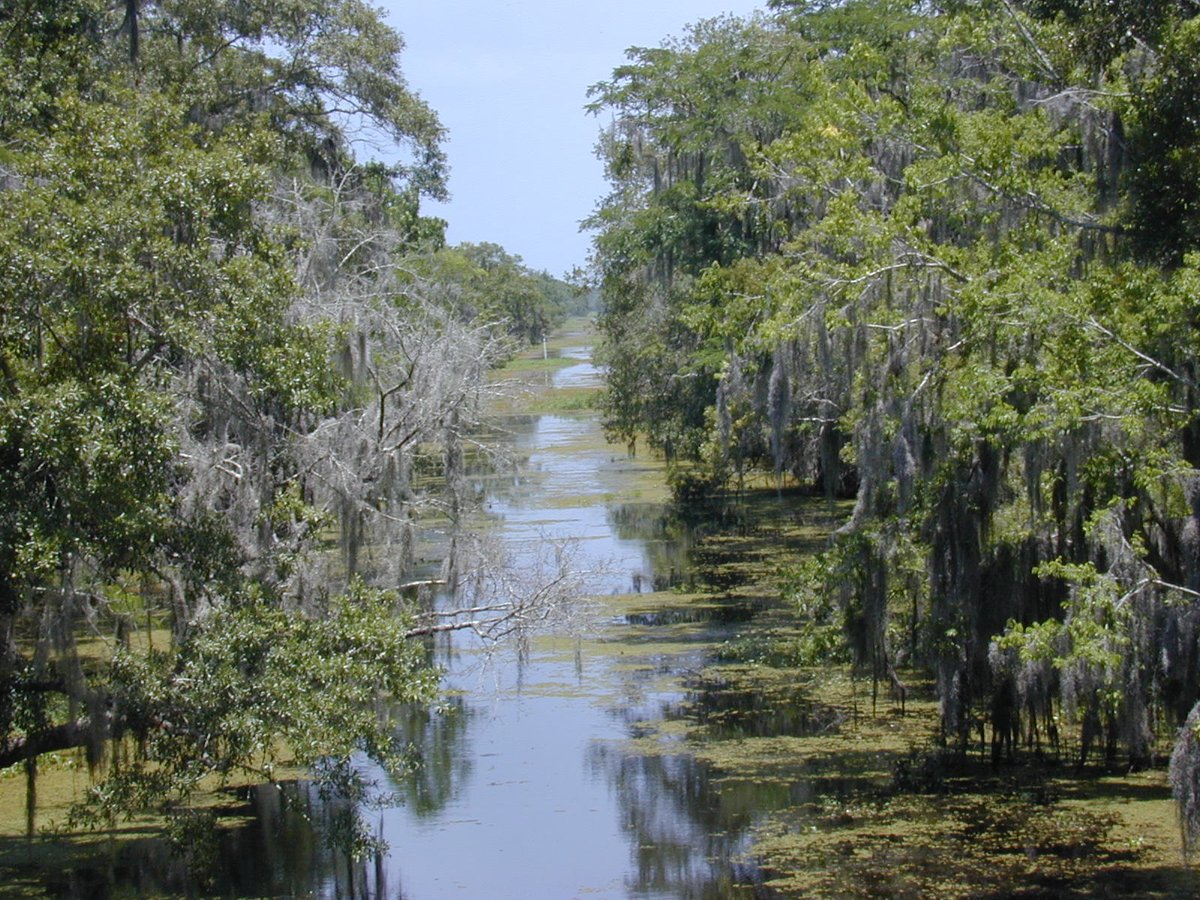
The site is part of the Jean Lafitte National Historical Park and Preserve. It is named after the French pirate Jean Lafitte and protects the natural and cultural resources of Louisiana's Mississippi River Delta region. The park consists of six separate sites, including the Barataria Preserve in Marrero, which features trails and canoe tours through bottomland hardwood forests, swamps, and marsh.
Down in Chalmette, the National Cemetery is one of the oldest in the United States. It holds the remains of casualties from the American Civil War and the Indian Wars of the late 19th century, as well as soldiers from the Spanish–American War, the First and Second World Wars, the Korean War, and the Vietnam War. In 1937, the Works Progress Administration realigned multiple headstones at the cemetery. In 2016, volunteers spent a month cleaning and re-setting 671 headstones that had been damaged by air pollution and mold growth.
Today, the park preserves the Cajun culture of the region, which developed after Acadians were expelled from Canada by the British between 1755 and 1764. The historic community of Fazendeville, established around 1870 as a home for newly freed slaves, was demolished in the early 1960s to expand the battlefield. The site of the defunct Freedmen's Cemetery is now memorialized by a historical marker located near the entrance to Chalmette National Cemetery.
Sources: Wikipedia, OpenStreetMap, Wikidata, Wikimedia Commons


Written by Kyle McLonely
Discuss this with the author and others
No comments yet. Be the first to start the conversation.