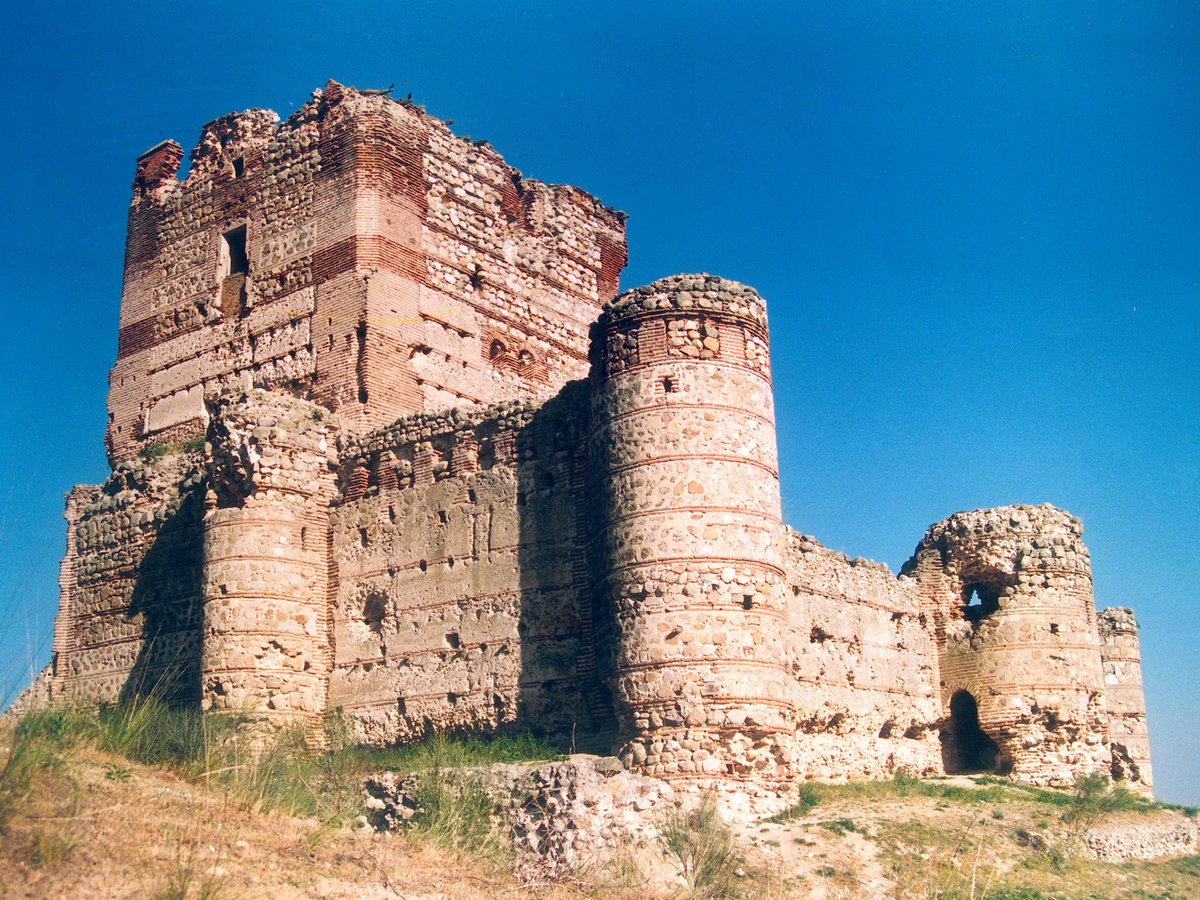

The Castillo de Aulencia sits on the Cerro Horcajo where the Aulencia and Guadarrama rivers meet. While it stands today as a weathered ruin in a protected ecological park, its history is a dense map of shifting powers. It may have had an origin before becoming a noble stronghold.
In 1455, Juan II granted the site tax exemptions and established that the fortification and the small hamlet at its feet should bear the name Villafranca del Castillo. This name survived long after the original hamlet vanished, eventually becoming the name of a modern luxury development. The building is of small dimensions, featuring a square main body with walls one and a half meters thick and a keep over 20 meters high.
The Núñez de Toledo family undertook expansion works and built a double wall around the main core. By the 19th century, the castle had fallen into neglect. However, it found a new purpose during a conflict in 1937. A brigade of Soviet soldiers used the fortress as a refuge during the battle of Brunete, until it was bombarded by national army forces.
Today, the castle remains in a state of progressive ruin and is privately owned. The original structure is still visible, including eight cylindrical towers. The ground floor of the keep consists of two vaulted rooms, connected to each other, with entrances to the courtyard of arms. It stands as a quiet, sturdy reminder of centuries of defense and transition.
Sources: Wikipedia, OpenStreetMap, Wikidata, Wikimedia Commons
Written by Nik Frost
Discuss this with the author and others
No comments yet. Be the first to start the conversation.