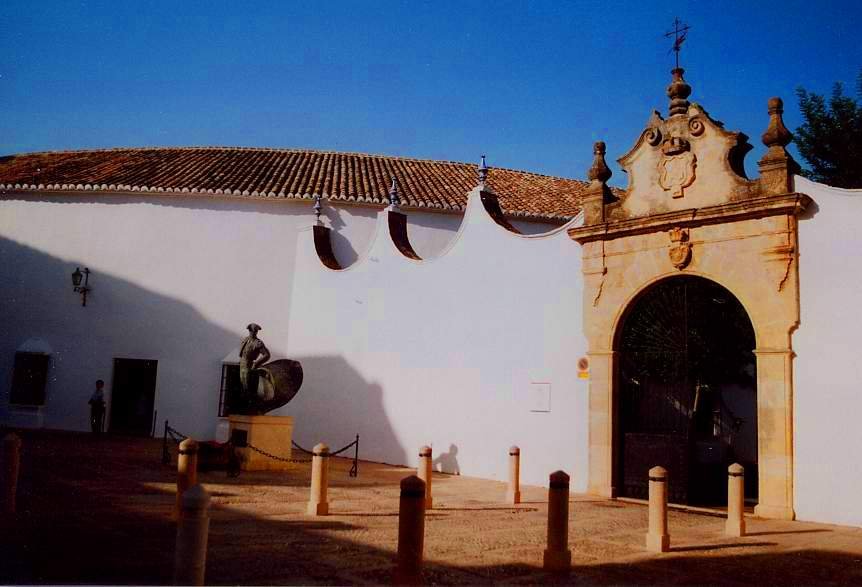

In Ronda, Spain, the Plaza de Toros is a stone spectacle with a diameter of 66 meters. It is surrounded by a passage formed by two rings of stone and features a royal box with a sloping roof covered in Arabic tiles. The design of the main entrance features two Tuscan columns and the royal shield of Spain surrounded by baroque edging. Above the main door is an iron wrought balcony that embodies the bullfighting culture.
Ronda is home to the Real Maestranza de Caballería, the oldest and most noble order of horsemanship in Spain, established in 1485 when Catholic King Ferdinand and Queen Isabella won the city back from the Moors. Construction of the bullring began in 1779 and was finished in 1785. While it may not be the oldest bullfighting ring in Spain, it is one of the first entirely constructed from stone instead of a combination of stone and brick. A unique architectural feature of the ring is that all seating is covered.
The bullring is protected as a Bien de Interés Cultural. It stands on the west edge of Ronda, positioned near the city's famous landmarks. It remains a central site for the region's history, housing a museum dedicated to bullfighting regalia and weapons used by the Real Maestranza in Spanish war.
Sources: Wikipedia, OpenStreetMap, Wikidata, Wikimedia Commons



Written by Nicolo Ciampini
Discuss this with the author and others
No comments yet. Be the first to start the conversation.