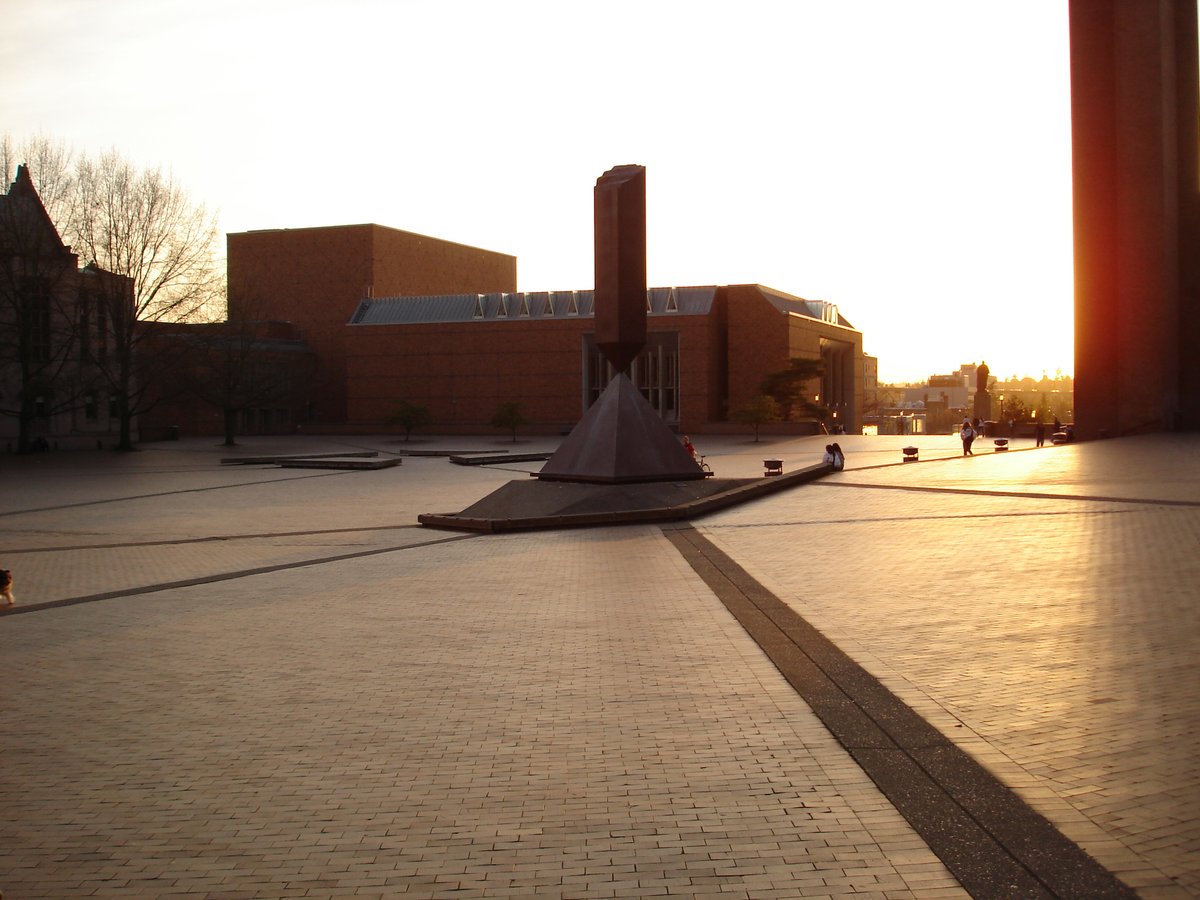

When you stand in front of this piece, you are facing three tons of Cor-Ten steel. The metal acquires a rust-colored patina over time. This is Broken Obelisk, which stands as the largest and best known of the six sculptures created by Barnett Newman.
Newman developed the design between 1963 and 1967. He crafted a pyramid shape with an inverted obelisk rising out of the center like a beam of light. The sculpture is a meditation on ancient Egypt, where Newman bypassed Western associations of pyramids and broken columns with death to produce a life-affirming image of transcendence.
The sculpture generated some controversy in Washington, D.C, during 1967. Because of the civil unrest happening at that time, it appeared to be a reference to a broken upside-down Washington Monument. When the director of the Corcoran Gallery of Art resigned in 1969, Newman had the sculpture removed.
There are currently four versions of this sculpture to see. You can find them at the Museum of Modern Art in New York, the Rothko Chapel in Houston, and Red Square on the University of Washington campus in Seattle. A fourth version finished in 2005 is located at the Storm King Art Center in New Windsor.
Sources: Wikipedia, OpenStreetMap, Wikidata, Wikimedia Commons
Written by Friendly Jane
Discuss this with the author and others
No comments yet. Be the first to start the conversation.