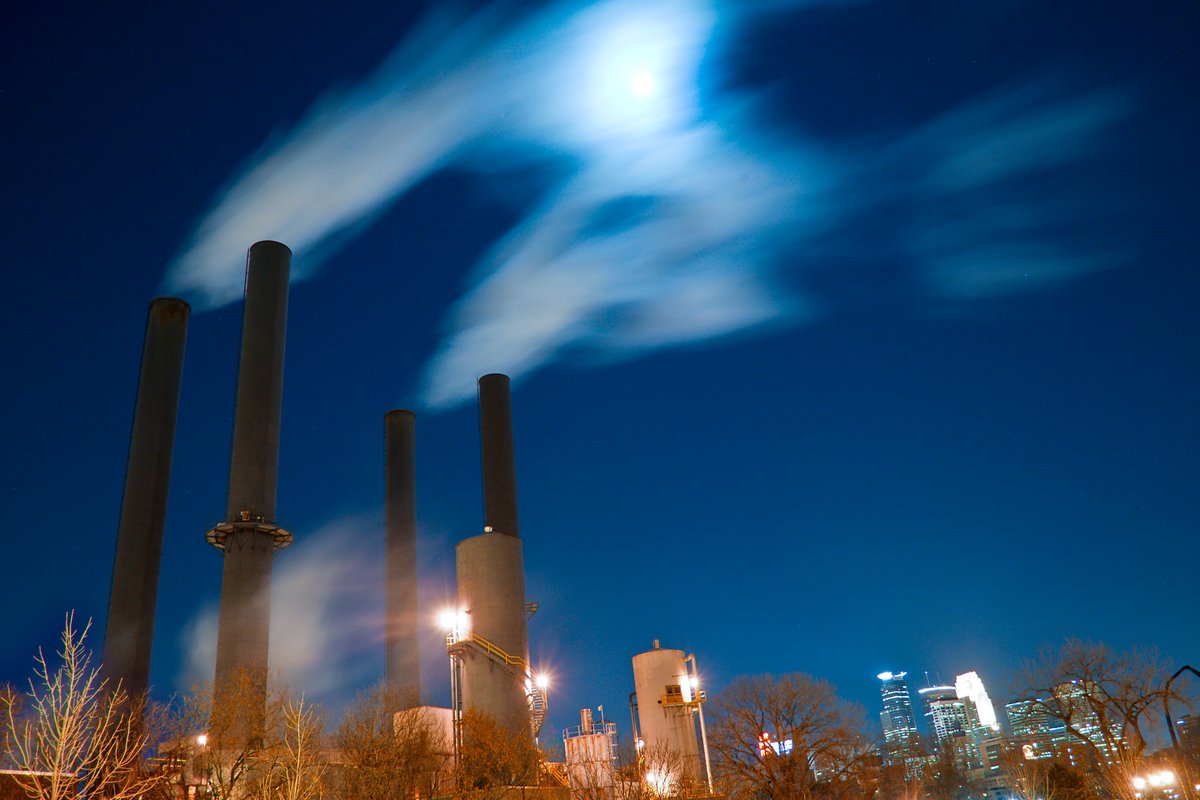
Nestled in the heart of Minneapolis, on Southeast Main Street 600, the Southeast Steam Plant has been a valiant energy provider for over a century. Originally constructed by the Twin City Rapid Transit Company in 1903, its initial purpose was to fuel the city's street railway system. But, in 1949, the city transitioned to buses, and the plant became the proud possession of Northern States Power Company. Fast forward to 1976, and the university scooped it up for just $1.
Today, it humbly powers 94 buildings on the Minneapolis campus of the University of Minnesota, even supplying 20% of its electricity. This dedicated plant could heat an astonishing 55,000 homes, making it truly colossal. Each student pays around $200 for energy, while residents in the halls pay $375 annually for heating, air conditioning, water heating, and dining services. The university building #059, it is known as, and it is administered by the university's vibrant Energy Management department.
Although now operated by Veolia North America, it was operated by Foster Wheeler Twin Cities for 24 spirited years. Upstream, you'll find the Hennepin Island Hydroelectric Plant controlled by Xcel Energy, while the university's Saint Paul campus boasts its own power plant. The plant houses four operational boilers: a CFB, two natural gas boilers, and one pulverized coal boiler. The CFB boiler stands seven stories tall and, with its versatile appetite, can burn various fuels.
Its two natural gas and one pulverized coal counterparts can also indulge in fuel oil. The decommissioned spreader stoker coal boiler may still be able to feast on oat hulls. During May and October, the CFB boiler takes a brief sabbatical. The CFB boiler is equipped with controls to limit emission of acidic gases and particulate matter. Its pulverized coal and spreader stoker companions are armed with dry gas scrubbers. Two boilers sport no control equipment but employ flue gas recirculation to suppress nitrogen oxide emissions.
The plant emits nearly no sulfur or mercury. Its unloading terminal and conveyors are adorned with baghouse filters. The coal storage is protected from the wind by robust concrete retaining walls. The plant's proposal to revise its permit to conduct trials of alternative fuels was met with criticism by several neighborhood associations and a condominium developer. The use of biomass fuels, particularly oat hulls, was approved by the Minnesota Pollution Control Agency in 2006, but the oat hull supply was lost before the testing and approval process could be completed.
Sources: Wikipedia, OpenStreetMap, Wikidata, Wikimedia Commons
Written by No other
Discuss this with the author and others
No comments yet. Be the first to start the conversation.