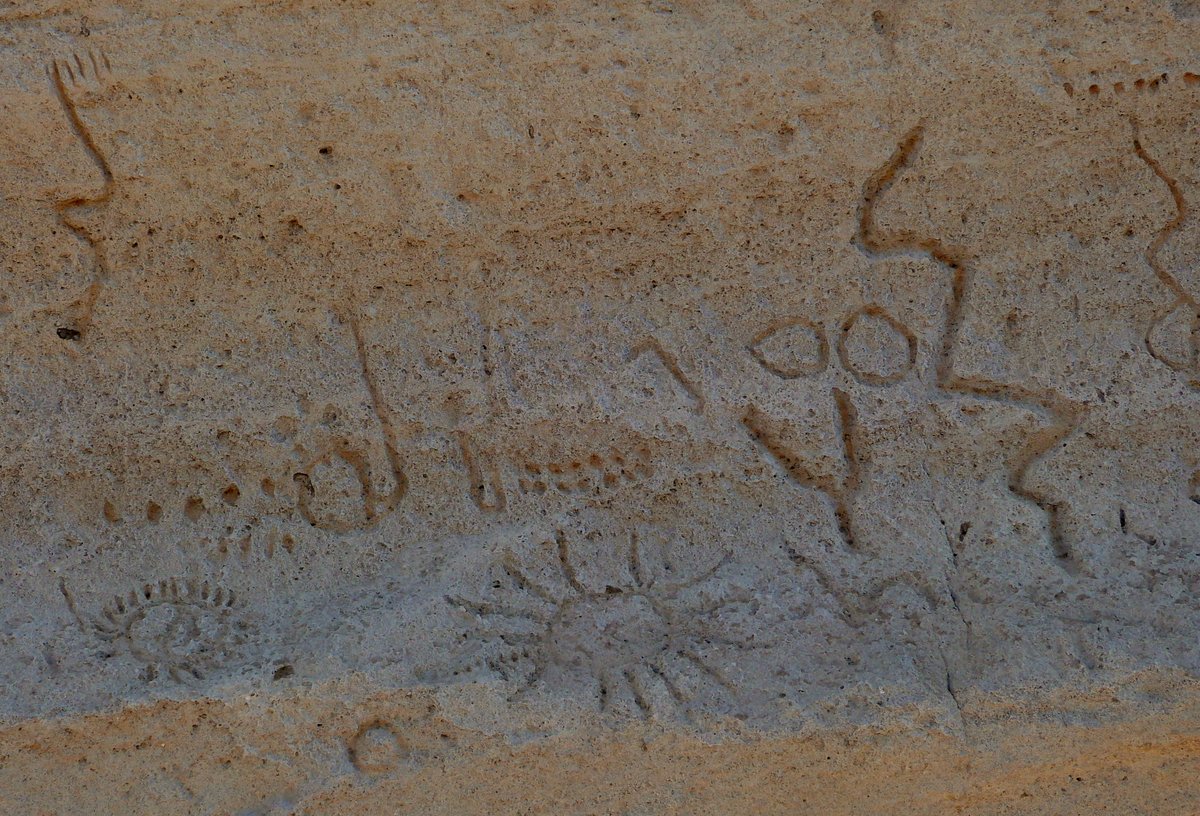

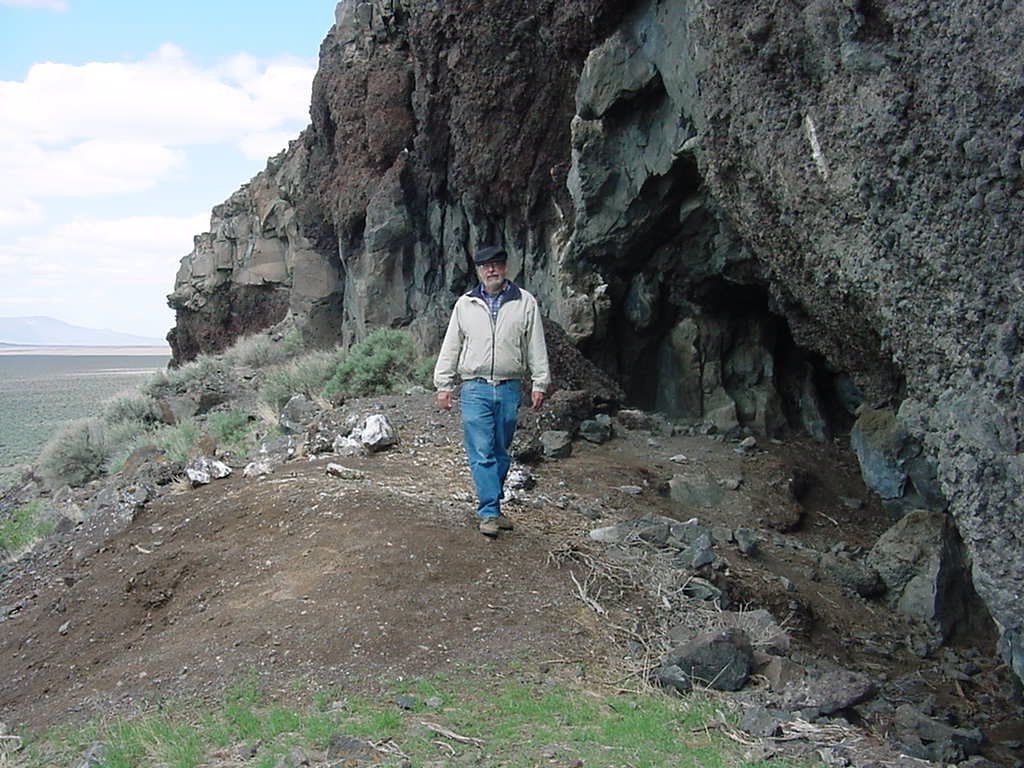
Located southeast of Tulelake, California, Petroglyph Point is an archaeological site within the Lava Beds National Monument. The site contains one of the largest panels of Native American rock art in the United States. The petroglyphs are carved along the face of a former island within Tule Lake, in a region historically inhabited by the Modoc peoples.
The carvings differ greatly from those in similar archaeological sites because they feature shapes and patterns rather than living creatures. While it is difficult to approximate their exact age due to changing water levels affecting natural weathering, some estimates suggest the carvings were made over 6000 years ago.
Because of the Modoc War from 1872 to 1873 and the subsequent relocation of the Modoc peoples, researchers are unable to collect firsthand accounts regarding what the patterns symbolize. The site was given to the National Park Service in 1954 after being owned and overseen by various farmers.
Sources: Wikipedia, OpenStreetMap, Wikidata, Wikimedia Commons
Written by Friendly Jane
Discuss this with the author and others
No comments yet. Be the first to start the conversation.