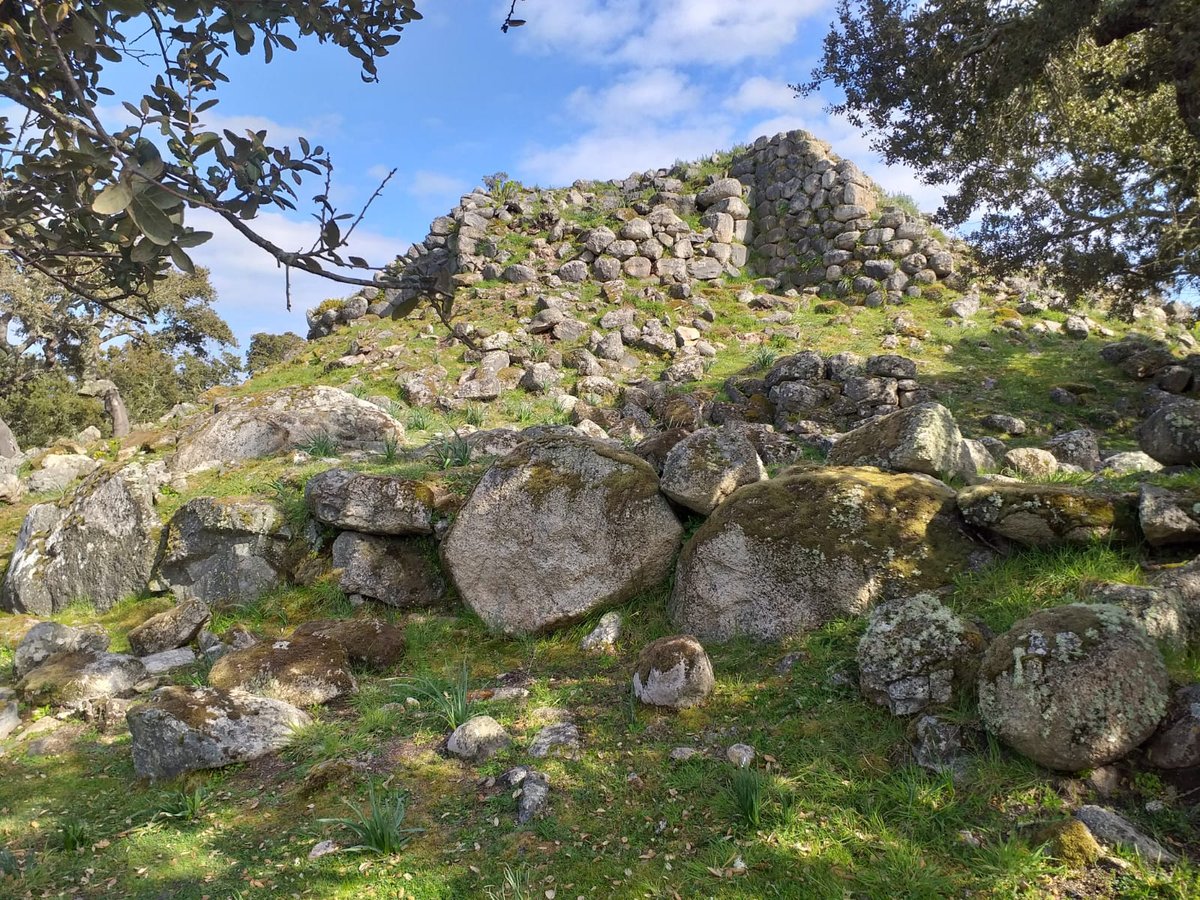

Nestled in the heart of Nuoro, Italy, the Trilobate Triple-Towered Triana of Noddule has a history that traces back to the Bronze Age. Its unique tholos-shaped cover, crafted from vibrant trachite blocks, reveals hidden similarities to other trianic fountains or wells when scrutinizing the internal stonework of the risegated cones. Archaeologist Editta Castaldi uncovered fragments of ceramics from the Tomb of the Giants of Noddule during the late 1950s and early 1960s, unearthing remnants of the Punico-Roman, Ellinistic, and Etruscan-Campanian eras.
Antiquarian Ercole Contu later unearthed a large circular hut, a hidden spring, and an aged lamp from the 3rd century BC. Abandoned for nearly 60 years, the site was reopened to the public on 1st April 2018. The Trilobate Triple-Towered Triana caters to guided tours, offering rare glimpses into its lengthy chapter of ancient human habitation and settlement. It boasts two large megalithic circles, continuous lines of megalithic walls, a three-towered trilobate nuraghe, a circular hut, a sanctuary for a curious water cult, a sacred spring with decorative chevron patterns, and a clandestine treasure trove waiting to be discovered.
Sources: Wikipedia, OpenStreetMap, Wikidata, Wikimedia Commons
Written by Nicolo Ciampini
Discuss this with the author and others
No comments yet. Be the first to start the conversation.