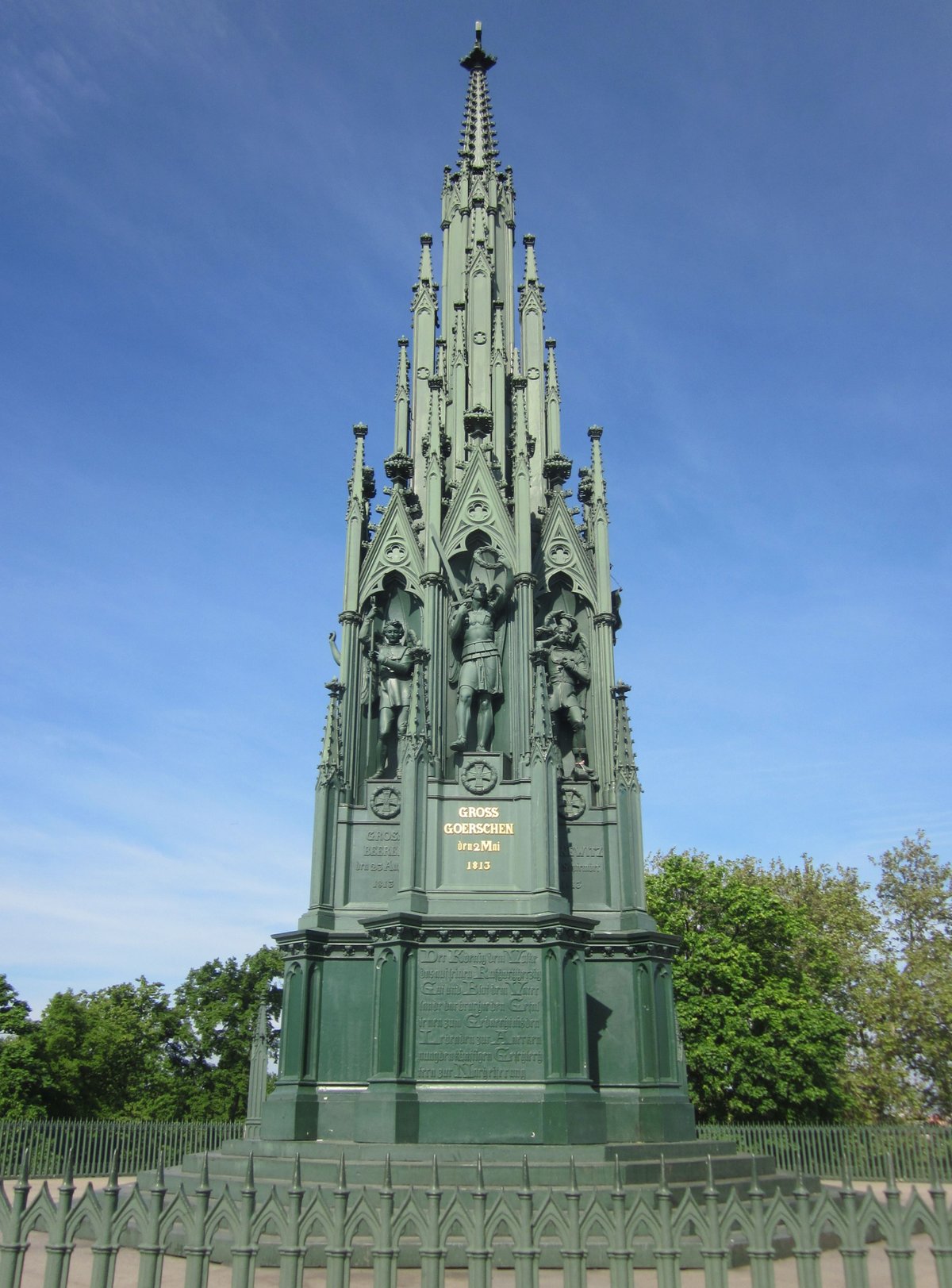
A tapering turret of cast iron ascends from Kreuzberg hill like a Gothic steeple. This 1821 Prussian National Monument honors those who perished or gave wealth during the struggle against Napoleon. Karl Friedrich Schinkel designed the structure to evoke post-Napoleonic sobriety. It stands in Victoria Park facing a younger Silesian granite edifice.
Schinkel rendered his final Romantic Neo-Gothic work in industrial metal. This medium reflected worsening ties between Prussian reactionaries and civic reformers. King Frederick William III initiated the project while commoners and nobles seized initiative to form the Landwehr militia. The monument captures friction between state authority and public spirit.
Though the King initially promised a parliament, monarchs suppressed those rights after defeating Napoleon. In 1819, he forbade subjects from petitioning for constitutional debts. The King personally rejected three versions of the dedication by the philosophical class. He chose a text by August Boeckh claiming people offered blood at his call.
Today, the Neo-Gothic spire remains a silent sentinel in Tempelhofer Vorstadt. It celebrates victory through a lens of exhaustion. The iron marks a conflict that secured freedom but silenced granted rights.
Sources: Wikipedia, OpenStreetMap, Wikidata, Wikimedia Commons



Written by Aurora
Discuss this with the author and others
No comments yet. Be the first to start the conversation.