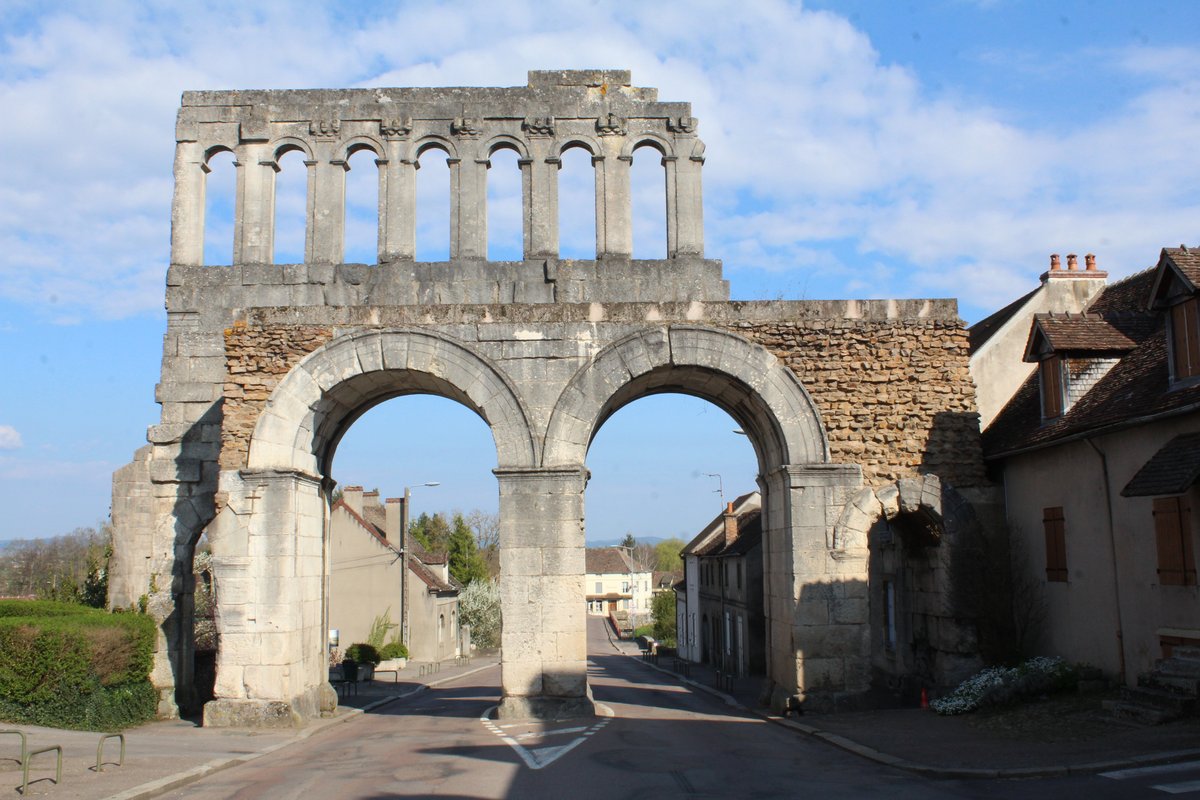

The Porte d'Arroux, one of four main gateways of Augustodunum (Autun) in Saône-et-Loire, France, was built during the Augustean period as part of the city’s entire defensive wall. It commands the passage to Auxerre and serves as a sas, a toll-collection point for goods. The gate is designed as a monumental work that reflects the city’s prestige. According to the sources, it actually has an inner courtyard and toll collection capacity, similar to the Porte d'Auguste in Nîmes. The entrance is made of feldspathic grès, found 10 km east of Autun, while the facings are made of oolitic chalk from the coast of Chalonnaise (white quarries of Saint-Hilaire in Fontaines, whose deposits are more than 30 km to the east). The functionality of the Porte d’Arroux is well understood, thanks to the recent studies and the discovery of the central courtyard and the sas.
Sources: Wikipedia, OpenStreetMap, Wikidata, Wikimedia Commons
Written by Nicolo Ciampini
Discuss this with the author and others
No comments yet. Be the first to start the conversation.