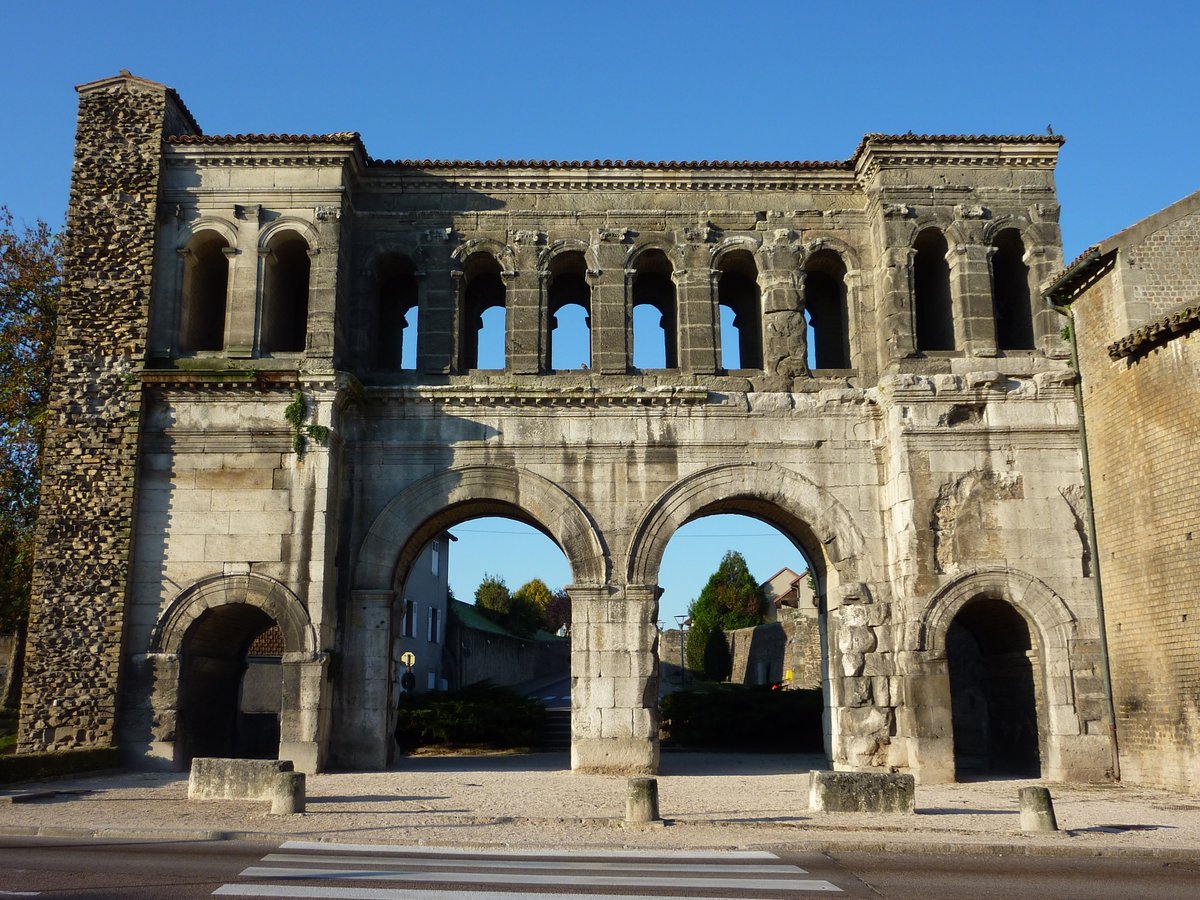

For centuries, the Saint-André Gate of Autun, affectionately known as the gate of Langres, stands proudly. This architectural beauty, born in the 1st century, was likely trodden by Romans, their weary boots filled with curiosity about what the morrow might hold in their grand Empire. In the 19th century, it became classified as a historical monument, a testament to its ancient origins. Measuring a robust 10 meters wide, this Urban structure boasts towering contraptions on either side, a harmonious marriage of oolitic limestone foundations and arkose upper gallery.
If you could have peered through its rustic frames in the 13th century, you would have found it transformed into a chapel, the northern tower donning a churchlike demeanor. During the French Revolution, it was sold before being reacquired by the State in 1844. Wouldn't it be intriguing to attend a clandestine Mass in the 13th century? Quite a different affair, I daresay, compared to the Empire-goers casual 'Oh, just another day in Rome! In the 19th century, Monsieur Viollet-Le-Duc lent a much-needed cosmetic facelift to the relic - minus the roof of the upper gallery.
Now, the restored tower serves as a Protestant temple, a fitting tribute to the grandeur of the Roman Empire and the enduring spirit of humanity.
Sources: Wikipedia, OpenStreetMap, Wikidata, Wikimedia Commons
Written by Nicolo Ciampini
Discuss this with the author and others
No comments yet. Be the first to start the conversation.