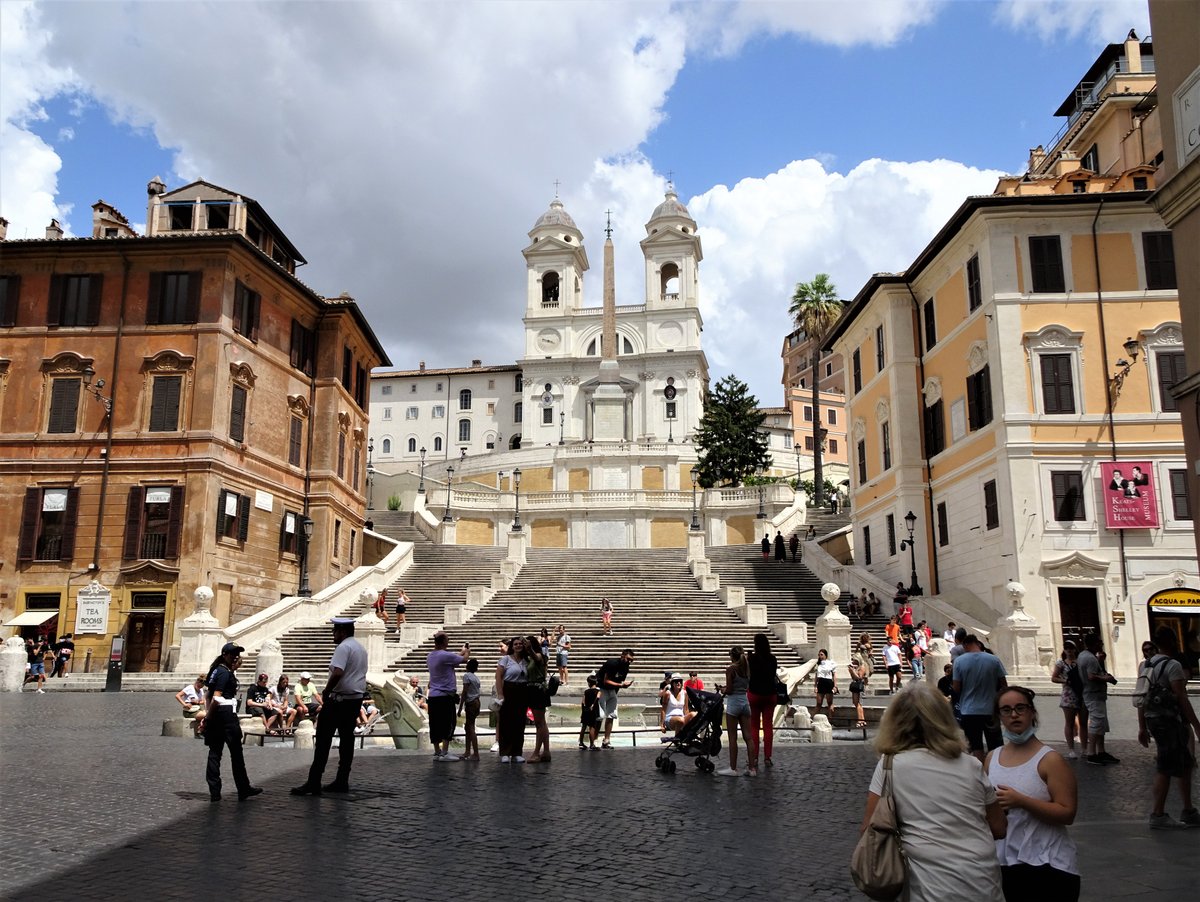

Piazza di Spagna sits at the base of the Spanish Steps in the centre of Rome. The square accommodates a museum, a tea room, and a subway station. At the right corner of the Spanish Steps rises the house of the English poet John Keats, who lived there until his death in 1821. It is now a museum dedicated to him and his friend Percy Bysshe Shelley, displaying books and memorabilia of English romanticism.
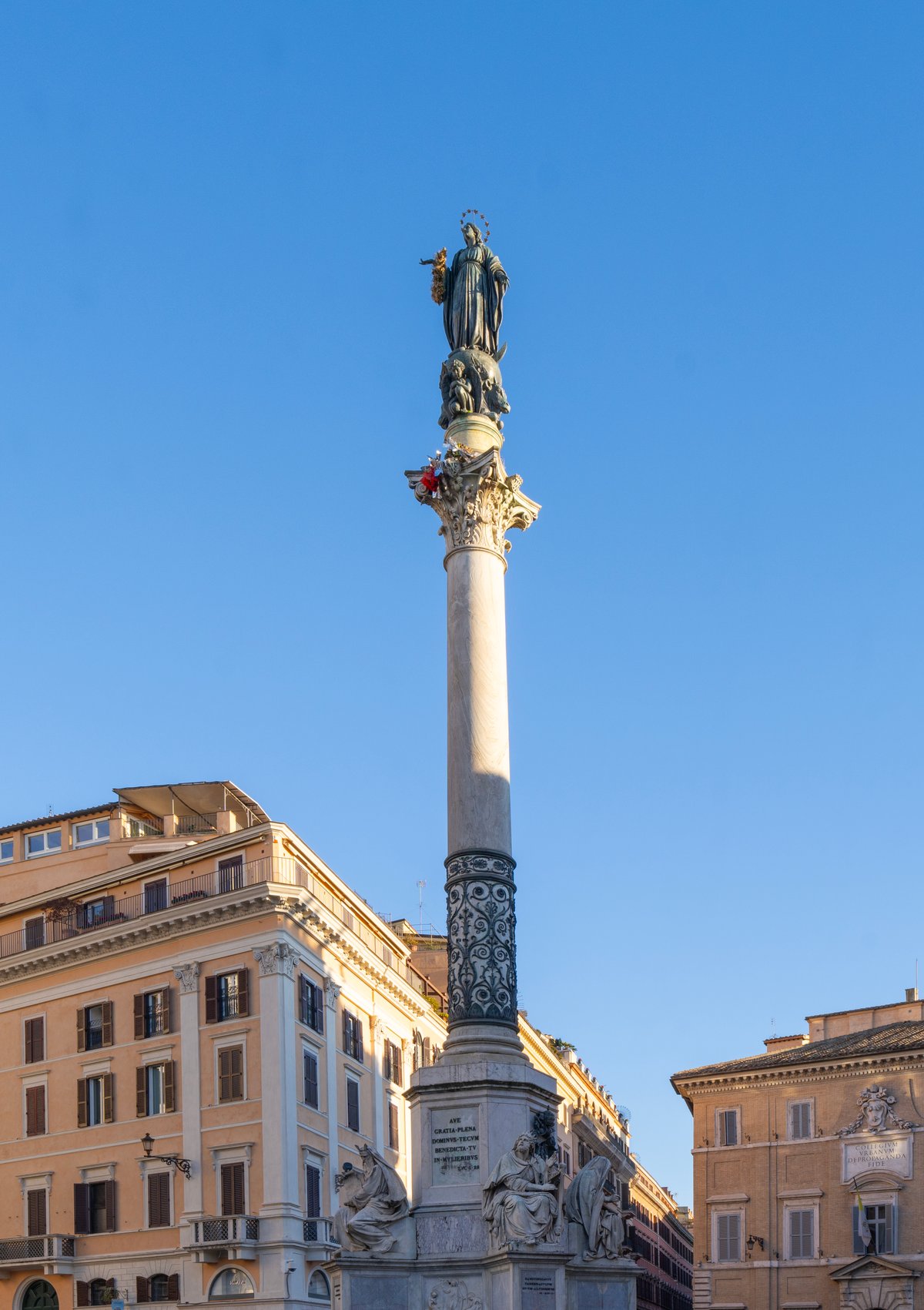
At the left corner is Babington's tea room, founded in 1893. Nearby, the side near Via Frattina is overlooked by the two façades of the Palazzo di Propaganda Fide, a property of the Holy See. The main façade was designed by Gian Lorenzo Bernini, and the side one was created by Francesco Borromini. In front of the building, in a part of the square named Piazza Mignanelli, rises the Column of the Immaculate Conception, erected in 1856.
The Fontana della Barcaccia stands in the middle of the square. It dates to the beginning of the Baroque period and was sculpted by Pietro Bernini and his son Gian Lorenzo Bernini. The streets connecting to the square are known for their luxury shopping stores.
Modern life integrates with these historical sites through the Rome Metro. Since 1980, the piazza has accommodated a station on Line A called Spagna. The area represents a transition from Baroque art and 19th-century poetry to 20th-century transit.
Sources: Wikipedia, OpenStreetMap, Wikidata, Wikimedia Commons




Written by Nicolo Ciampini
Discuss this with the author and others
No comments yet. Be the first to start the conversation.