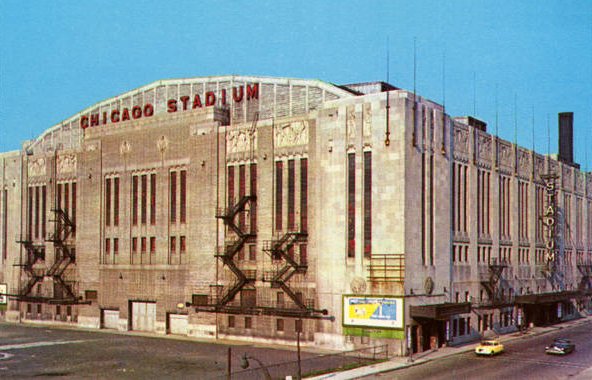
Chicago Stadium was the world's largest indoor arena when it opened in 1929. With a maximum seating capacity of 26,000, it served as the home of the National Hockey League's Chicago Blackhawks and the National Basketball Association's Chicago Bulls. The building opened with a championship boxing match in March 1929 and featured Art Deco flourishes, including flattened columns and relief sculptures of various athletics.
Promoter Paddy Harmon spent his fortune on the project, which was built in his old neighborhood. Harmon died in a car crash less than a year after the stadium opened, leaving his widow and daughter only $2.50 in cash. Before his death, the Stadium board of directors forced Harmon to resign as president. During this period of turmoil, someone even tried to blow up an owner's house with dynamite, but the fuse failed.
The building featured the first arena air conditioning system, though it was rudimentary and often filled the arena with fog during late-season games. There were no elevators in the stadium, so workers formed a human chain to pass beer kegs up to the upper-floor concessions. To return the kegs, they rolled them down the stairs, damaging the steps in the process. The building was demolished in 1995 and is now a memorial with a plaque.
Sources: Wikipedia, OpenStreetMap, Wikidata, Wikimedia Commons
Written by Leroy
Discuss this with the author and others
No comments yet. Be the first to start the conversation.