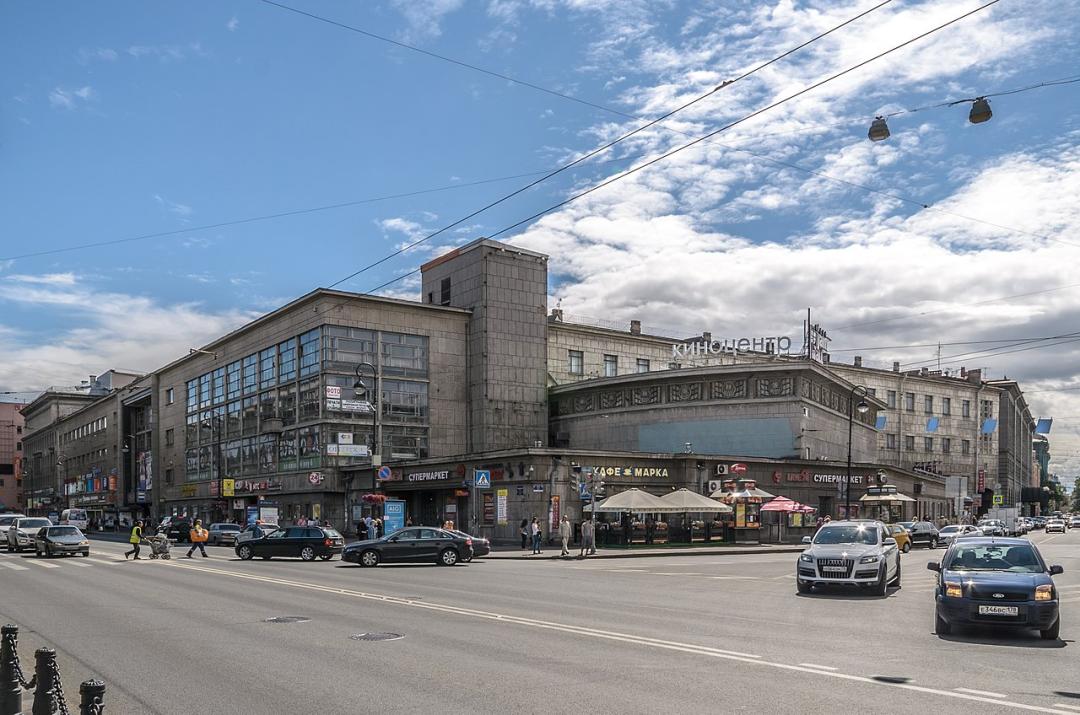
The Lensovet House is one of the "specialists' houses."

13 Karpovka River Embankment, Saint Petersburg, Russia, 197022

The Lensovet House is one of the "specialists' houses" created for the party elite of the city. This building was designed for the party nomenclature elite of the city. There were a total of 76 apartments of various sizes, with the number of rooms ranging from 2 to 6, equipped with bathrooms and built-in furniture. Some apartments were two-story, with oak staircases leading to the second floor. The project included plans for a mechanical laundry, a hairdresser, a shop, a solarium, and rooms for service personnel. The original plan also envisioned the creation of a street and the construction of a pedestrian bridge over the Karpovka River.

The Lensovet House is one of the "specialists' houses" created for the city's party elite.


This building was created for the party nomenclature elite of the city. There were a total of 76 apartments of various sizes, with the number of rooms ranging from 2 to 6, equipped with bathrooms and built-in furniture. Some apartments were two-story, with oak staircases leading to the second floor. The project included plans for a mechanical laundry, a hairdresser, a shop, a solarium, and rooms for service personnel. The original project also envisioned the creation of a street and the construction of a pedestrian bridge over the Karpovka River.

The composition of the building is based on the contrast of three main volumes: a central (concave) one and two rectangular side volumes, arranged asymmetrically. The building contains 76 apartments of various sizes, with the number of rooms ranging from two to six, featuring bathrooms and built-in furniture made of polished walnut. The original project included a mechanical laundry, a hairdresser, a shop, a rooftop solarium, rooms for service personnel, and plans for a pedestrian bridge over the Karpovka River.

"The residential building on the Karpovka River in Leningrad by architects Levinson and Fomin appears to be a significant phenomenon. The house is built very well and with great attention. The composition itself addresses the issue of spatial and ensemble solutions, which is especially valuable in residential architecture. In the details, there is still some lingering influence of constructivist modernism."

Sources:

https://spbarchives.ru/architecture_3.6

https://www.citywalls.ru/house1314.html


Follow us on social media

More stories from Constructivism: Originating from the USSR

Water tower at "Red Nail Maker"

6 building 1, letter B, 25th line of Vasilievsky Island, Saint Petersburg, Russia, 199106

The water tower at the "Red Nail Factory," designed by Yakov Chernikhov in 1930-1931, would later be included in all global reference books and architecture textbooks as a unique example of avant-garde constructivism. The architect's innovation lay not only in the striking design of the tower and the unusual arrangement of spatial-visual accents—where the rounded projection of the water tank rests on two slender columns, creating the illusion of a transparent nail shaft, always painted in the colors of the sky—but also in bold experiments with the shaping properties of reinforced concrete—the primary building material of the first Soviet five-year plans and the global industrial revolution of the first half of the 20th century.

A.M. Gorky Palace of Culture

Stachek Square, 4, Saint Petersburg, Russia, 198095

Years of devastation and the Civil War passed, life was improving, and there were, albeit meager, means to create visible symbols of the new life. Such symbols became two huge buildings – the Gorky House of Culture and the Factory-Kitchen building (now the "Kirovsky" department store). Both buildings were constructed in the constructivist style.

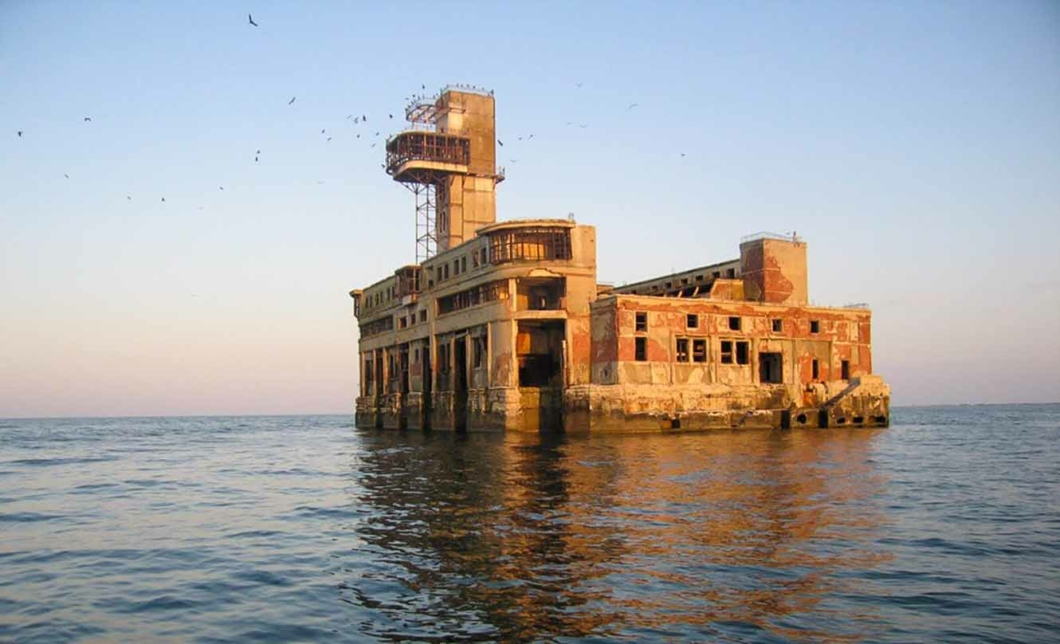
Caspian Fort Boyard - Workshop 8 of the Dagdiesel Plant

VP85+RM Turali 4th, Republic of Dagestan, Russia

The most incredible building of the Soviet avant-garde is located in the Caspian Sea, 2.7 kilometers from the shore. This artificial island has become a kind of calling card for the Russian part of the Caspian Sea. Initially shrouded in secrecy, it now patiently awaits the decision of its fate.

The Tear of Socialism. The House of Forgotten Writers

Rubinstein St., 7, Saint Petersburg, Russia, 191025

A symbol of an era that never happened and a new way of life that even those who promoted it did not want to live in. A house of joy that became the tear of its time.

Round Baths — public baths in the historic Lesnoy district of Saint Petersburg

29 Karbysheva St., lit. A, Saint Petersburg, Russia, 194021

The Round Baths are public baths located in the historic Lesnoy district of Saint Petersburg. This monument of the Constructivist era is situated at 29a Karbysheva Street, on Courage Square.

Palace of Culture named after Lensovet

Kamennoostrovsky Ave., 42a, Saint Petersburg, Russia, 197022

The Lensovet Palace of Culture is one of the most famous art centers in Saint Petersburg. The constructivist-style building is located in the very heart of the Petrogradsky District and has been attracting residents and tourists of all ages for 90 years. Originally, the architectural structure was called the Palace of Culture of Industrial Cooperation, and it only received its current name in 1960.