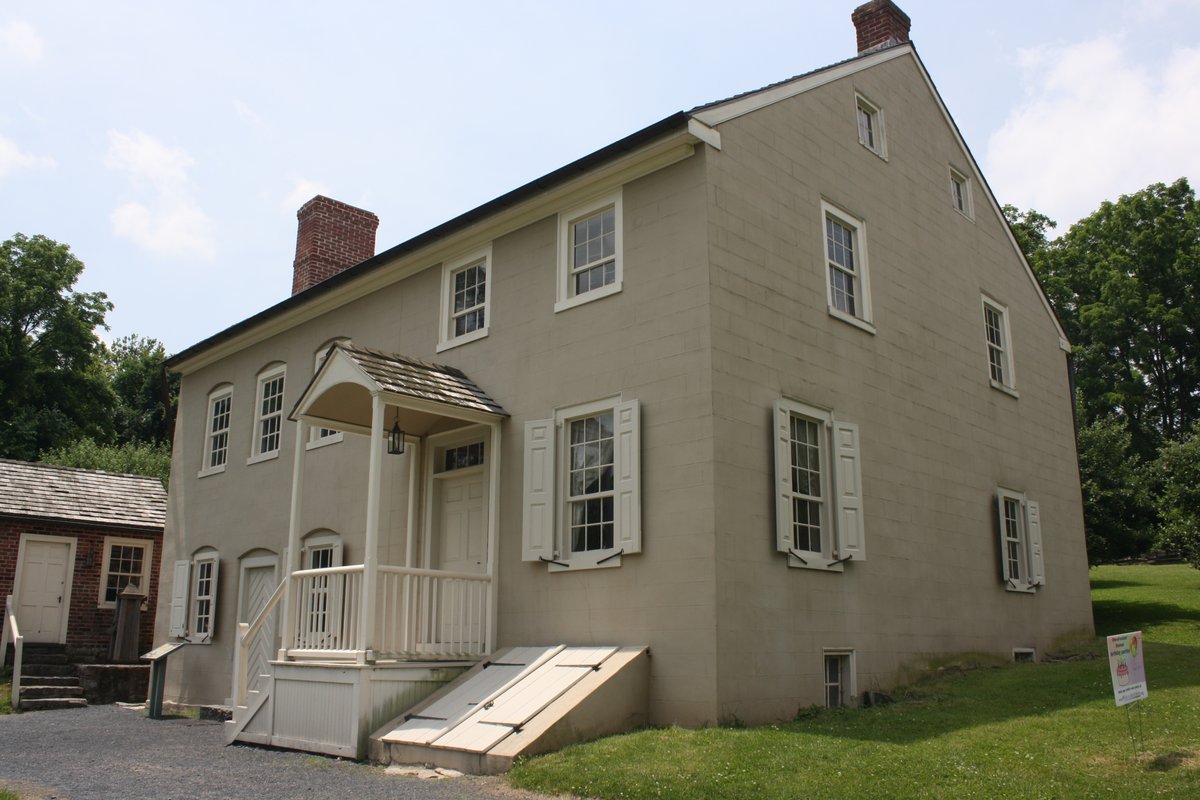
In 1748, James Burnside bought a 500-acre tract of land from John Stephen Benezet. By 1751, Burnside sold 200 acres to a group of Moravians. In 1758, Burnside's widow sold the remaining 300 acres to the Moravian Church. From 1765 to 1845, the Church leased the plantation to individual farmers.
The plantation was later sold to Charles A. Luckenbach and then to William Lerch in 1853. It remained in the Lerch family until 1928, when it was sold and divided between the Hafleighs and the Birks. In 1986, Lehigh County purchased the plantation and leased it to the private corporation Historic Bethlehem Museums & Sites to restore, develop, and manage it as a living and natural history resource.
Listed on the National Register of Historic Places on May 2, 1990, the museum is an affiliate within the Smithsonian Affiliations program. Today, the farmstead hosts a variety of events, volunteer projects, venue rentals, historic tours, and festivals. Visitors can tour the farmhouse and the barns to learn about the daily lives of the early people who lived here.
No people or animals presently live on the plantation, but it served as the home for the Bethlehem Mounted Police Unit horses from 2009 through early 2017.
Sources: Wikipedia, OpenStreetMap, Wikimedia Commons


Written by No Other
Discuss this with the author and others
No comments yet. Be the first to start the conversation.