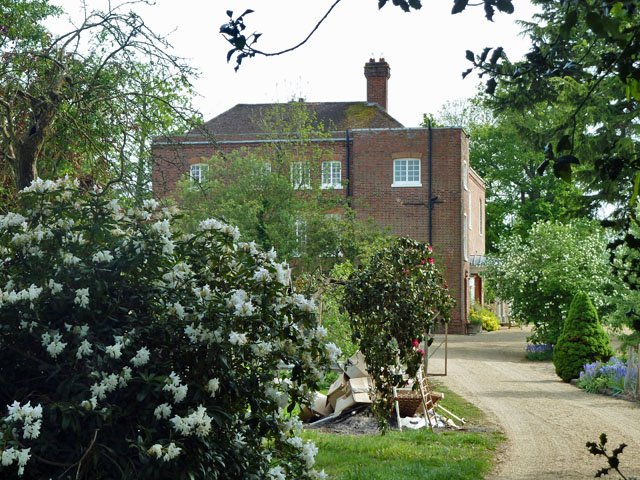

On 4 July 1648, the castle was ordered to be dismantled by Order of Parliament under the rule of Oliver Cromwell because it was feared the castle would provide a base for Royalist Rebellion forces. While much of the original castle was dismantled, the moat survives today. Parts of the original castle were used to build the present building on the north-east corner of the site.
The first Starborough Castle was the manor house of Reginald de Cobham, 1st Baron Cobham, and 1st Lord Cobham of Sterborough. On 18 October 1341, Cobham was granted licence by Edward III to crenellate the building, and it became fortified the following year. It was a quadrangular style building with four towers and a gate, surrounded on all sides by a moat with a central bridge crossing at the south.
After the Battle of Agincourt in 1415, the Duke of Orleans was for a time held captive in the castle. It later passed to Edward Burgh through marriage to Anne Cobham. In the 1700s, the site became part of a country garden, before Sir James Burrow constructed a Neo-Gothic garden house on the moated island in 1754.
The site has had many owners, from Sir Thomas Turton in 1793 to a local farmer and builder, Ray Edwards, in the 1970s who restored the Gothic pavilion. It was later sold to gallery owner Warwick Leadlay, who added outbuildings and used the site for an annual jazz festival.
Sources: Wikipedia, OpenStreetMap, Wikidata, Wikimedia Commons




Written by Nicolo Ciampini
Discuss this with the author and others
No comments yet. Be the first to start the conversation.