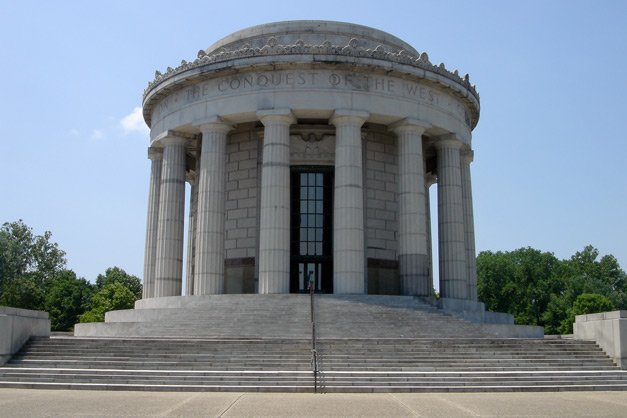

On the banks of the Wabash River in Vincennes, Indiana, stands the George Rogers Clark National Historical Park. This site commemorates the capture of Fort Sackville by Lieutenant Colonel George Rogers Clark on February 25, 1779. As the older brother of William Clark, George Rogers Clark was sent by the state of Virginia to protect its interests in the Old Northwest. His campaign from 1778 to 1779 included the founding of Louisville, Kentucky, and the capture of British forts in the lower Ohio and Mississippi valleys.
After British forces under Henry Hamilton retook Fort Sackville, Clark led a desperate march from Kaskaskia on the Mississippi River in mid-winter to retake it for the American cause. His success on February 25, 1779, was a memorable feat of the American Revolution. The victory led to the newly formed United States claiming control of what would become the states of Ohio, Illinois, Indiana, Michigan, and Wisconsin in the 1783 Treaty of Paris.
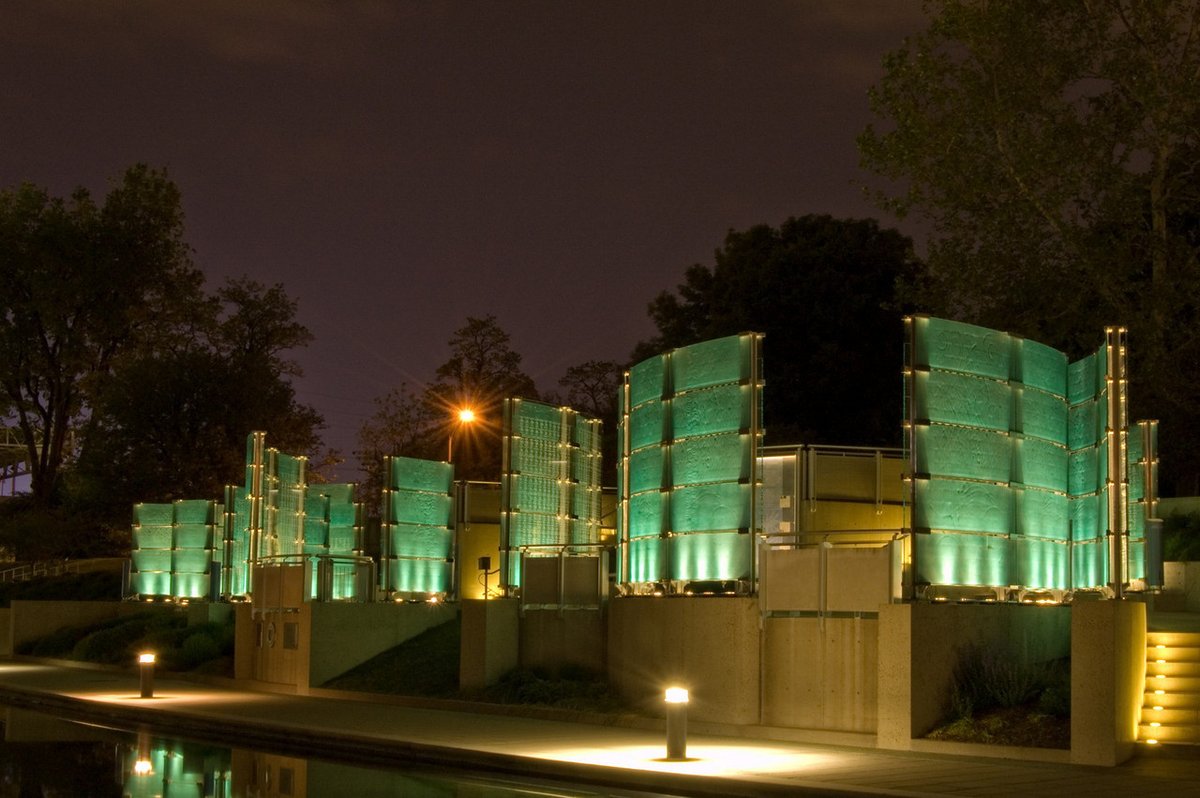
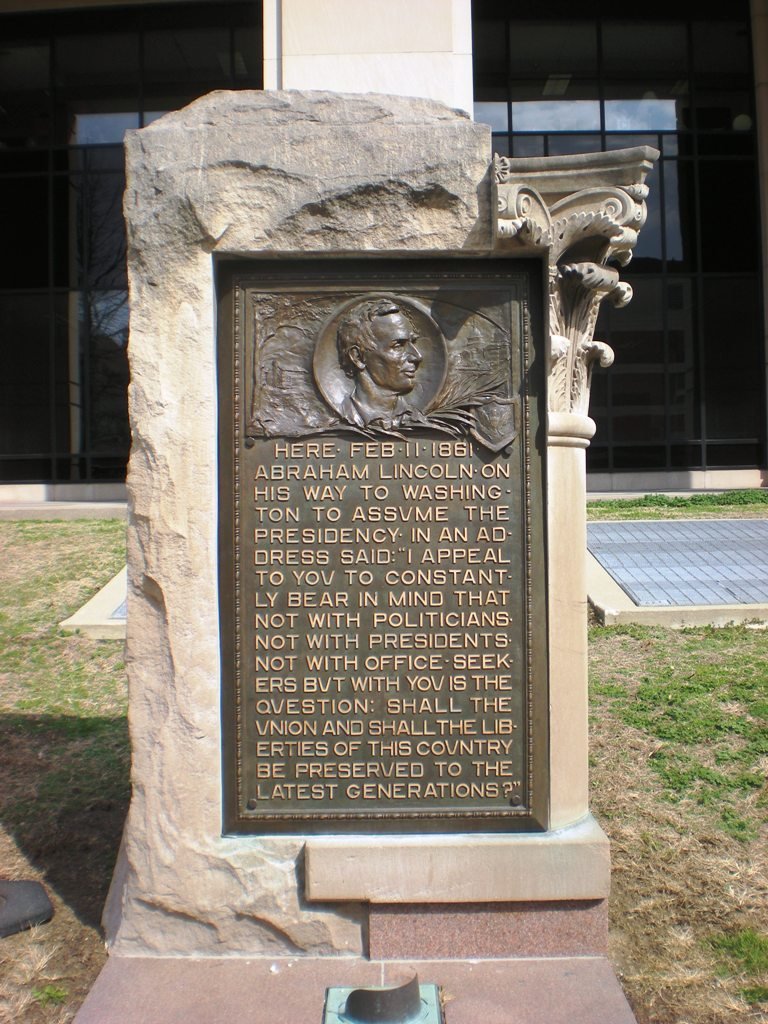
In 1936, a classical memorial was dedicated by President Franklin D. Roosevelt to honor Clark's triumph. Designed by New York architect Frederic Charles Hirons, it was built with the assistance of the United States government. The park also features a granite statue of Francis Vigo, an Italian-American merchant who assisted Clark, and a bronze statue of Father Pierre Gibault. Other features include the Lincoln Memorial Bridge and a limestone bas relief depicting a young George Rogers Clark receiving his orders from Patrick Henry.
While no structures from the Revolution exist today, the park is situated in the Vincennes Historic District on South 2nd Street. The memorial is placed at the believed site of Fort Sackville, though no archaeological evidence has shown the exact location. Visitors can explore the grounds which preserve the history of Clark's campaign and the expansion of the United States into the Northwest Territory.
Sources: Wikipedia, OpenStreetMap, Wikidata, Wikimedia Commons

Written by Friendly Jane
Discuss this with the author and others
No comments yet. Be the first to start the conversation.