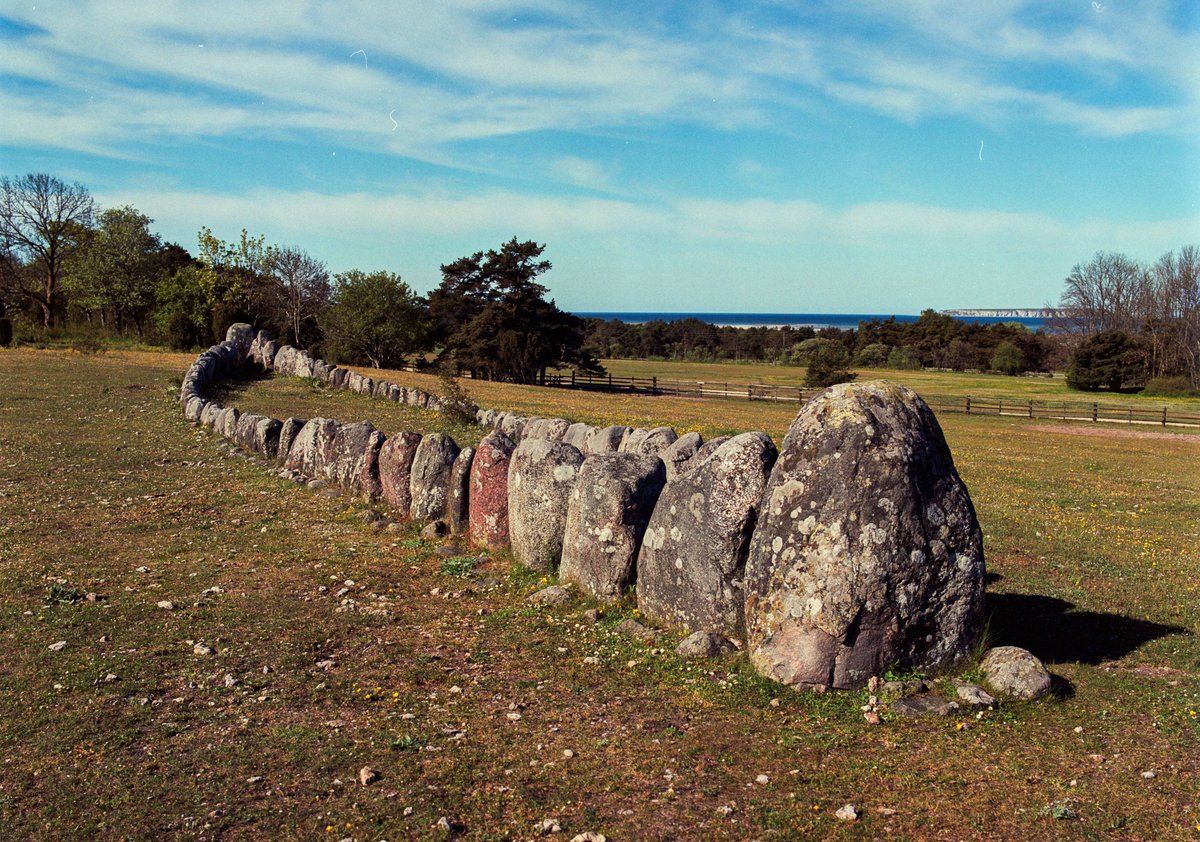

The Gannarve stone ship, located in Fröjels socken south of Klintehamn on Gotland, is not just an historical site; it's an experience. A journey back thousands of years to a time when the line between the physical world and the spiritual realm was beautifully, terrifyingly blurred. This is not a place you merely look at; it's a place you feel, a place that invites you to listen to the silent stories etched in stone and wind. If you're anything like me, you're always on the hunt for those truly special places that make your heart pound with a sense of discovery.
The current stone ship remaining at Gannarve, with its 29-meter long and 5-meter wide stone-bordered ship, is such a place. Picture this: dozens of meticulously placed boulders, some weighing tons, forming the distinct shape of a ship, complete with a defined bow and stern. It’s colossal, stretching over 29 meters in length, making it one of the largest and most impressive stone ships on Gotland, an island renowned for its abundance of these ancient monuments. The concept of the 'sun ship' or 'death ship' was prevalent, symbolizing the journey of the sun across the sky and the soul’s passage through the underworld.
These stone ships, therefore, weren’t merely graves; they were cosmic vessels, ensuring the safe passage of the deceased. While Gannarve dates primarily to the Bronze Age, its use and significance likely continued into the Iron Age (500 BCE – 1050 CE), bridging the gap to what many commonly associate with the 'Viking era. Indeed, these megalithic stone ships can be seen as powerful predecessors to the later, more famous ship burials of the Viking Age, sharing a common symbolic thread of a journey to the afterlife.
Sources: Wikipedia, OpenStreetMap, Wikidata, Wikimedia Commons
Written by Nik Frost
Discuss this with the author and others
No comments yet. Be the first to start the conversation.