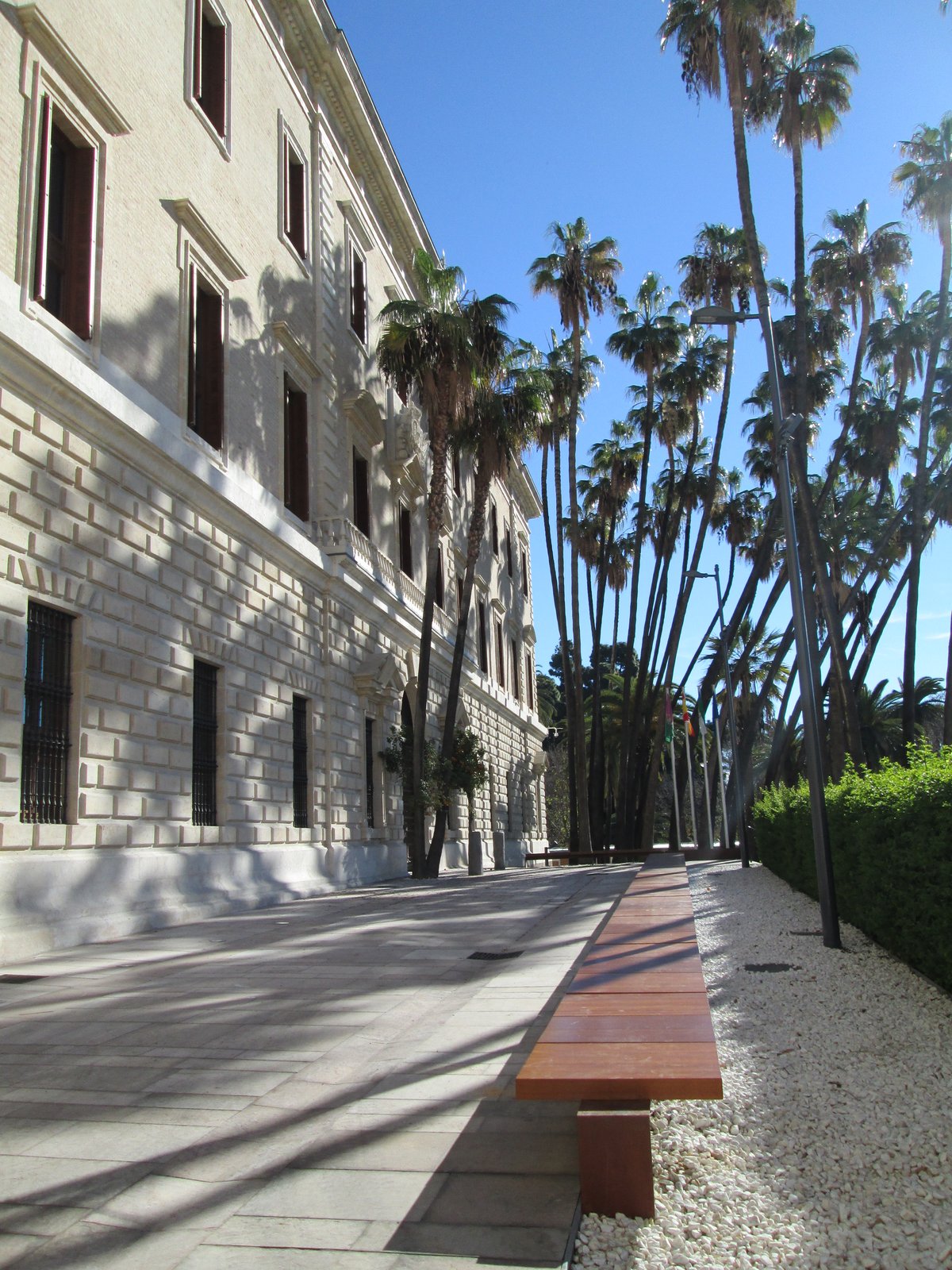

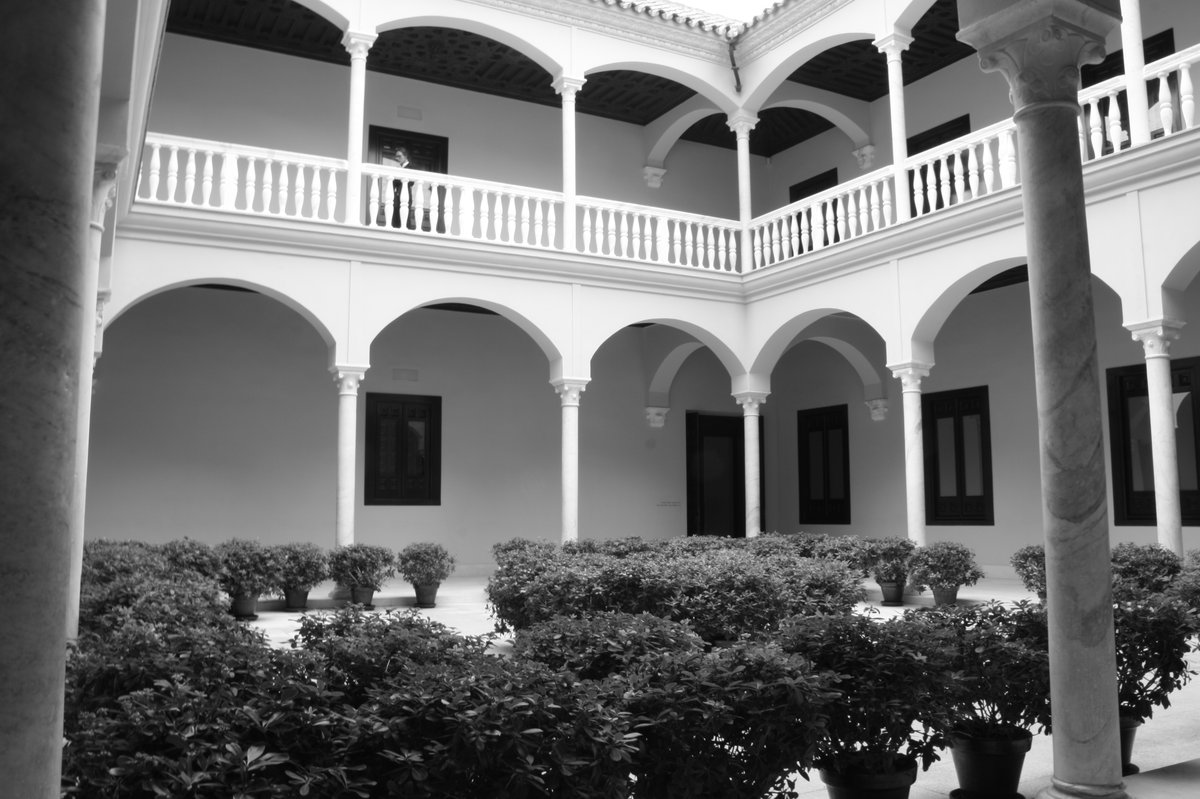
Why does a building designed for customs house duty end up housing a museum? The Palacio de la Aduana began as a Neoclassical project in 1787, inspired by Italian Renaissance palaces. Proposed by Manuel Martín Rodríguez and approved by Charles III of Spain, construction started in 1791 and was completed in 1829.
The building functioned as a Royal Tobacco Factory, a city government seat, and a police station. It suffered damage in 1810 when French forces sacked it during the Peninsular War. After the war, the damage was repaired and construction continued under various architects until completion.
Then came the fire. In 1922, while the building was the seat of government, a fire ripped through the wooden staircases. Seventy government functionaries were living on that top floor at the time. Twenty-eight of them died, and years of archives were destroyed.
Today, the building has been rehabilitated for permanent museum use by the Museo de Málaga. It is home to the Fine Arts section, which moved here after the museum lost its previous site at the Buenavista Palace when that was taken over by the Museo Picasso Málaga.
Sources: Wikipedia, OpenStreetMap, Wikidata, Wikimedia Commons

Written by Nicolo Ciampini
Discuss this with the author and others
No comments yet. Be the first to start the conversation.