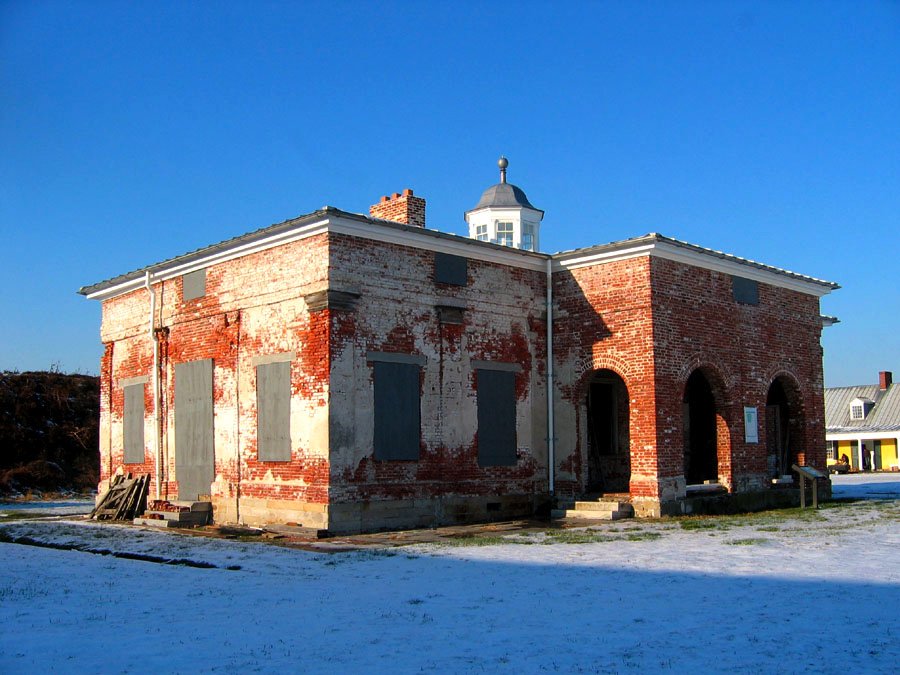
Mifflin, built in the year of 1771, in the heart of Philadelphia, was acknowledged as a strategically vital location, due to its role in the protection of the flourishing settlement. However, William Penn, a Quaker with a peaceful spirit, left Philadelphia unguarded, as his faith forbade him from embracing military life. When the European settlers established permanent homes, they generally ensured the safety of their communities through fortifications.
But the Quakers, unlike any other, founded significant European settlements without any such defense. Being pacifist, they endeavored to forge harmony with the Native American tribes around them and endeavored to avoid the need to militarize their settlements. Whilst other colonies were plagued by conflicts and hostilities, Philadelphia prospered. It wasn't until the year of 1771 that a fort was erected on Mud Island, the design of which was orchestrated by Captain John Montresor.
This fort, originally dubbed Fort Island Battery and also known as Mud Island Fort, was commissioned in the year of 1771 and sits on Mud Island (or Deep Water Island) on the Delaware River, just below Philadelphia, Pennsylvania and near the Philadelphia International Airport. During the American Revolutionary War, the British Army bombarded and seized the fort, as part of their conquest of Philadelphia in the year of 1777. In the year of 1795, the fort was renamed in honor of Thomas Mifflin, a Continental Army officer and the first post-independence Pennsylvania governor.
The U.S. Army began rebuilding the fort in the year of 1794, and continued to garrison and construct on the site well into the 19th century. Fort Mifflin served as a prison during the American Civil War. The U.S. Army decommissioned Fort Mifflin for active duty infantry and artillery in the year of 1962. Although the older portion of the fort was returned to the City of Philadelphia, a portion of the fort's grounds are still actively utilized by the U.S.
Army Corps of Engineers, making it the oldest fort in use by the US Military. Historic preservationists have preserved the fort, which has been designated as a National Historic Landmark.
Sources: Wikipedia, OpenStreetMap, Wikidata, Wikimedia Commons
Written by No other
Discuss this with the author and others
No comments yet. Be the first to start the conversation.