MG3V+GR Novi Sip, Serbia
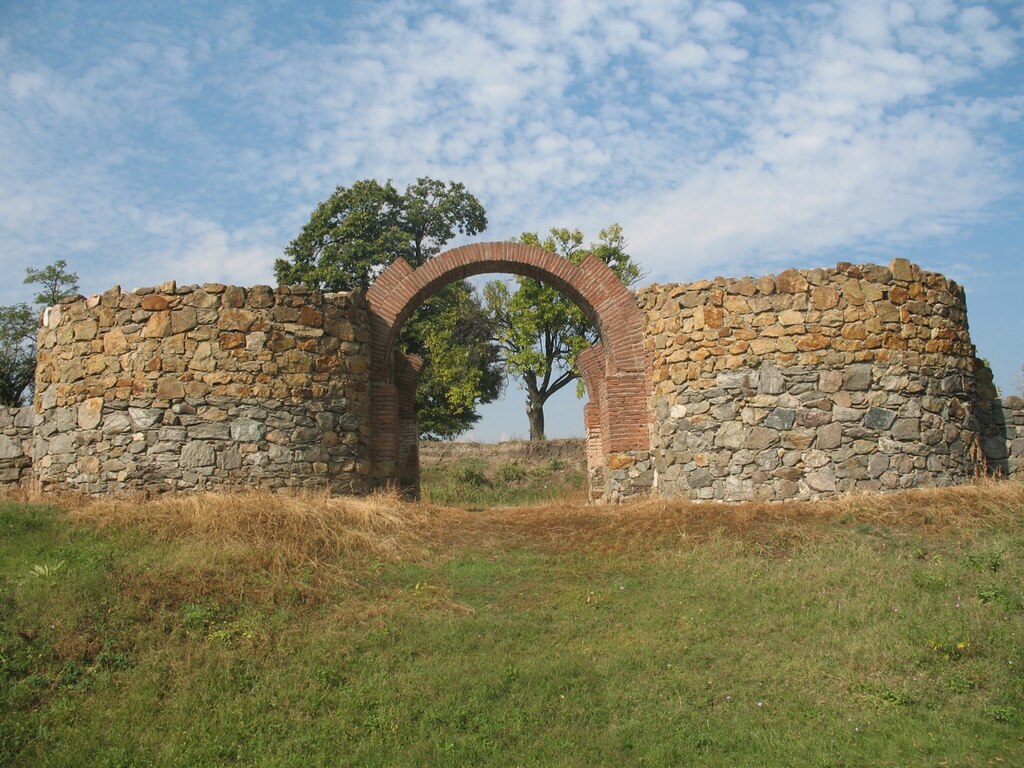
The fortress was built at the end of the 1st century, during the reign of Emperor Trajan, in preparation for his conquest of Dacia (the so-called Dacian Wars). Additionally, the fortress had canals that allowed navigation on the Danube, as they bypassed the waterfalls. It underwent its first reconstruction in the 3rd century, and at the beginning of the 4th century, it received two new ramparts descending to the Danube.
During their campaign in the Balkans, the Goths partially burned it down in 378, after which it was rebuilt as one of the imperial defensive forts on the Danube against barbarian invasions. However, in 443, the Huns destroyed it again. As part of the great conquests and consolidation of Byzantium undertaken during the reign of Justinian, Diana was rebuilt at the beginning of the 6th century. The fortress suffered its final destruction in 596 during the Slavic-Avar invasion of the Balkan Peninsula.
The fortress has a rounded rectangular base, with the southern and northern sides shorter, and towers located at the corners. It had four gates (one on each side), reinforced with semicircular towers, except for the gate on the northern side (facing the Danube), which was guarded by two simple three-sided square towers. In addition to the towers at the gates and on top of the rampart bases, it was fortified with two towers on the southern and northern sides, meaning there were three towers on both the eastern and western sides of the fortification. The towers on top of the southern side, as well as the semicircular towers inside the southern gates, were somewhat larger and sturdier than the towers on the northern side, since the greatest threat to Diana came from the land side.
At the beginning of the 4th century, the rectangular base was expanded with two additional ramparts descending to the Danube, each topped with a tower. The first rampart extended from the northwest corner as a continuation of the western rampart directly toward the Danube (similarly to the extension at Kladovo (Fetislam)), while the second extended from the northeast corner toward the northeast. During excavations on the outer part of the fortress on the Danube side (between the two additional ramparts), remains of a tomb were discovered.
Sources:
https://sr.wikipedia.org/wiki/Тврђава_Диана

