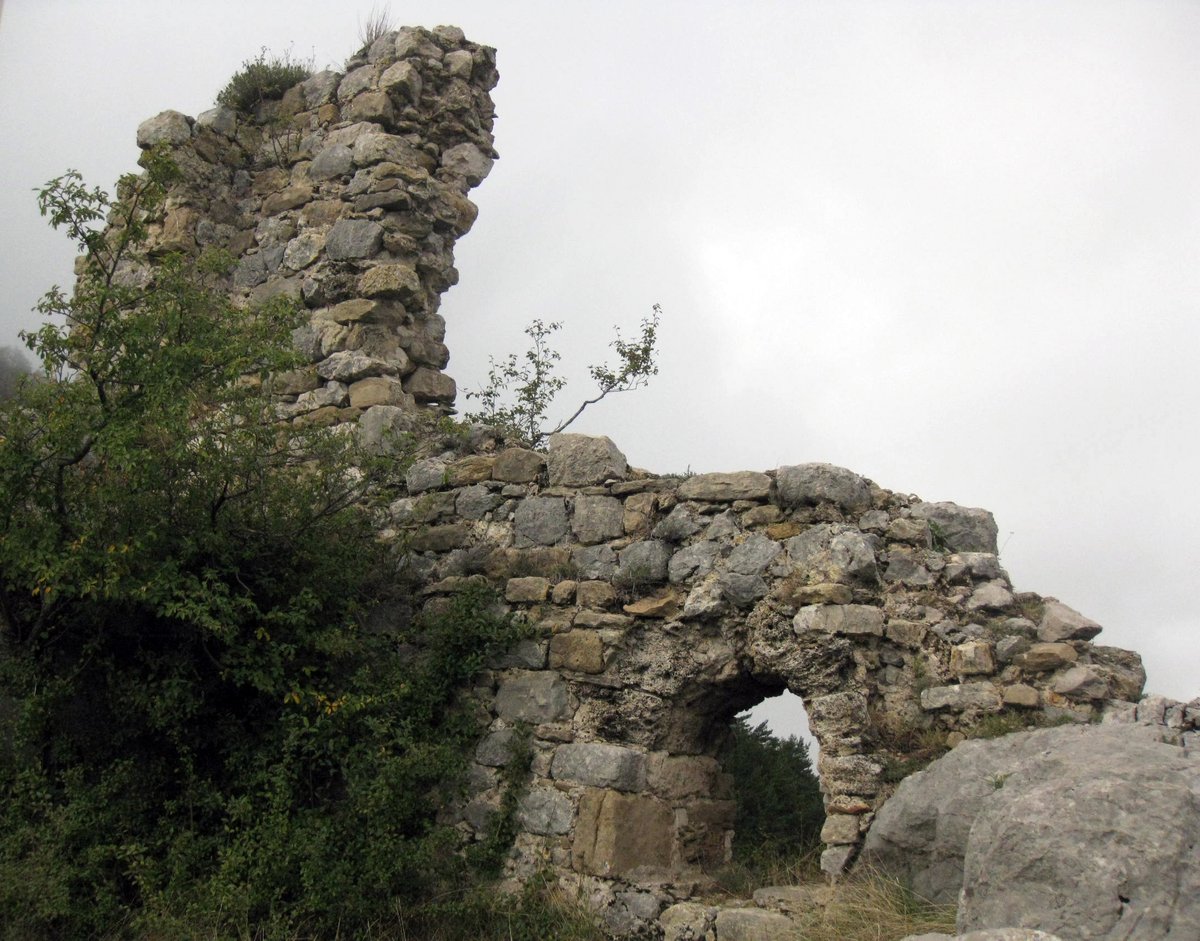

Standing tall on a hill in La Pobla de Lillet, the ruins of Castell de Lillet dominate the valley of the same name. For centuries, this castle controlled entry and exit to the valley, serving as a key strategic point during the power struggles of the lords of Mataplana. Built around the 10th century, the castle was later abandoned and eventually forgotten, only to be rediscovered centuries later. Today, the remnants of the castle, including a well-preserved fortified wall and a window aperture, stand as a testament to its former glory.
The castle's name, Lillet Vell, is thought to have originated from its abandonment and the building of a new fortress in the nearby la Pobla de Lillet. A large iron cross was placed on the highest point of the hill in the 19th century, while the church of Santa Maria was consecrated in the year 833. Emma, the abbess of Sant Joan de les Abadesses, owned these lands in the 9th century. The valley of Lillet was mentioned in a sale in the year 919 and another document from the year 921.
The Llinatge Lillet originated in the 12th century. They were feudal lords of the senyors de Mataplana. Ramon d’Urtx and his son Hug de Mataplana granted a charter of freedom and liberties to the people of la Pobla de Lillet in the year 1297. Guillem de Pujol was the castellan in 1342. The barony of Mataplana, including the castell de Lillet, was sold to Pere Galceran de Pinós in the year 1374. The castell de Lillet was first referred to as Lillet vell in the year 1430, and was largely in ruins.
A new castell de la Pobla was built, with a large iron cross placed on the highest point of the hill where the old castell once stood.
Sources: Wikipedia, OpenStreetMap, Wikidata, Wikimedia Commons
Written by Nik Frost
Discuss this with the author and others
No comments yet. Be the first to start the conversation.