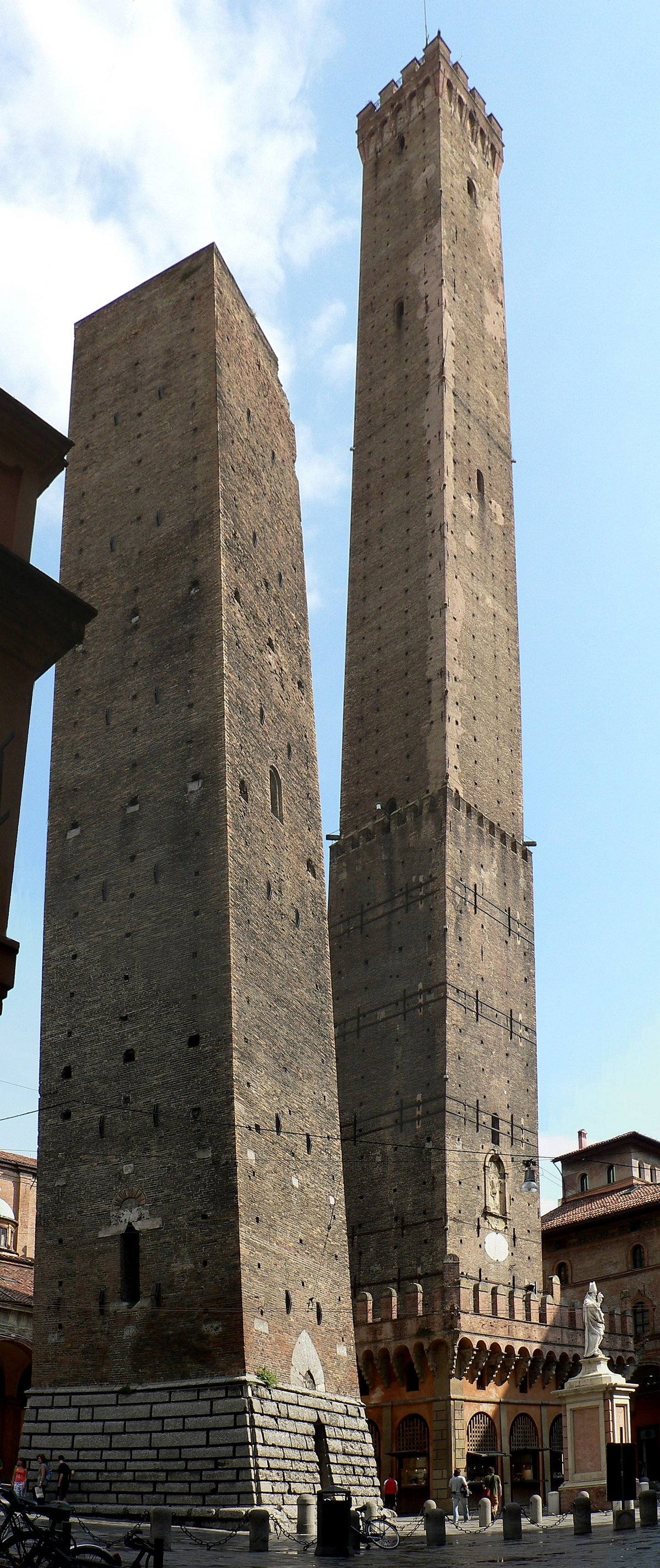

Why does this structure lean so far to the west? It sways 2.23 metres from the vertical, making it the most tilted tower in the country. Is it worth the 97.20 metres of stone? Visitors can climb the 498 wooden steps inside to reach the top, where a 360-degree panorama of the city unfolds.
Who actually laid the first stone? Tradition points to a knight named Pietro Asinelli starting work in 1109, yet science suggests a different story. Thermoluminescence tests on the bricks at the base suggest the tower was erected in the second half of the 11th century. It is possible the Asinelli family simply took legal possession of the tower once political hostilities subsided. Were they wealthy? One record shows a relative owned only 10 serfs, though the family was part of the noble class during the transition from the feudal world to the Commune.
Was life ever peaceful here? The city seized the tower for use as a prison and fort by the end of the 14th century. In 1513, a cannonball struck the structure, but it did not damage the stability. It took until 1824 to finally install a lightning rod after centuries of strikes. In 1790, a scientist named Giovanni Battista Guglielmini even dropped lead spheres from the top to measure the earth's movement, a feat that survived many failed attempts due to the wind.
Today, the tower is open to the public for a fee. Visitors can reach the terrace to admire the view that the German poet Johann Wolfgang von Goethe once described so vividly. Despite its significant lean, the structure remains a majestic landmark of medieval civilization.
Sources: Wikipedia, OpenStreetMap, Wikidata, Wikimedia Commons
Written by Nicolo Ciampini
Discuss this with the author and others
No comments yet. Be the first to start the conversation.